TKDN Products for Floating Infrastructure: A Procurement Guide for Government and State-Owned Enterprises
TKDN products matter more and more in government and BUMN procurement. Understand P3DN and the key questions to ask pontoon vendors before a project starts.
The tender documents have been prepared and the technical specifications for the floating dock agreed, yet the committee is still asking: do the offered pontoons qualify as TKDN (Indonesia's Domestic Component Level certification) products? This question comes up more and more often in floating infrastructure projects owned by regional governments, ministries, and state-owned enterprises (BUMN). For vendors, the answer is not a mere formality but part of whether a bid is eligible.
This article gives a general explanation of what TKDN is, how it relates to the P3DN (Indonesia's program to increase the use of domestic products) program, and the practical questions you should ask vendors before choosing pontoons or floating structures.
What Are TKDN and Domestic Products?
TKDN stands for Tingkat Komponen Dalam Negeri (Domestic Component Level), a measure of how much domestic content a good or service contains. The components assessed generally include raw materials, labour, production equipment, and processes carried out in Indonesia. The assessment results are set out in a certificate issued through an official government mechanism.
TKDN product status is different from simply being "made in Indonesia". A product may be assembled domestically, but without a certificate its local content value cannot be formally proven in the procurement process.
The Role of P3DN in Government and BUMN Procurement
P3DN, or Program Peningkatan Penggunaan Produk Dalam Negeri, is a government policy encouraging agencies and state-owned enterprises to prioritize goods made in Indonesia. In general, the program affects how government procurement is structured, from needs planning and specification drafting to bid evaluation.
In practice, holding a TKDN certificate can be a factor in bid assessment and in listing TKDN products in the electronic procurement catalogue. Detailed provisions are set out in regulations that may change over time. Procurement teams should therefore always refer to the latest rules and consult the legal or procurement unit in their agency.
For floating infrastructure projects, the relevance is quite broad. Floating docks on remote islands, river trash barriers, dredging work platforms, and tourist boats in government-owned areas are generally funded by public budgets, so domestic product considerations come into play.
Why Pontoon TKDN Matters for Floating Projects
Pontoons are the main component of a floating structure. The number of units scales with the size and load of the structure, so pontoons often make up a significant part of the contract value. Several reasons why pontoon TKDN deserves attention:
Administrative compliance. A certificate helps the committee verify domestic product claims without relying on a vendor's verbal statements.
Availability of additional units. Local manufacturers are generally easier to reach for adding or replacing modules.
Logistics. Domestic shipments do not go through import processes, although the distance to island locations still needs to be planned.
Support for local industry. Public spending helps drive the domestic supply chain.
As an example, Bajau Indo (PT. Asa Kreasi Global) manufactures modular pontoons such as Block Pod, Nusa Dock, Nose Pod, and Body Pod with a UV-resistant LLDPE shell and a CFC-free polyurethane core. According to its official website, Bajau Indo products are TKDN certified. Certificate details can be requested directly during the bidding process.
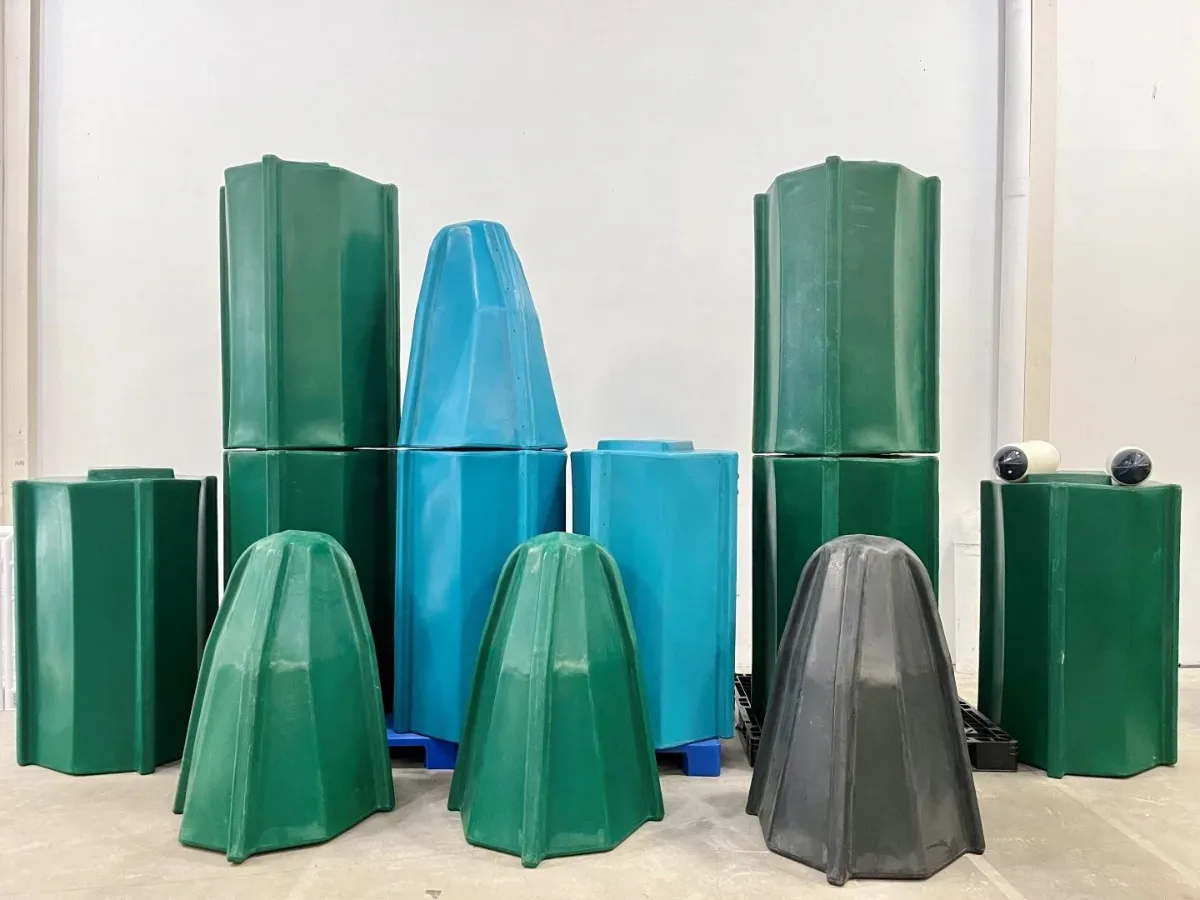
Modular pontoons in various colours stacked upright in a warehouse. Source: Bajau Indo documentation
Questions to Ask Vendors
Before selecting a TKDN product supplier, ask the following questions to make the evaluation more objective:
Which products are covered by the TKDN certificate, and does the coverage match the items offered?
Is the certificate still valid, and can it be checked in the official database?
Where is production carried out, and can the facility be visited?
Are the per-unit specifications, namely dimensions, weight, and buoyancy, clearly stated in the technical documents?
How is the overall buoyancy of the structure calculated for this project?
Who handles the site survey, assembly, and post-installation support?
The fifth question matters because per-unit buoyancy does not yet reflect the capacity of the structure. Final capacity is calculated per project based on load, layout, and water conditions. For other pontoon technical criteria, also read our guide to choosing quality floating cubes for floating docks.
Preparing Procurement Documents for Floating Infrastructure
From the project owner's side, several steps help the process run smoothly:
Describe functional requirements, for example the type of vessels berthing or the number of users, rather than a specific brand.
Include TKDN product or domestic product requirements in line with applicable regulations.
Prepare site data: depth, water level changes, currents, and land access.
Ask vendors to show verifiable project references.
Examples of Bajau Indo's work, such as the floating dock for vessels and amphibious aircraft in the Selayar Islands Regency and floating trash collectors in several cities, can be seen on the Bajau Indo project portfolio page. Official module specifications are available on the Block Pod pontoon and Nusa Dock dock module pages.
Frequently Asked Questions
What is the difference between TKDN and P3DN?
TKDN is a measure of a product's domestic content, proven by a certificate. P3DN is a government program that encourages the use of domestic products in agency and BUMN spending. Simply put, TKDN is the measuring tool, while P3DN is the policy that uses it.
Are Bajau Indo pontoons TKDN certified?
According to the official bajauindo.com website, Bajau Indo products are TKDN certified. For procurement documentation, certificate details and product coverage can be requested directly from the Bajau Indo team.
How can I make sure a vendor's TKDN claim is valid?
Request a copy of the certificate, match the product names with the items offered, then check its validity through the official government database. Also make sure it is still valid while the procurement process is under way.
Preparing specifications or procurement documents for a dock, platform, or other floating unit? The Bajau Indo team can help explain the product specifications and supporting documents you need. Contact us via WhatsApp at 0878-5931-4314 or send your project requirements to marketing@bajauindo.com.
Written by
Tim Redaksi Bajau Indo
Tim Teknis & Redaksi
Tim teknis dan redaksi Bajau Indo — produsen dermaga apung, kubus apung, dan ponton modular LLDPE dari Sentul, Bogor.
Share this article: