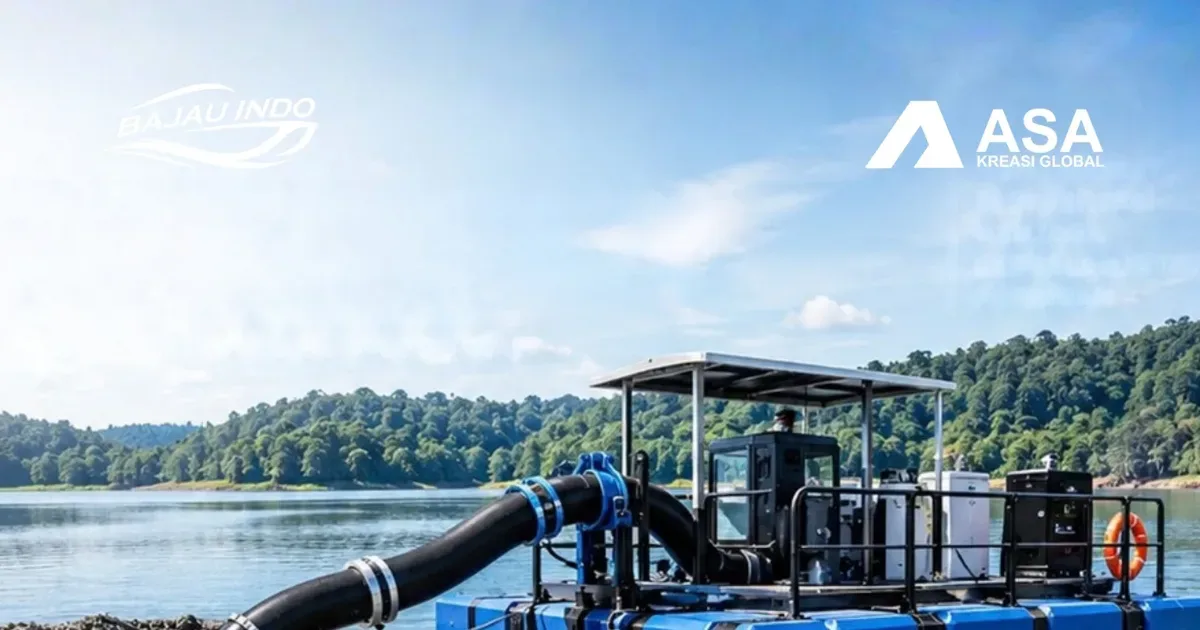
Dredging Small Navigation Channels: Keeping Harbour Basins Deep Enough
Dredging navigation channels and small community harbour basins: the impact of silting, depth surveys, work from a pontoon platform and handling dredged material.
Silting rarely happens overnight. Little by little, mud and sand carried by the current settle at the mouth of a harbour basin, along the entrance channel or beside a river dock. The signs only become noticeable when boats start having to wait for high tide to get in. At that point, navigation channel dredging is no longer an option but a necessity to keep harbour activity running.
This article covers protecting small navigation channels, community harbour basins and river docks from sedimentation, from depth surveys to handling dredged material.
The Impact of Harbour and River Channel Sedimentation
Harbour sedimentation affects more than the depth figure. In general, the impacts users often experience include:
- Tide-dependent schedules: boats can only enter and leave at certain times.
- Risk of grounding: the hull or propeller can touch the bottom, especially when fully loaded.
- Shrinking berthing area: shallow sides of the dock can no longer be used.
- Disrupted flow: in rivers, deposits can slow the flow and increase the risk of flooding nearby.
These impacts directly affect fishers, ferry boat operators and area managers who depend on water access.
Depth Surveys as the Basis for Navigation Channel Dredging
Effective dredging starts with data. Regular depth surveys help identify where deposits build up fastest and how much material needs to be moved. For small waterways, surveys can be carried out with a depth-measuring tool at fixed points, then compared over time.
In general, several points should be considered when planning a survey:
- Record depths against the same water-level reference, for example at low tide, because the water level affects the reading.
- Prioritise critical points such as the basin mouth, estuaries, channel bends and dock sides.
- Set the required channel depth based on the type of boats that use it.
- Repeat the survey after the rainy season, when deposits usually increase.
Survey results are also the basis for planning navigation channel dredging: which areas are dredged first, to what depth, and where the material goes. Without this data, the work risks missing its target or having to be repeated sooner than expected.
The effect of tides on berthing facilities is covered in the article on tides and dock design, while the principles of managing deposits in enclosed waters are covered in the article on sediment management in reservoirs and retention ponds.
Dredging from a Pontoon Platform
For small channels and community harbour basins, a pontoon dredger is one approach worth considering. The Bajauindo Dredger uses a suction-pump system on a stable pontoon platform. According to its brochure, its applications include ports and industrial estates, to maintain depth and the safety of port activity, and rivers and navigation channels, to improve flow and transport access. Platform stability and mobilisation considerations are explained in the article on floating dredging platforms.
In general, the advantage of a floating platform is that it works directly from the water surface, including in areas that heavy equipment struggles to reach from land, such as harbour basins surrounded by buildings or river docks with narrow access. Bajau Indo's portfolio also includes a floating dredger project in Bogor.
Plain suction
This system sucks up sediment directly with a simple, efficient flow. It suits the mud, sand and fine sediment commonly found in harbour basins and river mouths.
Double crusher
This system uses a double crusher and agitator to break up compacted sediment before suction. It is effective for mud, sand and hard deposits, with more stable operation. The system should be chosen once the character of the material on site is known.
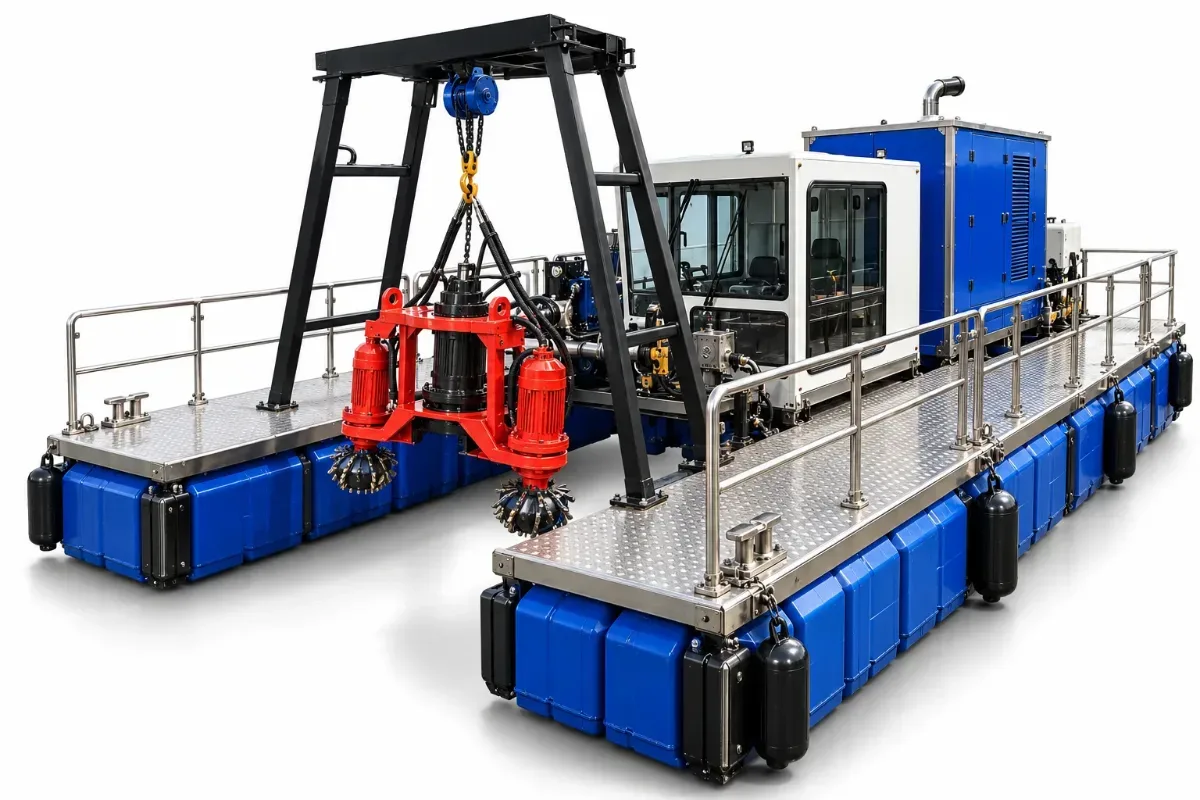
Bajauindo Dredger product visual: a blue pontoon platform with a gantry, two red crusher pumps, an operator cabin and a railed deck. Source: Bajau Indo product visual (illustration)
Handling Dredged Material
The material that is sucked up needs to be pumped to a containment site, usually through a discharge pipe to an area on land. This site must be prepared before work begins, including containment bunds and a route for draining water. A dewatering stage, separating water from the material, can help reduce the volume that has to be transported. What must be avoided is disposing of material where the deposits can flow back into the channel. For navigation channel dredging in residential areas, also plan the pipe route so it does not disrupt boat traffic and residents' activities.
Coordinating Permits and Work Schedules
Navigation channel dredging generally needs to be coordinated with the port authority or the local transport agency, as well as the environmental agency responsible for the material containment site. Schedule the work so dredging does not block boat traffic, place markers around the work area, and prepare a safety SOP for operators. Also share the work plan with local fishers and boat operators before the work begins.
Frequently Asked Questions
How often does a navigation channel need dredging?
There is no schedule that applies to every site. The frequency depends on the sedimentation rate shown by regular depth surveys. Sites near the mouths of large rivers generally need to be monitored more often.
When should I choose plain suction and when double crusher?
Plain suction suits mud, sand and fine sediment. Double crusher is more suitable when the deposits have become compacted or hard. Sampling the material on site helps determine the choice.
Does dredging have to stop harbour activity?
Not always. With a pontoon platform that can be moved, the work can be divided into zones and scheduled outside busy hours. Coordination with the harbour manager is still needed to keep boat traffic safe.
To discuss dredging needs for your harbour, channel or river dock, send your depth survey data and site photos to marketing@bajauindo.com. Unit details are also available on the Modular Dredger / Dewatering Boat page.
Written by
Tim Redaksi Bajau Indo
Tim Teknis & Redaksi
Tim teknis dan redaksi Bajau Indo — produsen dermaga apung, kubus apung, dan ponton modular LLDPE dari Sentul, Bogor.
Tags
Share this article: