Electric Tourist Boats for Nature Tourism Areas: Benefits and Operational Considerations
Electric tourist boats suit lakes and quiet nature tourism areas. Learn about their benefits, charging, routes, and an example at the Bogor Botanical Gardens.
Managers of botanical gardens, recreational parks or conservation lakes often face the same question: how can they add attractions on the water without disturbing the natural atmosphere that is the main draw? Noisy engines and exhaust fumes clearly do not fit the experience they want to offer. That is why electric tourist boats are increasingly being considered for areas like these.
This article discusses the general benefits of electric tourist boats, the operational aspects that need to be planned, an example of their use at the Bogor Botanical Gardens, and catamaran size options for lake tourism.
Why Electric Boats Suit Nature Tourism Areas
In general, electric boats are driven by battery-powered electric motors, so they produce no exhaust emissions at the place of operation. They are also relatively quieter than combustion engines. For visitors, the calm atmosphere makes a trip across the lake feel more relaxing.
For operators, this character supports an eco-friendly tourism image. Areas with wildlife, waterside vegetation or environmental education programs are usually better suited to quiet water transport. Even so, the overall environmental benefit still depends on how the boats are operated and how the batteries are managed.
Electric tourist boats also offer visitors a different experience. Without engine noise, guides can talk about the flora, fauna or history of the area without having to shout. This format suits educational tourism, school groups and families who want to enjoy a peaceful setting.
Example: Perahu Tutur Danau at the Bogor Botanical Gardens
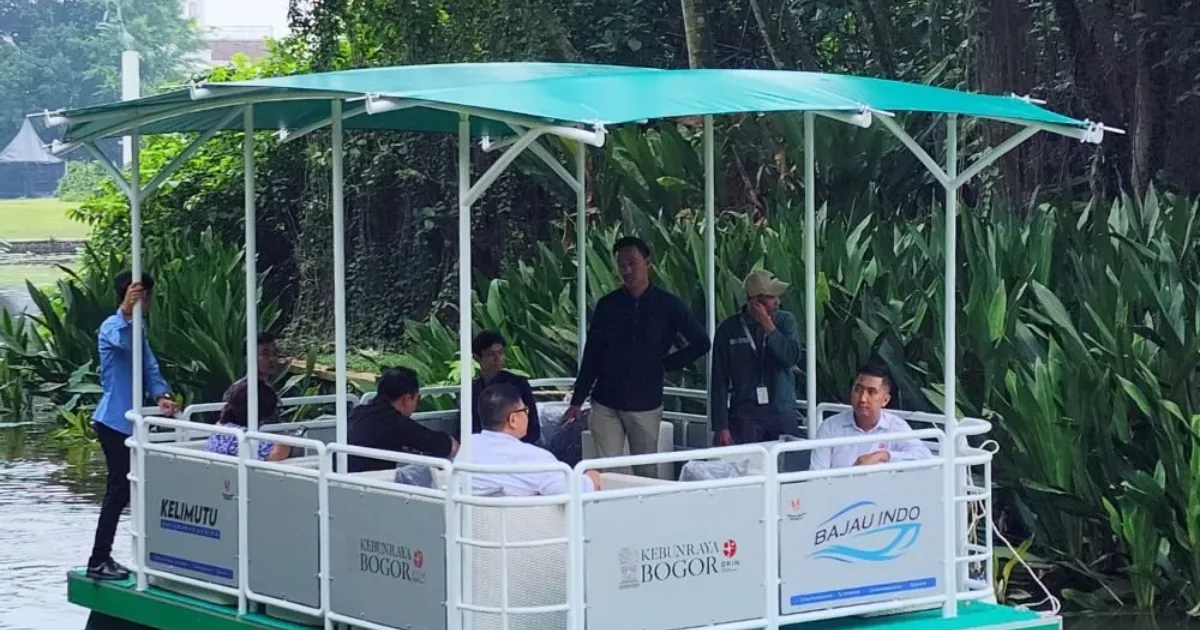
One of Bajau Indo's projects in this sector is the "Perahu Tutur Danau" electric catamaran at the Bogor Botanical Gardens. Measuring 3 × 4.5 m, the boat can carry up to 10 passengers and has operated on Danau Gunting since December 2024. You can read the full story of the project in our article on the Bajau Indo catamaran at the Bogor Botanical Gardens.
This example shows that an electric catamaran can become part of educational tourism in green areas. Its compact size suits lakes with limited area and short routes, while visitors can still enjoy the view from the water.
Operational Considerations for Electric Tourist Boats
Choosing a boat is only the first step. For smooth operations, the following aspects should be planned from the start.
Charging
Choose a charging location close to the dock and safe from standing water. Make sure the power supply is adequate and the installation is carried out in accordance with electrical codes. The charging schedule should be arranged so that it does not clash with peak visitor hours.
Routes and Trip Duration
The range of an electric boat depends on battery capacity, passenger load and water conditions. Routes should therefore be designed taking into account the number of trips per day and breaks for charging.
Docks and Boarding Points
Tourist boats need a stable and easily accessible berthing point. A floating dock that follows the water level helps keep passenger boarding and disembarking comfortable as the lake's water level changes.
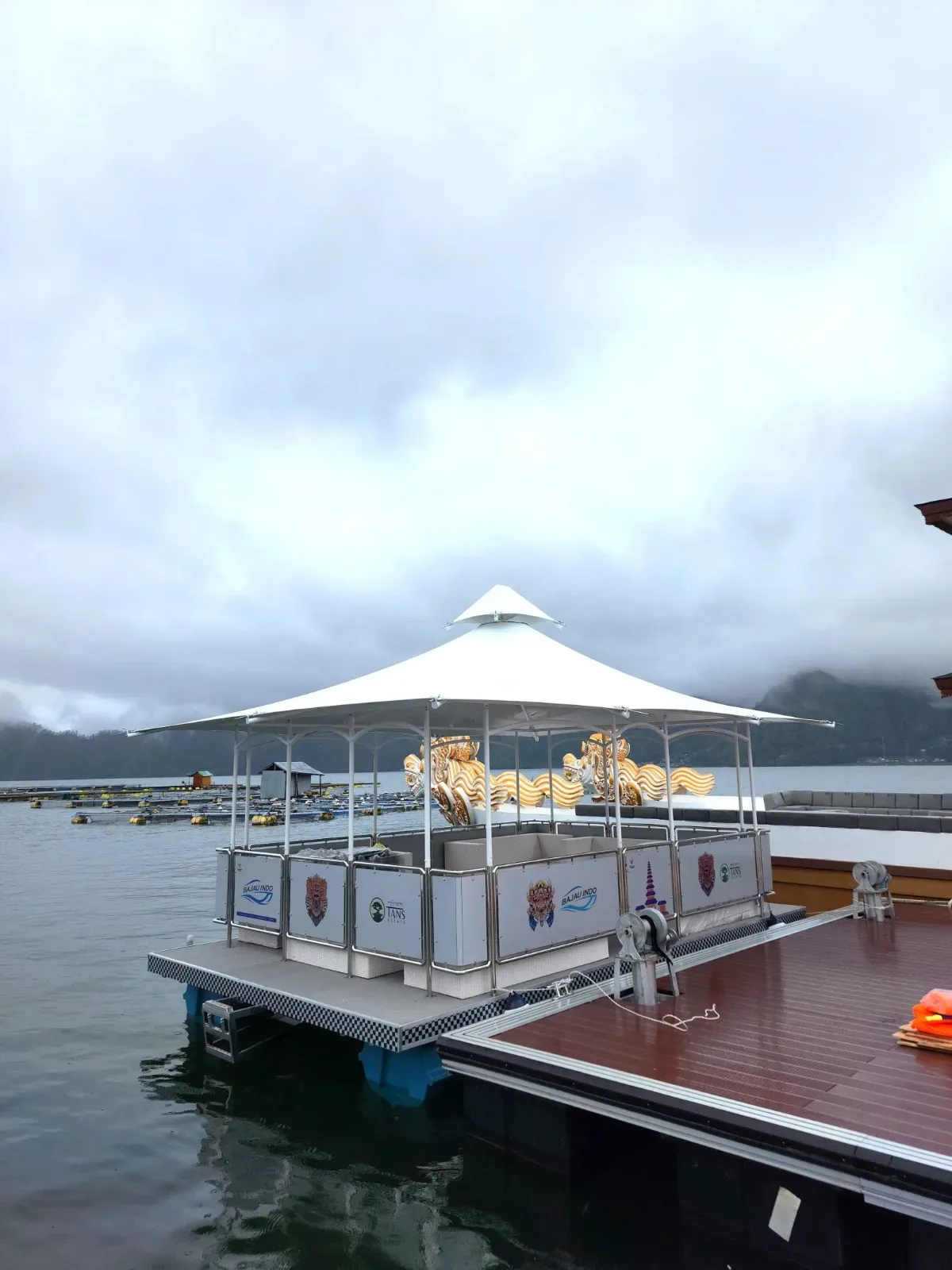
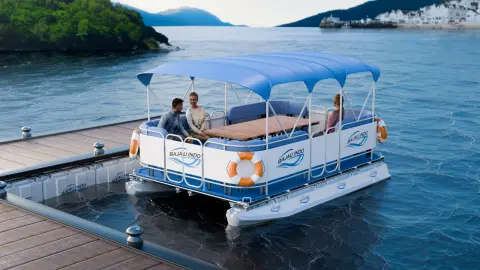
A tourist boat with a white canopy moored at a lake dock in Bali. Source: Bajau Indo documentation
Safety and SOPs
Provide life jackets for all passengers, limit the number of passengers to the boat's capacity, and train operators to handle emergencies, including electrical system faults. Routine pre-operation checks, such as the condition of batteries, cables, pontoons and safety equipment, should also be recorded.
Scheduled Maintenance
In addition to daily checks, schedule periodic maintenance for the propulsion system, batteries, pontoon hulls and passenger seats. Maintenance records help operators spot signs of problems early before they affect the operating schedule.
Choosing a Catamaran Size for Lake Tourism
Besides the project at the Bogor Botanical Gardens, Bajau Indo tourist boats also operate in Bali and Balikpapan. For new requirements, three types of tourist catamaran are available in different sizes. All types use PU-insulated LLDPE pontoons, a marine-grade aluminum frame, synthetic rattan seats with waterproof cushions, and a roof.
Kelimutu — Size: 4.6 × 3 m; Capacity: 7–10 people; General consideration: Small lakes and short routes
Sentani — Size: 5.6 × 4 m; Capacity: 10–15 people; General consideration: Medium-sized lakes or reservoirs
Toba — Size: 7 × 5 m; Capacity: 15–20 people; General consideration: Destinations with higher visitor numbers
Propulsion options and technical details are discussed per project according to the water conditions, routes and operating patterns at your site.
Frequently Asked Questions
Are electric tourist boats truly emission-free?
Electric boats produce no exhaust emissions at the place of operation because they do not use combustion engines. However, the overall environmental footprint is also affected by the electricity source used for charging and by battery management. A more accurate term is therefore zero exhaust emissions at the tourist site.
How long can an electric boat operate in a day?
Operating time depends on battery capacity, passenger load, speed and water conditions. There is no single figure that applies to every location. Routes and charging schedules should be designed together with the supplier from the planning stage.
Are electric tourist boats suitable for waters with currents?
In general, electric tourist boats are better suited to calm waters such as lakes, reservoirs or large ponds. For rivers with currents or open waters, power requirements and safety aspects need to be assessed in more detail. A site survey helps determine whether the concept is feasible.
Designing a boat attraction for your lake or nature tourism area? Tell the Bajau Indo team about the size of the water area, your planned route and the expected number of visitors via WhatsApp 0878-5931-4314. We will help you choose the right catamaran size and supporting requirements.
Written by
Tim Redaksi Bajau Indo
Tim Teknis & Redaksi
Tim teknis dan redaksi Bajau Indo — produsen dermaga apung, kubus apung, dan ponton modular LLDPE dari Sentul, Bogor.
Tags
Share this article: