Floating Fishing Cabins: A Concept Guide for Fishing Tourism
Designing a floating fishing cabin for a lake or reservoir: layout of the fishing deck and roof deck, pontoon structure, walkway access, safety and water cleanliness.
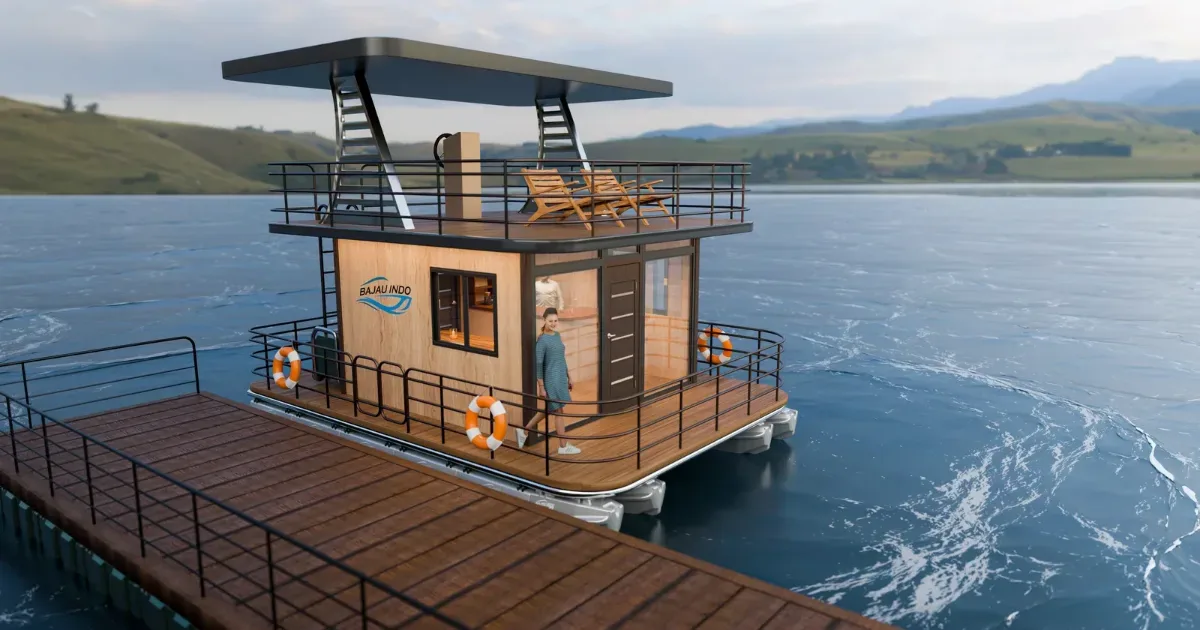
Anglers are known for waiting patiently, but they are also careful about where they fish. A quiet, shaded spot a little away from the busy bank is often the reason someone returns to a lake. For reservoir or water-tourism managers, a floating fishing cabin can be a way to offer that experience while adding a facility that can be rented out. This article discusses the floating fishing cabin concept, from layout to safety. The featured image of this article is a concept render, not a built project.
Why Floating Fishing Cabins Appeal to Managers
Compared with fishing from the bank, a cabin on the water offers a different experience. In general, its attractions include:
- Access to spots further out: anglers can reach areas that are hard to reach from land.
- Comfort: a roof and a rest room encourage visitors to stay longer.
- A new tourism product: the cabin can be rented per session or combined with other tourism packages.
- Following the water level: a floating structure rises and falls with the surface, so the deck stays close to the water when the reservoir level changes.
Not every manager needs to build a two-storey cabin straight away. The first phase can be a simple floating fishing dock without a building, later expanded with a roof and rest room once visitor interest is clear. Because the system is modular, plans for additions like this should be considered from the start so the pontoon layout and mooring points do not need major changes.
Floating Fishing Cabin Layout
Bajau Indo's concept render shows a two-storey fishing cabin with a roof deck, stairs and a timber walkway. Based on that concept, the layout of a floating fishing cabin can be divided into several zones:
- Rest room: an enclosed space on the lower floor for shelter, rest or storage.
- Fishing deck: an open area around the rest room. The railing needs to stay safe without getting in the way of casting.
- Roof deck: a viewing area on the upper floor that is attractive for relaxing, with a perimeter railing and a clear limit on the number of people.
- Work area: a place to store equipment, cool boxes and a fish-cleaning area kept separate from the rest room.
More complete accommodation on the water, such as villas, is covered separately in the article floating houses for tourism. Visualisations of other floating units can be seen on the floating unit inspiration page.
Floating Structure: Block Pod as the Base
A static and relatively large cabin needs a floating base with a wide deck area. According to the official specification, one Block Pod unit measures 123 × 97 × 65 cm, weighs 40 kg and has a buoyancy of 375 kg per unit. The product is described as suitable for boat mooring areas, semi-permanent docks, fish cages and marine tourism.
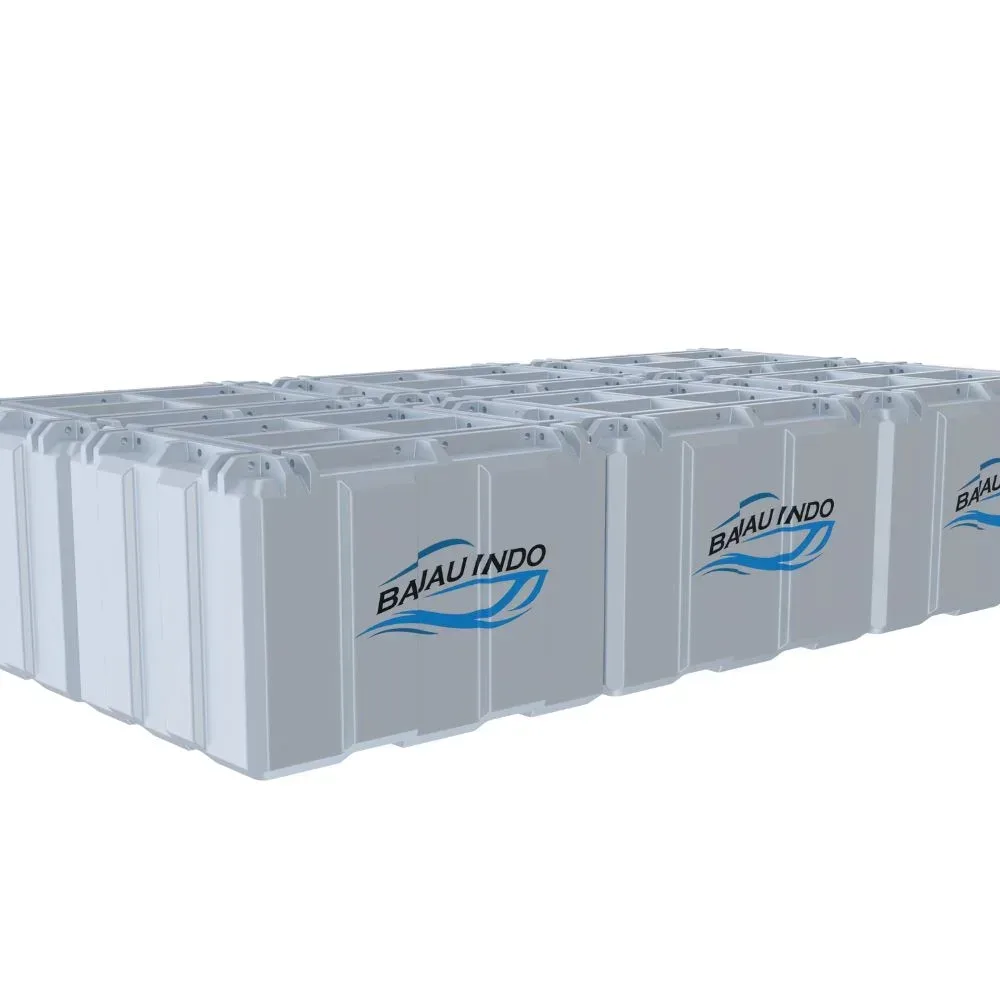
Render of several white Block Pod units with the Bajau Indo logo lined up in a row. Source: Bajau Indo 3D product render
Bear in mind that a two-storey design adds building load and raises the centre of gravity. The number of pontoons, frame layout and visitor capacity of a floating fishing cabin are therefore calculated per project by the engineering team, not estimated from the number of units alone.
Walkway Access and Visitor Safety
The cabin can be reached by boat, but a floating walkway from land is usually more practical for general visitors. The walkway can be built from Nusa Dock units measuring 150 × 100 × 40 cm each, which can be arranged in straight, L, T or U layouts. In general, the following need to be prepared:
- Railings along the walkway and the edge of the roof deck.
- A non-slip surface, as the fishing deck easily becomes wet and slippery from water or bait.
- Lifebuoys and life jackets within easy reach, including children's sizes.
- Lighting if the cabin is used into the evening or at night.
- A mooring system that holds the cabin in position as wind and water level change.
- An information board showing the visitor limit and emergency numbers.
Water Cleanliness and Permits
A floating fishing cabin sits directly on the water, so waste and wastewater management must be planned from the start. Provide closed bins, prohibit throwing bait packaging into the water, and set a procedure for disposing of fish waste. A short rules board at the walkway entrance helps remind anglers of these habits. If there is a toilet, its waste must not be discharged directly into the water and needs to be held for transport to land.
On permits, coordinate your plans with the reservoir manager or the authority responsible for the use of that water body. Rules can differ between regions, so make sure you refer to the latest regulations that apply at the site.
Frequently Asked Questions
How many people can a floating fishing cabin accommodate?
Capacity cannot be set in general terms because it depends on the cabin size, building weight, number of floors and pontoon arrangement. The Bajau Indo team calculates it per project, including the load of furniture, fishing gear and visitors gathering on one side of the deck. Once set, the capacity limit should be shown on the information board.
Can the cabin be moved to another location?
Modular floating structures can basically be assembled and adapted. However, moving a cabin that is already in place requires replanning the mooring system and walkway access. Discuss this possibility at the design stage if the location is not yet permanent.
Has the fishing cabin in the image been built?
No. The featured image of this article is a 3D concept visualisation intended to illustrate the layout, not project documentation. The final design will be adapted to your needs and site conditions.
Want to offer a fishing cabin on the lake or reservoir you manage? Start with a simple sketch using the Bajau Indo Drawing Tool, then discuss the result with our team via WhatsApp 0878-5931-4314.
Written by
Tim Redaksi Bajau Indo
Tim Teknis & Redaksi
Tim teknis dan redaksi Bajau Indo — produsen dermaga apung, kubus apung, dan ponton modular LLDPE dari Sentul, Bogor.
Tags
Share this article: