Indonesian Water Tourism: The Role of Floating Infrastructure for Lakes, Rivers and Coasts
Indonesian water tourism is growing on lakes, rivers and coasts. Learn the role of floating infrastructure, opportunities for local governments and operators, and how to start.
Indonesia has thousands of islands, many lakes, and rivers that run through cities and villages alike. The potential of Indonesian water tourism is enormous, yet many destinations are still held back by basic issues: no proper landing point, no safe access to the water, or no facilities that make visitors want to stay. Without adequate infrastructure, natural beauty alone is often not enough to drive repeat visits.
This article discusses the role of floating infrastructure in developing water destinations, the opportunities for local governments and tourism operators, and a summary of solutions worth considering to strengthen Indonesian water tourism.
Three Water Tourism Landscapes: Lakes, Rivers and Coasts
Indonesia's water tourism landscape is highly diverse. Each type of water body has its own character and its own water tourism infrastructure needs, so a solution that suits one location will not necessarily suit another.
Lakes and Reservoirs
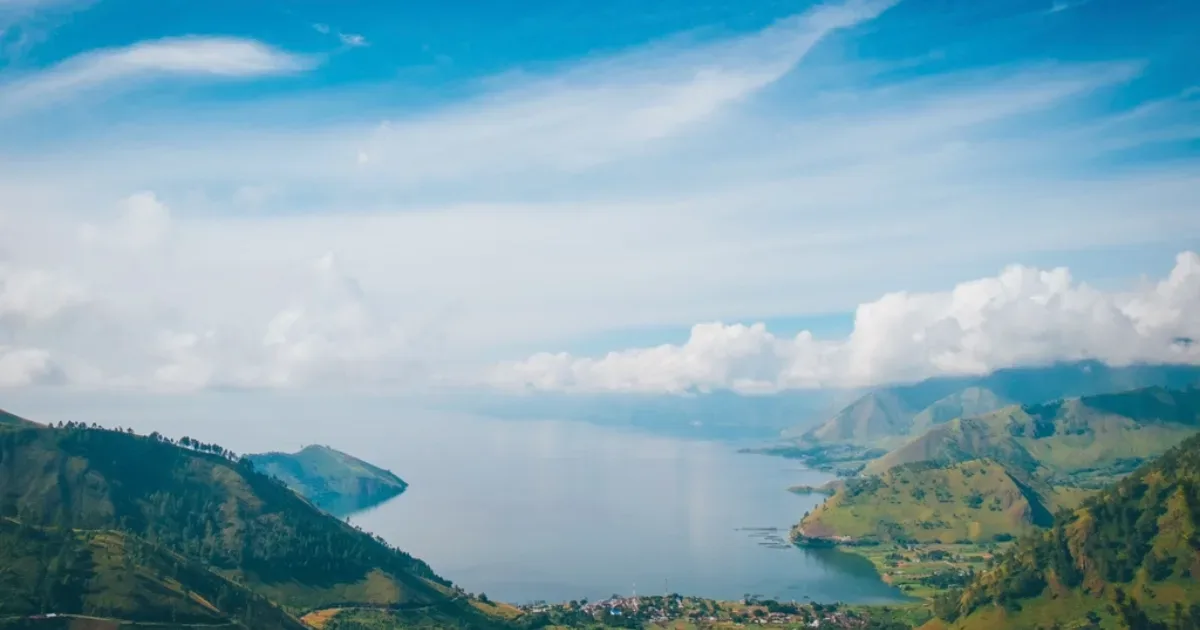
Lakes and reservoirs are generally calm, but their water level can change with the seasons. Commonly developed activities include tourist boats, viewing docks, and floating restaurants.
Rivers
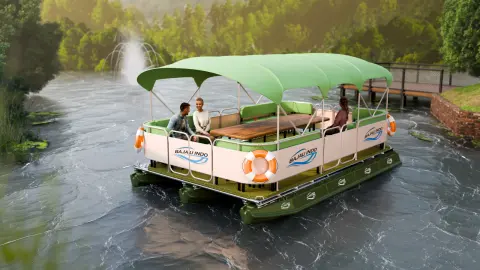
River tourism has grown in many urban areas and tourist villages. Challenges include currents, changes in flow, and waste carried downstream. River cleanliness is an important part of the visitor experience.
Coasts and Islands
On coasts and islands, docks are the main gateway for tourists. Tides and waves influence the design, so structures that follow the water level are often a consideration.
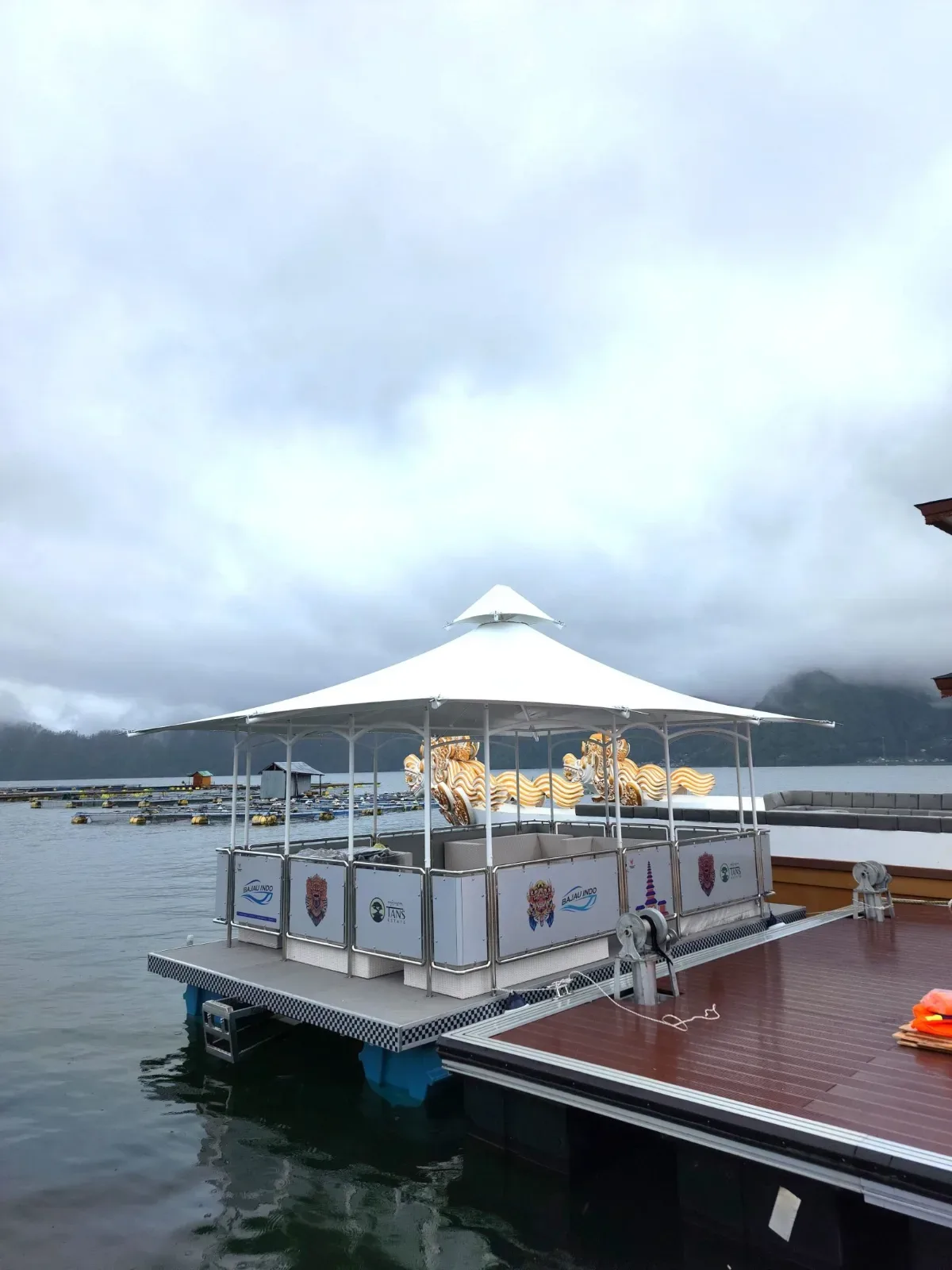
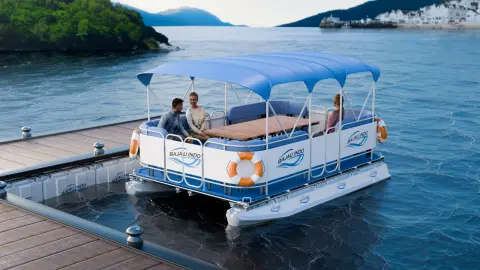
White-canopied tourist boats at a lake dock in Bali. Source: Bajau Indo documentation
Why Floating Structures Are Relevant for Water Destinations
Floating structures move with the water level, so the deck height relative to boats stays fairly consistent. In general, this approach also does not always require large permanent construction in the water, although it still needs a well-designed mooring system.
Some characteristics that operators generally consider:
Modular: the size can be expanded as visitor numbers grow.
Flexible: the layout can be adapted, for example straight, L, T, or U-shaped.
Relocatable: modules can in principle be dismantled and reassembled at another location.
Lighter intervention: can be considered for sensitive areas such as mangroves.
A discussion of how floating docks are applied for water tourism and seaplanes is available in the article Bajau Indo floating docks for water tourism and maritime infrastructure.
Opportunities for Local Governments and Tourism Operators
For local governments, tourist docks and other floating facilities can act as a catalyst for area development: opening access to islands, revitalizing riverbanks, or turning lakes into public spaces. In procurement, domestic products are also a consideration; according to the official website, Bajau Indo products are TKDN (Indonesia's Domestic Component Level certification) certified.
For private tourism operators, floating structures open up business opportunities such as tourist boats, floating restaurants, floating spas, or accommodation on the water. Some of these have already been realized, for example a floating restaurant on the Manggar River and a floating spa in Balikpapan. Other ideas such as floating villas and floating glamping can be seen as concept illustrations on the Floating Unit Inspiration page.
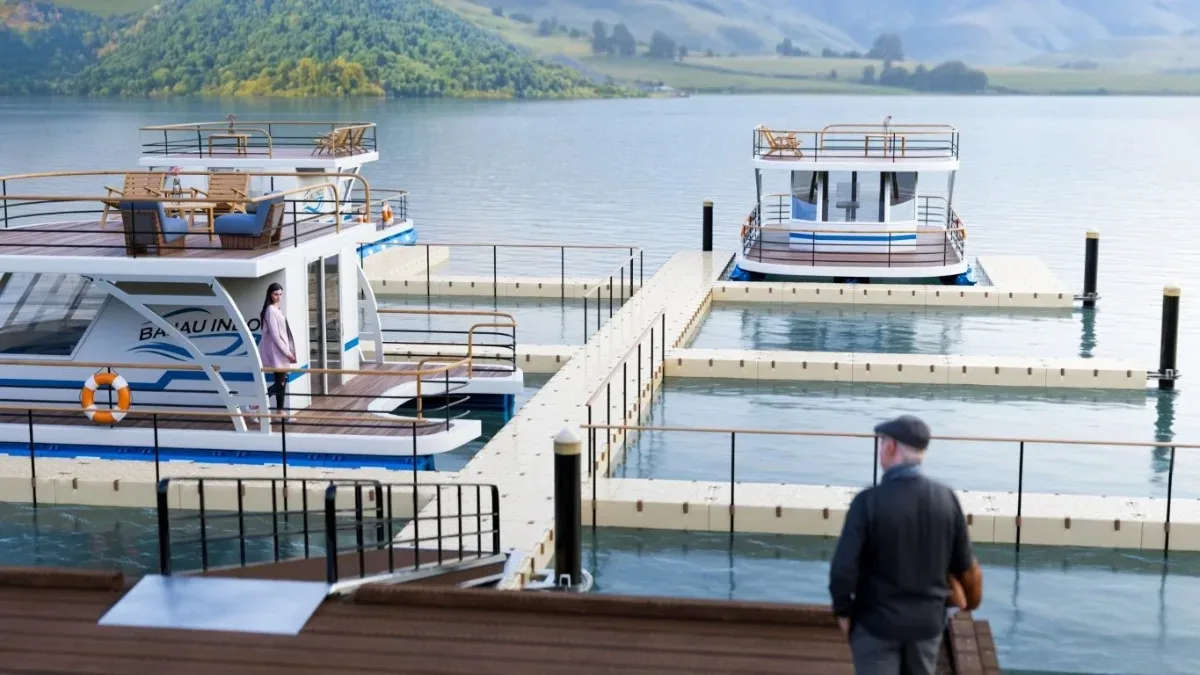
A floating dock walkway at a lake marina with tourist boats. Source: Bajau Indo documentation
Summary of Bajau Indo Solutions for Water Tourism
The following summary lists Bajau Indo products according to the common needs of water destinations.
Tourist docks, marinas and resorts — Relevant products: Nusa Dock, Block Pod
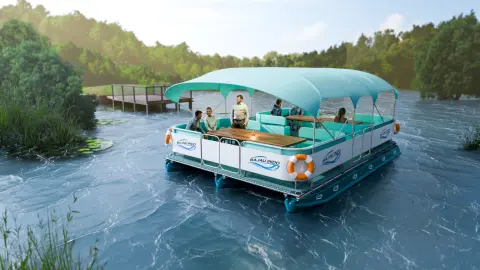
Tourist boats — Relevant products: Kelimutu, Sentani, Toba catamarans
Mobile floating units such as boats and restaurants — Relevant products: Nose Pod and Body Pod
Water cleanliness — Relevant product: Belida Trash Barrier
Dredging and dewatering — Relevant product: Modular Dredger / Dewatering Boat
In the field, these solutions have already been applied in various projects that you can explore on the Bajau Indo projects page, including a floating dock for vessels and seaplanes in Kepulauan Selayar Regency, a Nusa Dock at TWA Mangrove PIK, an electric catamaran at Kebun Raya Bogor, and floating trash collectors in Palembang and Makassar.
First Steps in Developing a Water Destination
Map the potential and character of the waters to be developed.
Define the main activities and the estimated number of visitors.
Survey the site: depth, water level changes, currents, and land access.
Prepare an initial concept with tools such as the Bajau Indo Drawing Tool.
Discuss technical calculations and permits with the supplier and the relevant authorities.
A phased approach like this helps a destination grow according to its needs. A simple dock can be the starting point, later complemented by tourist boats or other facilities as visitor numbers increase. With careful planning, Indonesian water tourism can grow without sacrificing the health of its waters.
Frequently Asked Questions
What floating infrastructure does a water tourism destination usually need?
The basic need is usually a dock for boat berthing and visitor access. After that, the destination can add tourist boats, a food and beverage platform, or water-cleaning facilities according to its development plan. Priorities should be set based on the main activities and visitor numbers.
Are floating structures suitable for coastal waters with tides?
In general, floating structures rise and fall with the water level, making them relevant for tidal waters. The design still needs to account for waves, currents, and an appropriate mooring system. A site survey and technical analysis determine the final configuration.
How can a local government start a water tourism infrastructure project?
The first step is to map the potential of the waters, decide which tourism activities to develop, and collect site data. After that, an initial concept can be prepared together with the supplier to get a picture of the units and layout required. Permitting and coordination with the relevant authorities should be discussed from the start.
Whatever type of waters your region has, the first step is a conversation. The Bajau Indo team is ready to listen to your destination plans and help turn them into a realistic floating infrastructure concept. Contact us via WhatsApp 0878-5931-4314 or email marketing@bajauindo.com.
Written by
Tim Redaksi Bajau Indo
Tim Teknis & Redaksi
Tim teknis dan redaksi Bajau Indo — produsen dermaga apung, kubus apung, dan ponton modular LLDPE dari Sentul, Bogor.
Tags
Share this article: