Floating Structure Project Workflow: From Consultation to Handover
An overview of the floating structure project workflow with a local manufacturer: consultation, site data, initial estimate, engineering verification, production and handover.
For many project owners, the first question is the hardest one to answer: where do we start? A government agency planning a dock, a resort operator planning a floating restaurant or a contractor awarded a reservoir works package often already has a picture of the end result, but has not yet seen the sequence of steps in between. Understanding the floating structure project workflow from the outset helps you prepare the right data, set an internal schedule and avoid revisions that could have been prevented.
Below is a general overview of the workflow with a local manufacturer such as Bajau Indo. Note that these stages can differ for each project, depending on its scale, location and procurement mechanism.
An Overview of the Floating Structure Project Workflow
Broadly speaking, the workflow for a modular floating structure project passes through the following stages:
- needs consultation;
- site data collection;
- concept and initial estimate;
- engineering verification and working drawings;
- quotation;
- production of pontoons and components;
- delivery;
- on-site installation;
- handover and maintenance support.
Some stages can run in parallel, and on small projects several steps can be combined. What matters is that each stage produces decisions or data that form the basis for the next one.
In the floating structure project workflow, the project owner also plays an active role. That role includes appointing a single technical person in charge, providing data and site access, approving working drawings, and handling the permits that fall under the owner's authority. Clear coordination from the outset helps every stage proceed without being held up by delayed decisions.
Floating Project Consultation and Site Data
Needs consultation
A floating project consultation starts with function: will the structure be a boat dock, a work platform, a restaurant or a trash-collection unit? That function raises questions about the number of users, the type of boats that will berth, the equipment to be installed and your target operating date.
Site data
A floating structure is strongly affected by field conditions. The data generally needed includes:
- water depth and water-level changes, including tides or seasonal fluctuation;
- currents, waves and prevailing wind direction;
- bed conditions for mooring design;
- land access for delivery and an assembly area;
- photos and coordinates of the site.
A more complete list is covered in the article on floating dock site surveys.
Concept, Initial Estimate and Engineering Design
Once the needs and site data are clear enough, an initial concept is prepared. For platforms based on Nose Pods and Body Pods, you can try the platform pontoon configurator, which shows dimensions, an estimated unit count, an estimated structure weight and a buoyancy indicator. The result can be sent directly with the "Kirim Konfigurasi via WhatsApp" (Send Configuration via WhatsApp) button. For docks, the Nusa Dock Drawing Tool offers drag-and-drop, a custom grid, unit estimates and image export.
Both tools provide a starting point for discussion, not a final design. The configurator itself carries the note "Estimasi awal — akan diverifikasi tim engineering" (initial estimate, to be verified by the engineering team). At the design and engineering stage, the team checks the design load, buoyancy, stability, mooring system, and frame and decking materials, then sets them out in working drawings.
Quotation
The quotation is prepared on the basis of the verified design. Prices depend on specification, volume and delivery location, so complete data at the early stage makes the quotation more accurate and easier to compare.
Pontoon Production and Delivery
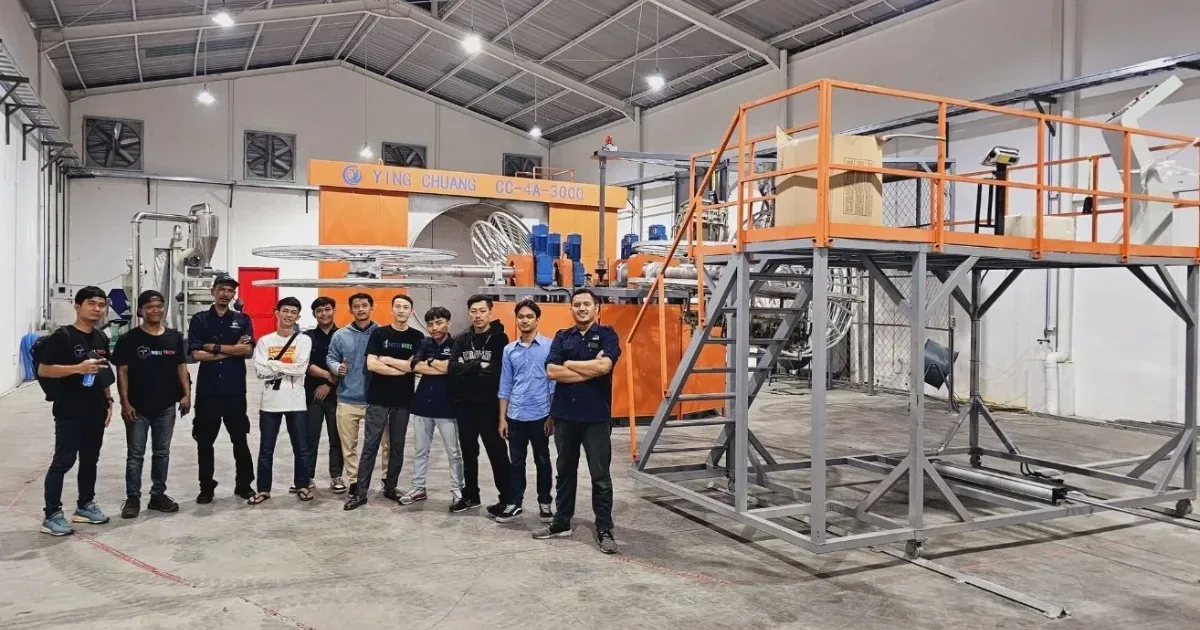
Once the design and quotation are agreed, the floating structure project workflow moves into pontoon production at the Bajau Indo facility at Pergudangan Indo Sentul, Bogor. Pontoons with an LLDPE shell and a CFC-free polyurethane core are prepared together with supporting components, such as the frame and decking, according to the working drawings.
Because the system is modular, pontoons and frames can be shipped as components and assembled near the site. The delivery method is matched to the distance, road access and any sea crossing needed if the site is on another island. At this stage, the project owner usually prepares an assembly area and access to the water.
Installation, Handover and Maintenance Support
On site, the pontoons are connected according to the layout, the frame is installed on top, and the decking, accessories and mooring system are then completed. The photo below shows the frame assembly stage at a floating dock project in Serpong, Banten.
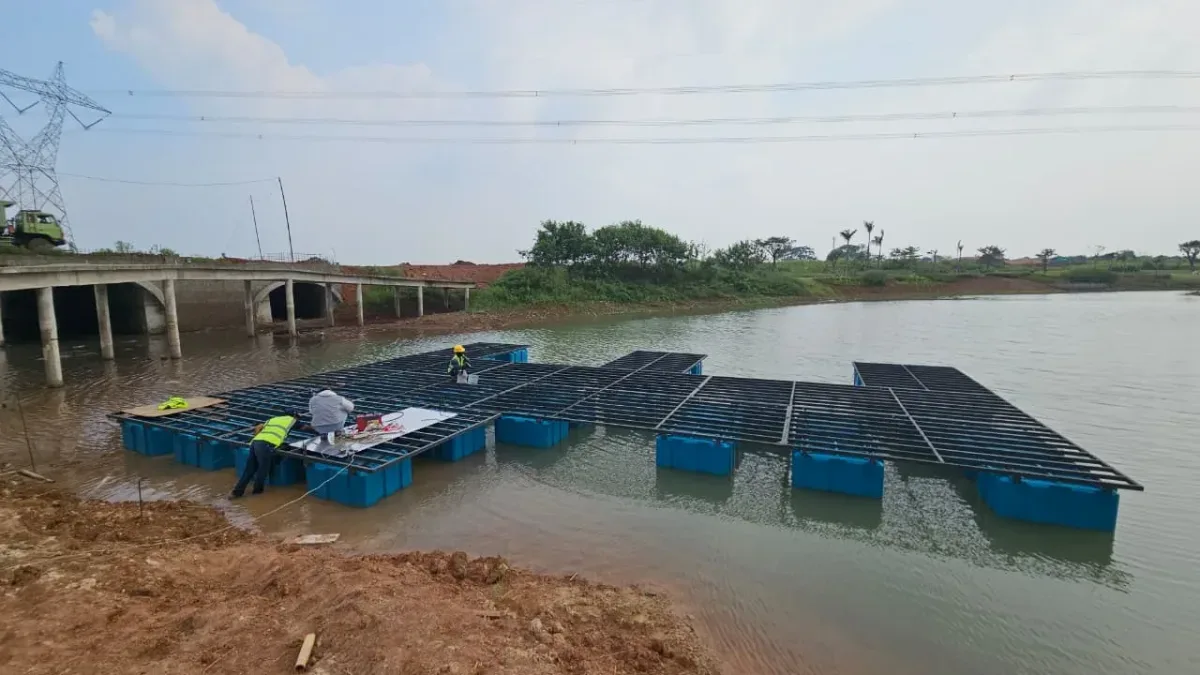
Workers assembling the frame on a string of blue pontoons during installation at a floating dock project in Serpong, Banten. Source: Bajau Indo documentation
After installation, the structure is checked together with the project owner, from levelness, connections and mooring to the function of accessories. Handover is generally accompanied by an explanation of how to use the structure and carry out routine checks for the operating staff. Maintenance support afterwards helps keep the condition of the structure monitored from the first day of operation. As a reference for periodic inspections, you can use the floating dock maintenance checklist.
Examples of completed and ongoing projects can be seen on the Bajau Indo projects page.
Frequently Asked Questions
Does every project have to go through all these stages?
Not always. Small projects, such as a simple platform in a pond, may combine several stages. Government projects or projects in open waters usually require more complete data and documentation.
Can the configurator result be used directly as an order?
The configurator result is an initial estimate. The figures need to be verified by the engineering team, taking site conditions and load details into account, before they are used as the basis for a quotation.
How long does the floating structure project workflow take from consultation to handover?
The duration differs for each project, depending on scale, completeness of data, production schedule, delivery distance and site conditions. A realistic schedule is best discussed directly with the team once the needs and site data are available.
Ready to map out the first step of your project? Start by trying the configurator or Drawing Tool, then send the result together with photos of the site to WhatsApp 0878-5931-4314. The Bajau Indo team will help you decide on the next stage.
Written by
Tim Redaksi Bajau Indo
Tim Teknis & Redaksi
Tim teknis dan redaksi Bajau Indo — produsen dermaga apung, kubus apung, dan ponton modular LLDPE dari Sentul, Bogor.
Tags
Share this article: