Floating Dock Mooring Systems: Anchors, Guide Piles and Chains
Understand floating dock mooring systems: how anchors, guide piles, chains and ropes work, and how depth, seabed type and currents influence the choice.
A floating dock is designed to rise and fall with the water level. However, it must not drift, rotate or shift too far when hit by wind and currents. This balance between "allowed to move" and "must stay in place" is what a floating dock mooring system manages.
Unfortunately, mooring is often only considered after the dock size has been decided. Yet seabed conditions and water depth can change the design significantly. This article explains the general principles of the three main components of pontoon mooring and the factors that influence their selection.
The Function of a Floating Dock Mooring System
In general, a floating dock mooring system is responsible for:
keeping the dock in its planned position;
resisting horizontal forces from wind, currents, waves and berthing boats;
allowing the dock to rise and fall as the water level changes;
reducing shock loads on the connections between pontoons.
The reason floating docks follow the water level has been covered in our article on why floating docks are key to port flexibility. Here, the focus is on how to hold the dock in place.
Main Components: Anchors, Guide Piles and Chains
Floating Dock Anchors
An anchor is a holding point on the seabed. Anchors come in various forms, for example concrete ballast blocks that rely on their own weight, or anchors embedded into the seabed material. The anchor is connected to the dock by a chain or rope.
Guide Piles
A guide pile (tiang pemandu) is installed vertically in the seabed. The dock is then connected by a ring or guide frame that can slide up and down along the pile. This method restricts horizontal movement quite tightly, so it is often considered in waters where the seabed allows pile driving.
Chains and Ropes
Chains and ropes connect the dock to anchors or to structures on land. In general, the weight of a chain helps dampen jolts, while synthetic rope is lighter and more elastic. Their length and installation angle must account for changes in the water level so that the dock is not held down when the water rises.
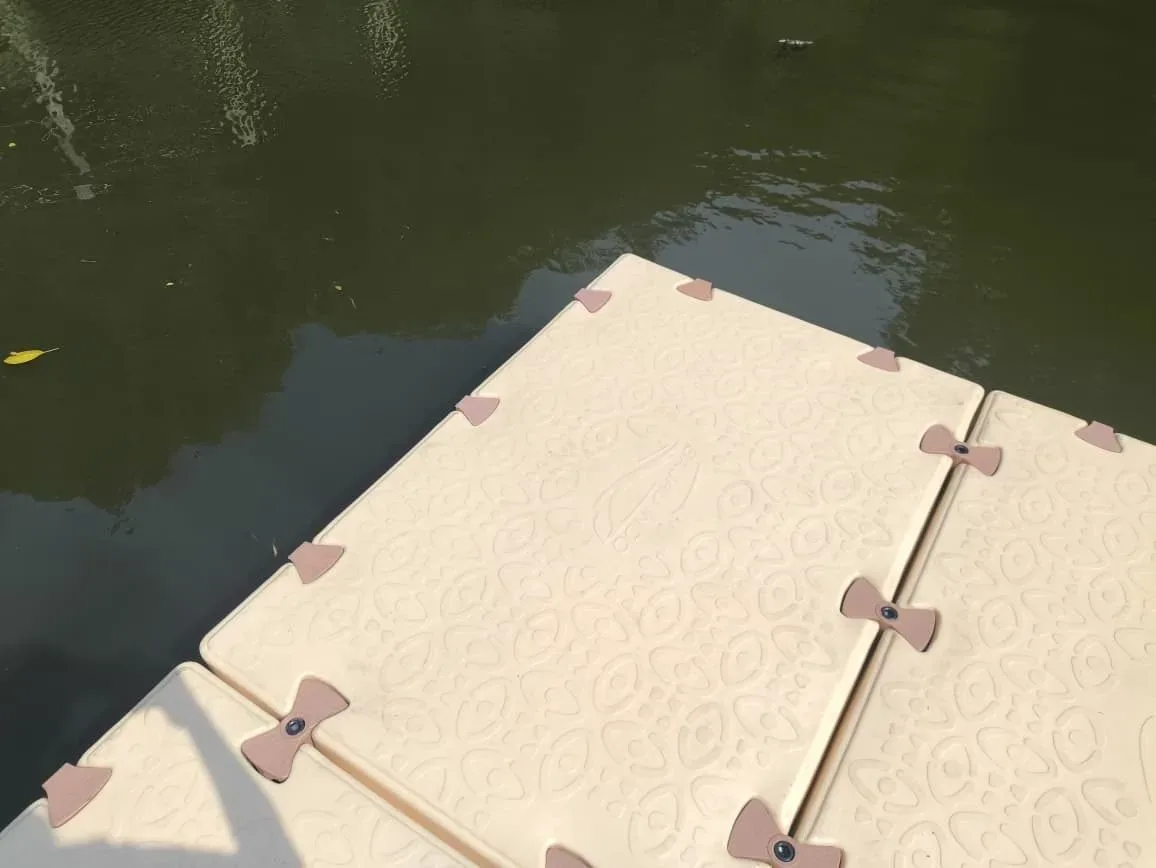
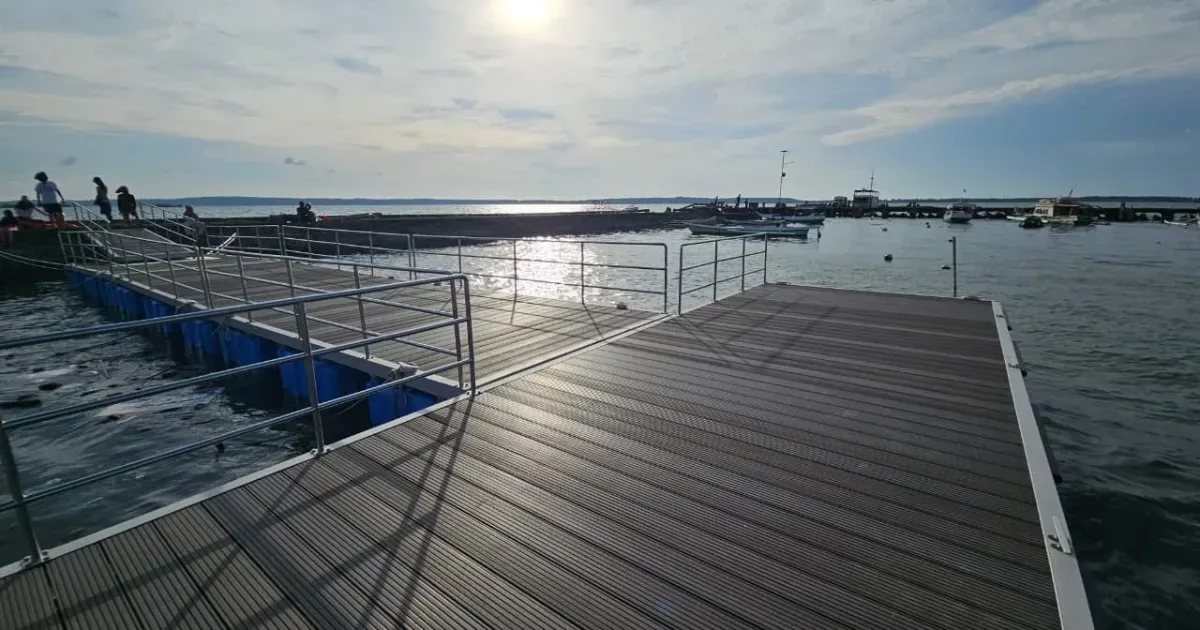
Nusa Dock at TWA Mangrove PIK. Source: Bajau Indo documentation
Every location requires a different combination. A modular dock such as Nusa Dock in the calm waters of a mangrove area, for example, faces different conditions from a dock in open sea.
General Comparison of Pontoon Mooring Methods
Anchor + chain/rope — Generally suitable for: Deeper waters or seabeds that are difficult to pile; Points to note: Greater range of dock movement; chain length must match the water level range
Guide piles — Generally suitable for: Shallow to medium-depth waters with a pileable seabed; Points to note: Requires pile-driving work; piles must be higher than the highest water level
Mooring to shore or a fixed structure — Generally suitable for: Small docks at the edge of ponds, lakes or canals; Points to note: Depends on the strength of the tie-off points on land
In practice, a single dock can combine more than one pontoon mooring method.
Factors That Influence the Choice of Mooring System
No single floating dock mooring system applies to every location. The following four factors are usually the main considerations.
Depth and Water Level Range
The deeper the water, the longer the piles required, so anchors with chains are often an alternative. The tidal range or reservoir water level fluctuation determines chain length and pile height.
Seabed Type
Muddy, sandy, rocky or coral seabeds provide different holding power. For this reason, seabed data should be obtained from a survey before the design is finalized.
Currents, Waves and Wind
Locations with strong currents or high waves generally need more mooring points and stronger components. The dock area and the profile of berthing boats also affect the magnitude of wind forces.
Dock Function
A boat berthing dock, for example one built from Block Pod, receives different loads from a pedestrian dock in a tourist area. Boat berthing loads need to be included in the calculations from the start.
Survey Data for Designing a Floating Dock Mooring System
Before choosing a method, collect the following field data:
depth at several points of the planned dock;
the highest and lowest water level range;
the type of seabed material;
current and wave conditions, and the prevailing wind direction;
the type and size of boats that will berth.
This data helps the technical team determine the number of mooring points, the type of anchor and the chain length. Without survey data, a floating dock mooring system design can only be a preliminary estimate.
Frequently Asked Questions
What is the difference between an anchor and a guide pile on a floating dock?
An anchor is a holding point on the seabed connected to the dock by a chain or rope. A guide pile is installed vertically, and the dock slides up and down along the pile. In general, guide piles restrict horizontal movement more tightly, while anchors allow a greater range of movement.
Does a floating dock at sea need a special mooring system?
In general, a dock at sea needs to account for tides, waves and currents, so its mooring design is calculated specifically for each location. The choice of method depends on the depth and type of seabed.
What data is needed to design a pontoon mooring system?
The basic data includes depth, water level range, seabed type, current and wave conditions, and the type of boats that will berth. Ideally, this data is obtained from a site survey.
Have depth and seabed data for your site? Start by drawing an initial layout in the Nusa Dock Drawing Tool, then bring the result to a discussion with the Bajau Indo team via WhatsApp 0878-5931-4314 or marketing@bajauindo.com to talk through your mooring system requirements.
Written by
Tim Redaksi Bajau Indo
Tim Teknis & Redaksi
Tim teknis dan redaksi Bajau Indo — produsen dermaga apung, kubus apung, dan ponton modular LLDPE dari Sentul, Bogor.
Tags
Share this article: