Floating Pontoons: Definition, Types, and Uses for Various Water Projects
Get to know floating pontoons: definition, Block Pod, Nose Pod, Body Pod, and Nusa Dock types, and their uses for docks, tourist boats, and work platforms.
Many water projects start with the same question: how do you build a stable work deck, dock, or boat on the water without complicated pile foundations? The answer often lies in floating pontoons, the buoyant elements that support the structure above them. Pontoons can be used both for facilities that stay in one place and for units that move.
For project owners, contractors, and tourism operators, understanding the types of pontoons helps in choosing a system that suits the function and site conditions. This article covers the definition, the types of modular pontoons, and how they are used in the field.
What Is a Floating Pontoon?
In general, a floating pontoon is a sealed container that generates lift when placed in water. The principle follows Archimedes' law: a submerged object experiences an upward force equal to the weight of the water it displaces. As long as this force is greater than the total load, the structure stays afloat.
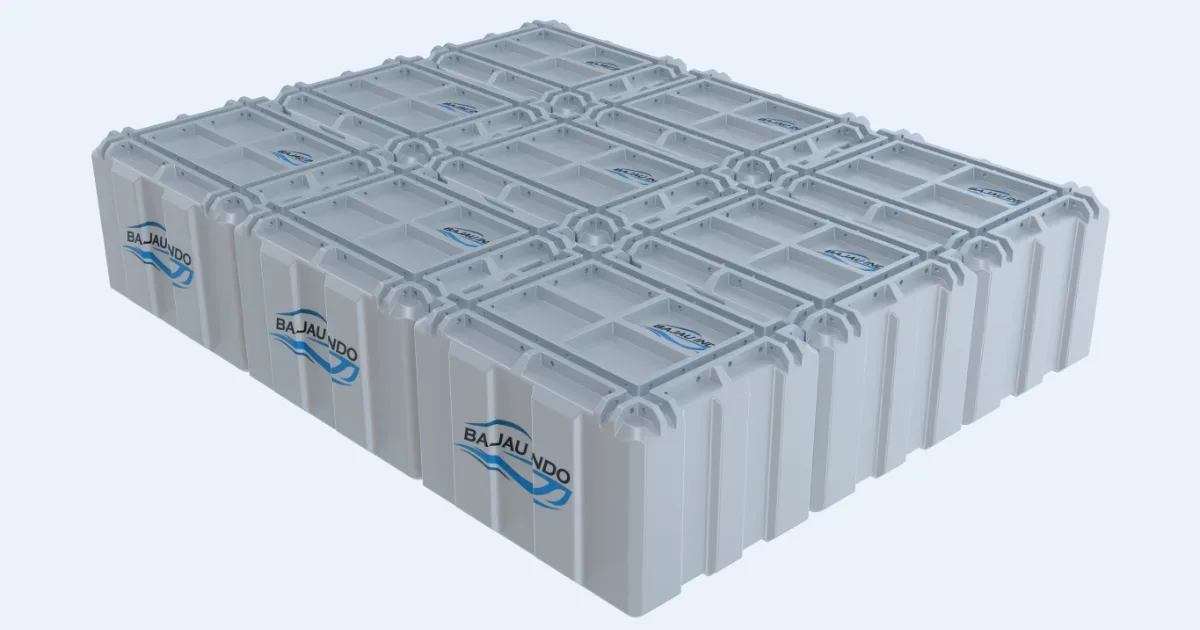
Today's pontoons are generally modular. Standard-sized units are connected into the required shape, then fitted with a frame and deck on top. This approach makes shipping, installation, and future expansion easier. For a basic overview of cube-shaped units, see also the article what is a floating cube.
Bajau Indo pontoons use a UV-resistant LLDPE outer shell and a CFC-free polyurethane core. The PU core helps maintain buoyancy if the outer shell is scratched or damaged, while LLDPE is known for being flexible and crack-resistant.
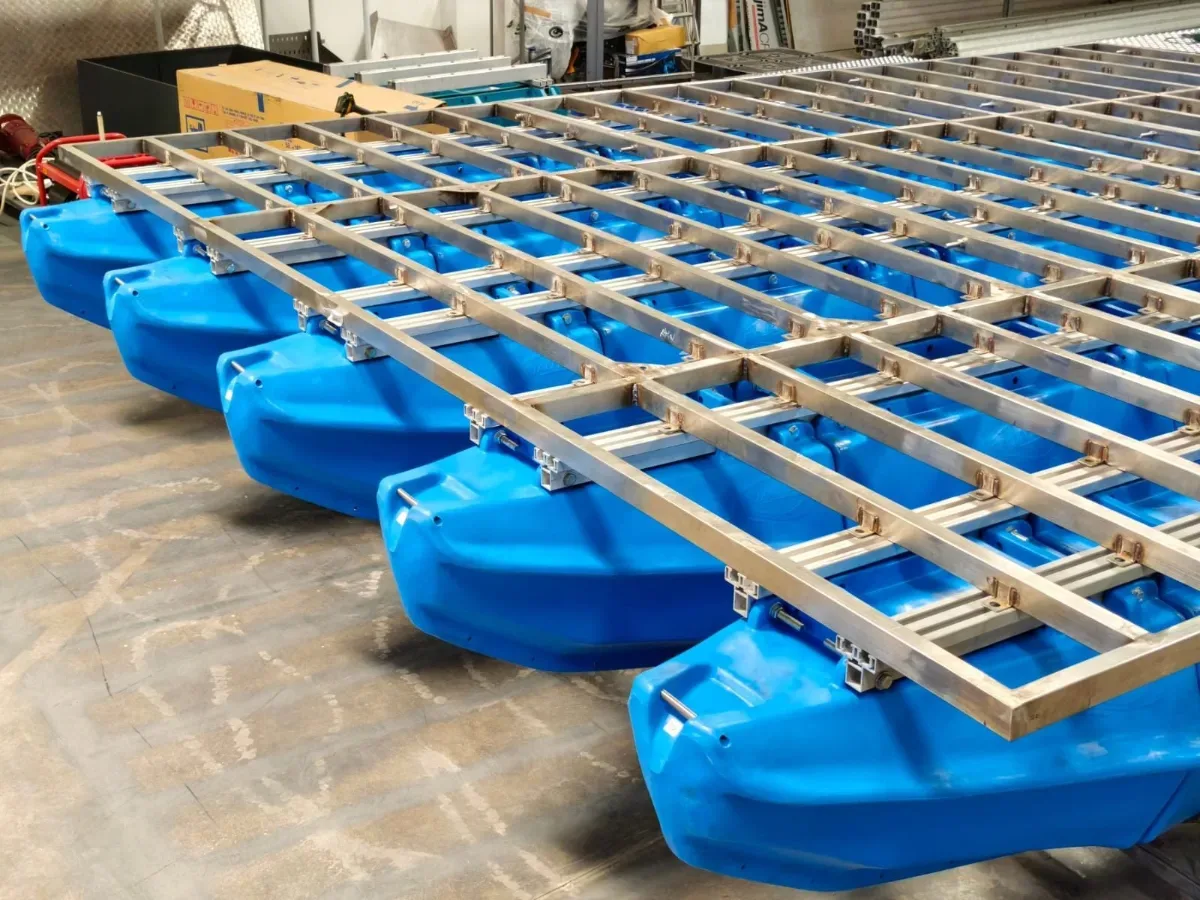
Assembly of the aluminum frame on a set of modular pontoons. Source: Bajau Indo documentation
Types of Modular Pontoons and Their Characteristics
Not all pontoons are designed for the same role. The table below summarizes the pontoon types based on the official per-unit specifications published by Bajau Indo.
Nose Pod — Dimensions per unit: 100 × 82 × 75 cm; Weight: 23 kg; Buoyancy per unit: 130 kg; Main role: Front element of a moving unit assembly
Body Pod — Dimensions per unit: 125 × 82 × 75 cm; Weight: 33 kg; Buoyancy per unit: 230 kg; Main role: Body of the assembly, connected behind the Nose Pod
Block Pod — Dimensions per unit: 123 × 97 × 65 cm; Weight: 40 kg; Buoyancy per unit: 375 kg; Main role: Larger deck area for semi-permanent docks
Nusa Dock — Dimensions per unit: 150 × 100 × 40 cm; Weight: 32 kg; Buoyancy per unit: 275 kg; Main role: Marinas, yacht clubs, and floating resorts
Block pontoons for flat surfaces
Block-shaped pontoons, such as the Block Pod and Nusa Dock, are arranged side by side to form a flat surface. This type is suitable for mooring areas for large vessels, semi-permanent docks, fish cages, and marine tourism facilities. Nusa Dock can be arranged in straight, L, T, or U layouts.
Elongated pontoons: Nose Pod and Body Pod
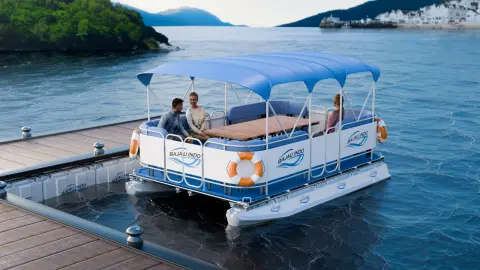
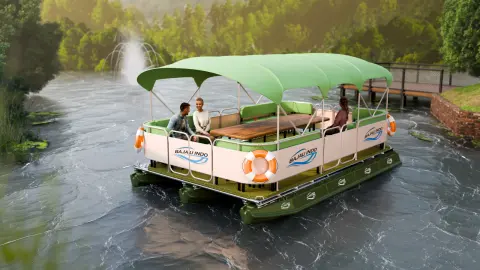
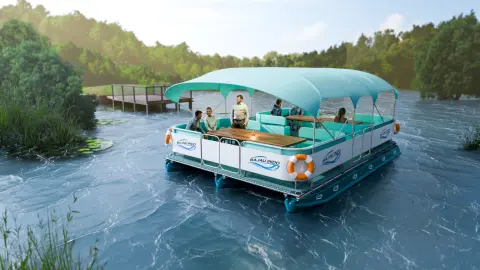
The Nose Pod has a tapered front, and is connected to several Body Pods behind it. This assembly forms an elongated hull commonly used for tourist boats and floating restaurants. Full specifications are available on the Nose Pod page.
Large floating platforms
Several pontoon assemblies can be joined with an aluminum or galvanized frame to form a wide floating platform. Platforms like this serve as the base for work areas, pump mounts, and even lightweight buildings on the water.
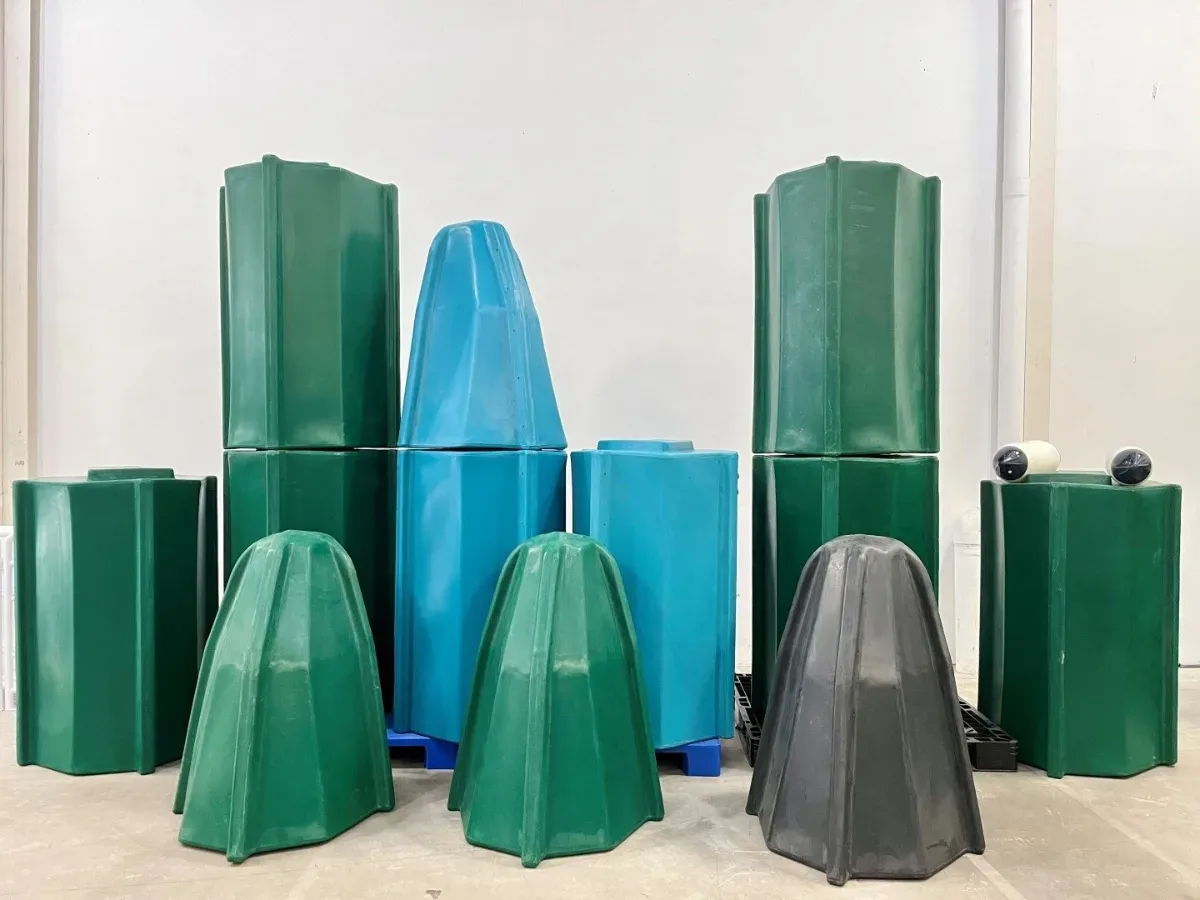
Several pontoon units in the warehouse before being assembled to project requirements. Source: Bajau Indo documentation
Uses of Floating Pontoons in Various Projects
Because they are modular, floating pontoons can be used for a fairly wide range of needs, including:
Docks and boat moorings at sea, on lakes, and on rivers.
Tourist boats and catamarans with hulls made from pontoon assemblies.
Floating restaurants, spas, or tourism facilities.
Work platforms, for example for dredging or pump mounts.
Trash barriers and collectors on rivers and lakes.
Floating net cages for aquaculture.
You can see examples of these applications on the Bajau Indo project portfolio page, from a floating dock for boats and amphibious aircraft in Kepulauan Selayar Regency to a floating dredger in Bogor.
Things to Consider Before Choosing
Choosing a pontoon type should start from the function, not just the unit size. Questions to answer include whether the structure is stationary or moving, how much load it will support, and what the water conditions are like.
In general, site data such as depth, currents, waves, and water level changes also affect the design of the mooring system. The buoyancy in the specifications is a per-unit value, so the overall capacity of the structure must still be calculated per project by the engineering team.
For an initial overview, you can try the Platform Pontoon configurator. This tool shows the estimated number of units and buoyancy based on the platform size and target load you enter.
Frequently Asked Questions
What is the difference between a floating pontoon and a floating cube?
A floating cube is one form of floating pontoon, arranged side by side to form a flat deck. The term floating pontoon is broader because it also covers elongated pontoons such as the Nose Pod and Body Pod, which are assembled into a boat hull.
Can floating pontoons be used at sea?
Floating pontoons can be used at sea, on lakes, and on rivers. The LLDPE shell of Bajau Indo pontoons is UV-resistant, but the frame design, mooring system, and layout still need to be adapted to the water conditions at the site.
How many pontoons are needed for one platform?
The number depends on the platform size, the weight of the frame and decking, and the target load to be supported. The Platform Pontoon configurator on the Bajau Indo website provides a preliminary estimate, which is then verified by the engineering team.
Planning a dock, boat, or work platform on the water? Tell the Bajau Indo team about your project needs via WhatsApp 0878-5931-4314 or email marketing@bajauindo.com. Prices depend on specifications, volume, and delivery location, so complete site information will help us prepare a suitable recommendation.
Written by
Tim Redaksi Bajau Indo
Tim Teknis & Redaksi
Tim teknis dan redaksi Bajau Indo — produsen dermaga apung, kubus apung, dan ponton modular LLDPE dari Sentul, Bogor.
Share this article: