Floating Unit Roofs: Choosing a Canopy, Membrane or Light Solid Roof
A guide to choosing a floating unit roof for tourist boats, lounges and restaurants: roof types, how weight affects buoyancy, wind load, drainage and maintenance.
On land, a roof is supported by walls, columns and foundations that stay still. On water, a roof is supported by a frame and pontoons that move with ripples, wind and the people walking on top. That is why a floating unit roof cannot be chosen on looks alone. The roof affects total weight, centre of gravity, wind load and even user comfort when it rains.
This article covers roof options for tourist boats, lounges, restaurants and other floating units, together with the general principles to consider before the design is finalised.
Why a Floating Unit Roof Must Be Planned Early
The roof is often decided last, after the platform size and number of pontoons have been fixed. This order is risky. The roof is the highest element with the largest surface, so its effect on how the unit behaves on the water is considerable.
In general, four things are affected by the choice of roof:
- Total weight: the roof frame, covering and accessories add load that the pontoons must carry.
- Centre of gravity: mass placed high up raises the unit's centre of gravity.
- Wind area: a large roof acts like a sail when wind blows from the side.
- Rainwater flow: water from the roof must be discharged where it does not wet walkways or pool on the deck.
Common Roof Types
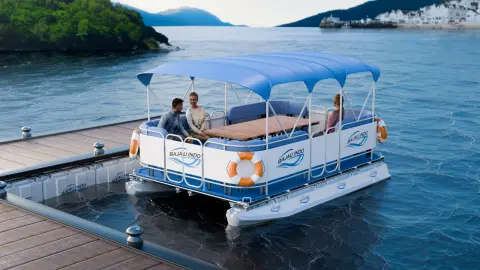
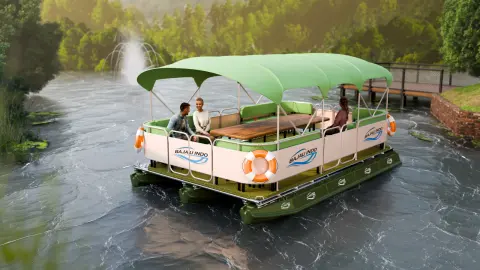
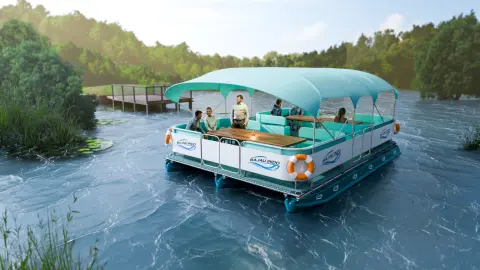
No single floating unit roof type suits every need. The choice depends on the unit's function, daily hours of use and wind conditions at the site. For example, every Bajau Indo tourist catamaran type already comes with a roof as part of its specification.
Membrane or tent roof
A membrane roof uses technical fabric sheets tensioned on a frame. It is relatively light and flexible in shape, so it is often used for boat canopies and dock shades. Its drawback is that the membrane must be tensioned correctly so it does not flap or collect standing water, and its surface needs regular inspection.
Light solid roof
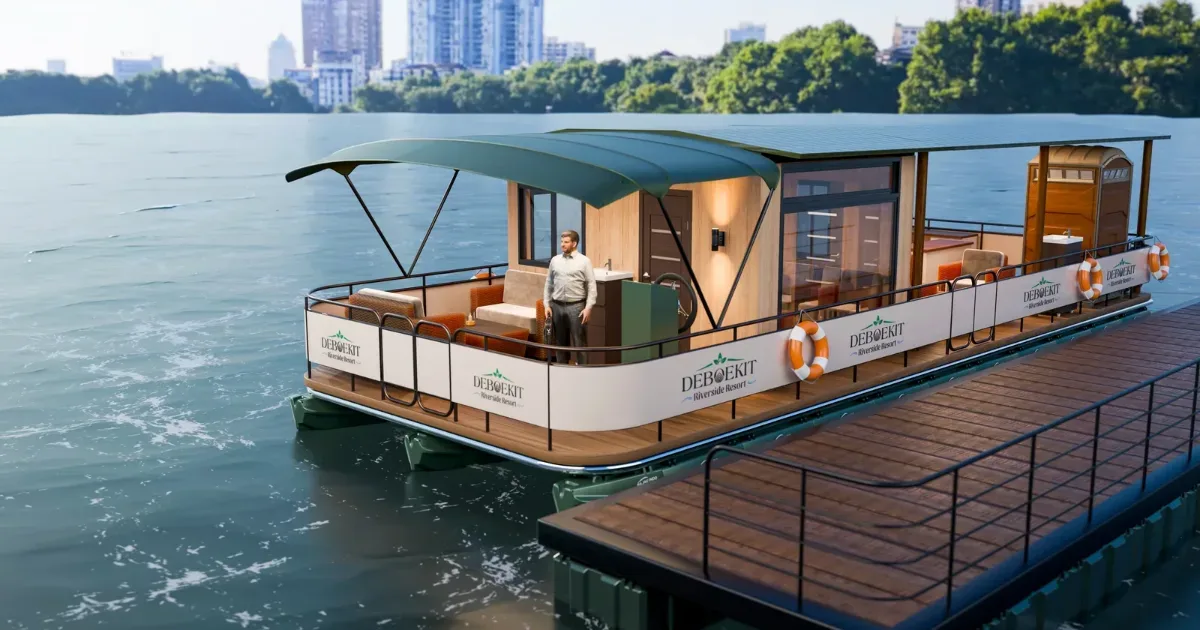
A roof made of light sheets or panels on a metal frame feels more permanent and suits restaurants or lounges that operate every day. As a consequence, its weight and frame requirements are usually greater than a membrane's, so they need to be accounted for from the early stage.
Solar panel roof
Solar panels can double as shade and a power source, for example for lighting or electric boats. However, panels add weight, need a sturdy mounting frame, and require cable routes protected from water. Their feasibility needs to be assessed per project.
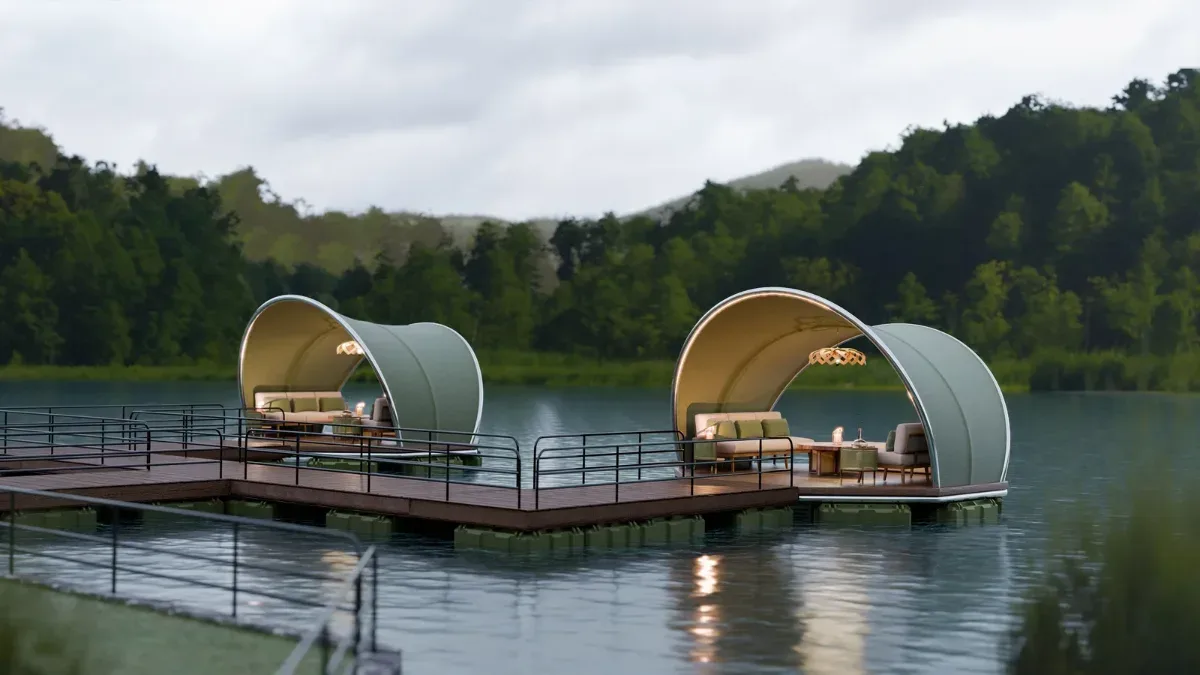
Concept visualisation of two curved-roof floating lounges connected by a railed walkway. Source: Bajau Indo 3D concept visualisation — not a built project
Roof shape also shapes the character of the space. A curved roof like the one in the concept visualisation above helps rainwater run off to the edges, while a flat roof needs a carefully planned slope and gutters. Other shape variations can be seen in the floating unit inspiration gallery, which contains concept visualisations, not built projects.
Roof Weight, Buoyancy and Centre of Gravity
Every kilogram of a floating unit roof goes into the buoyancy calculation, just like the frame, decking, furniture and passengers. If a roof is added without recalculating, the buoyancy reserve shrinks and the unit can sit lower in the water. How to set up this basic calculation is explained in the article on how to calculate pontoons for a floating platform.
The centre of gravity matters too. In general, the higher the mass, the more easily the unit heels when passengers gather on one side or when the wind blows hard. For that reason, roof materials should be as light as their function allows, and heavy items such as water tanks or equipment should be placed low and evenly.
Wind Load and Rain Drainage
Wind load on a floating unit roof does not only stress the frame; it also affects the mooring system and boat handling. A unit with a large roof and closed sides is pushed harder than one with an open roof. General principles that can be applied include roof joints locked to the main frame, side panels that can be opened, and an SOP for rolling up curtains or membranes when the weather worsens.
For drainage, decide where the water will fall at the design stage. On a floating restaurant, for example, rainwater should not fall on the entrance path or over the dining tables. Other layout considerations are covered in the article on planning a floating restaurant.
Routine Roof Maintenance
A floating unit roof in a waterside environment is exposed to heat, rain and high humidity. Regular inspection helps stop small problems from becoming major repairs:
- Tighten roof bolts and fasteners after periods of strong wind.
- Check membrane tension, seams and small tears.
- Clear gutters and drains of leaves and debris.
- Look for signs of corrosion at metal frame joints.
Frequently Asked Questions
Does every floating unit need a roof?
Not always. A dock for short berthing often needs no roof, while tourist boats, restaurants and lounges generally need shade for user comfort. The decision depends on the function, duration of use and local weather conditions.
Which is lighter, a membrane roof or a solid roof?
In general, a membrane roof is lighter because it only needs a tensioning frame. A solid roof gives more permanent protection but usually adds weight. The exact figures depend on the material and size, so they need to be calculated per design.
Can a roof be added after the floating unit is built?
Yes, but buoyancy, centre of gravity and frame strength need to be checked again. It is safer to share the roof plan from the start so the number of pontoons and the frame mountings are prepared accordingly.
Want to see how accessories affect your platform estimate? Try the Platform Pontoon Configurator, which includes a canopy roof option, then send the result to the Bajau Indo team for verification, or discuss your roof requirements via marketing@bajauindo.com.
Written by
Tim Redaksi Bajau Indo
Tim Teknis & Redaksi
Tim teknis dan redaksi Bajau Indo — produsen dermaga apung, kubus apung, dan ponton modular LLDPE dari Sentul, Bogor.
Tags
Share this article: