Floating Platform Decking: Choosing WPC, Aluminium Checker Plate, or No Decking
Compare WPC, aluminium checker plate, and frame-only floating platform decking: function, weight per m², and how to choose for your project.
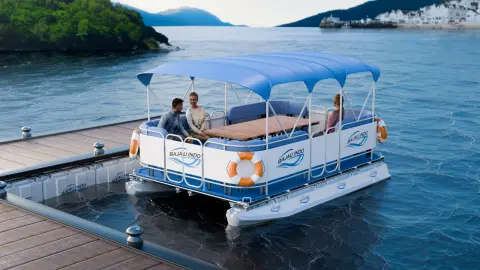
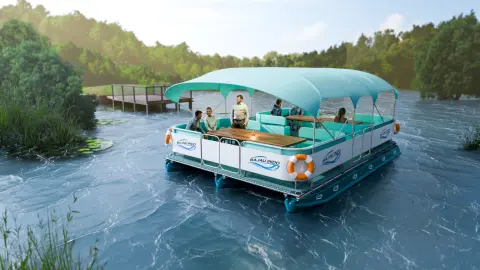
A floating platform packed with tourists every weekend has different demands from a work platform carrying pumps and hoses in the middle of a river. That difference is felt most in the part people step on every day: the floor. Choosing floating platform decking is not just a matter of appearance, because the floor material also affects comfort, maintenance, and the total weight the pontoons must support.
This article covers the three options available in the Bajau Indo Platform Pontoon Configurator: WPC decking, aluminium checker plate, and frame without decking. We will look at the function of each, weight considerations, and the questions worth answering before you decide.
Why Floating Platform Decking Should Be Planned from the Start
In general, a floating structure consists of three layers: pontoons that provide buoyancy, a frame that ties everything together, and decking as the walking or working surface. All three are interrelated. Heavier decking adds dead load, so the share of buoyancy left for people, goods, or equipment becomes smaller.
For this reason, the decision on floating dock decking should ideally be made together with the pontoon count calculation, not afterwards. Changing the floor type mid-project can mean recalculating the pontoon and frame configuration.
Three Decking Options and Their Characteristics
Each floating platform decking option has its own advantages and considerations. There is no single answer for every project; there is only the option that suits the function, load, and site environment.
WPC Decking
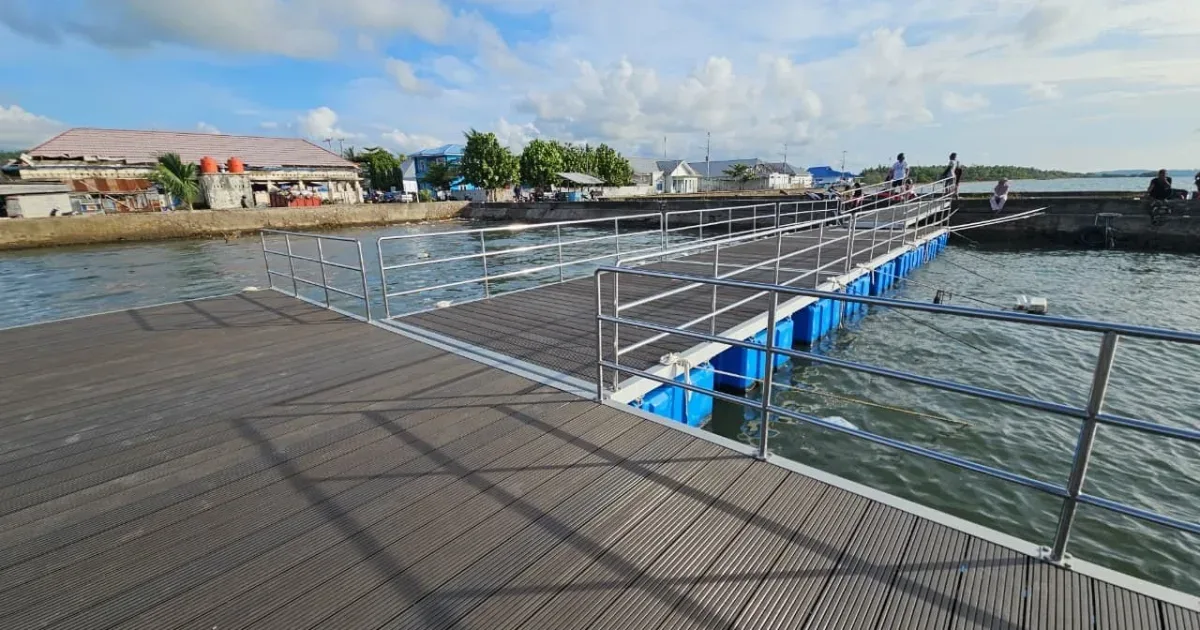
WPC (wood plastic composite) is a composite material that looks like wood. WPC decking is often chosen for areas that prioritize aesthetics and user comfort, such as tourist docks, floating restaurants, or passenger waiting areas.
An example can be seen in the floating dock in the Selayar Islands Regency, which combines Block Pod, a marine-grade aluminium frame, and WPC decking.
Aluminium Checker Plate
Aluminium checker plate is an aluminium sheet with a raised pattern on its surface. In general, this pattern helps reduce the risk of slipping. This option suits work areas, service walkways, or platforms frequently crossed by equipment and goods. According to the configurator's assumptions, it is lighter than WPC, leaving more buoyancy for payload.
No Decking (Frame Only)
This option leaves the frame on top of the pontoons without a floor covering. It makes sense when the platform will carry specialized equipment, or when the project owner wants to install their own flooring to internal standards. For areas used by people, a safe walking surface must still be ensured.
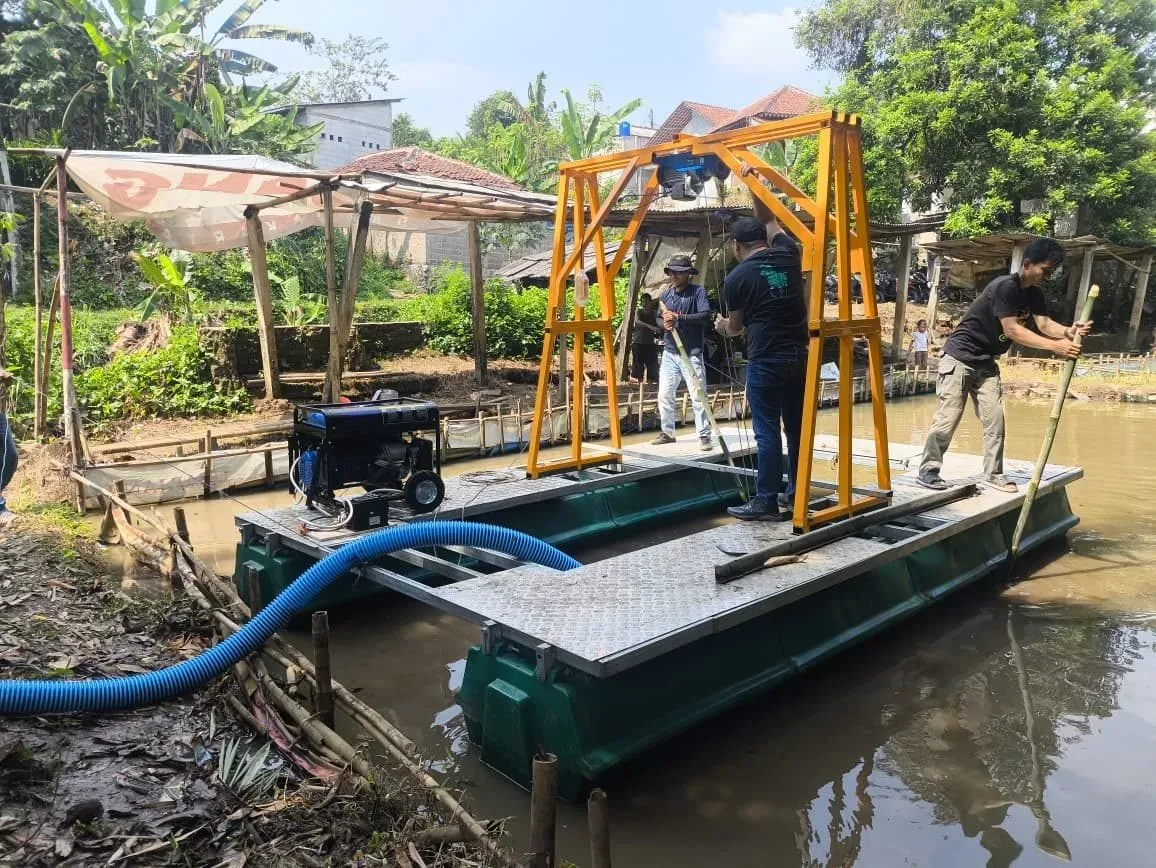
Floating work platform on a floating dredger project, an example of a unit whose deck and frame follow equipment requirements. Source: Bajau Indo documentation
Decking Weight Considerations: Reading the Configurator Assumptions
Decking weight is often underestimated because it is spread over the entire surface. Yet on a large floating platform deck, a few kilograms per square metre can add up to hundreds of kilograms in total. The Bajau Indo configurator shows weight assumptions that can serve as an initial guide:
Frame — Configurator weight assumption: ± 15 kg/m²
WPC decking — Configurator weight assumption: ± 25 kg/m²
Aluminium checker plate decking — Configurator weight assumption: ± 15 kg/m²
No decking — Configurator weight assumption: frame weight only
As a simple illustration, an 8 × 4 m platform has an area of 32 m². Using the assumptions above, WPC decking weighs about 800 kg, while aluminium checker plate weighs about 480 kg. That difference of about 320 kg is also carried by the pontoons and reduces the room for payload.
These figures are only estimates based on configurator assumptions, not final specifications. Actual weight depends on the materials chosen, connection details, and accessories, and is then verified by the engineering team.
How to Choose Floating Platform Decking by Function
The following questions help narrow down the options:
Who are the main users? General visitors and restaurant guests are usually better suited to wood-look WPC decking.
Is there equipment or goods traffic? Aluminium checker plate is generally more practical for work areas.
How large is the target load? If the buoyancy margin is thin, lighter decking gives more headroom.
What is the maintenance plan? Ask about cleaning and panel replacement from the outset.
Are there special requirements? A platform for machinery or instruments can start from the frame only.
If you are still comparing the types of pontoon that will support the decking, the article on the functions of pontoons and floating cubes is a good starting point.
Trying Combinations in the Platform Pontoon Configurator
The configurator lets you set a length of 4–14 m, a width of 2–6 m, the target load, decking type, aluminium or galvanized frame, and accessories such as railings and pool ladders. The summary instantly shows the estimated number of pontoons, structural weight, and an indicator of whether buoyancy is sufficient or insufficient.
Try swapping WPC decking for aluminium checker plate at the same size, then watch how the estimated structural weight changes. The results are labelled "Initial estimate — to be verified by the engineering team", so they still need to be discussed before moving into production.
Frequently Asked Questions
Is WPC decking heavier than aluminium checker plate?
According to the Bajau Indo Platform Pontoon Configurator assumptions, WPC decking is about 25 kg/m², while aluminium checker plate is about 15 kg/m². These figures are initial estimates. Actual weight depends on material specifications and is verified by the engineering team.
Can a floating platform be ordered without decking?
Yes. The configurator offers a frame-only option without a floor covering. This option is generally chosen if the platform will carry specialized equipment or the project owner wants to install their own flooring.
What decking is suitable for a tourist dock?
For areas with heavy visitor traffic, WPC decking is often chosen because it looks like wood. However, the final choice still needs to consider the target load, maintenance needs, and site conditions.
Already have an idea of your platform's size and function? Put together the configuration in the configurator, then press "Send Configuration via WhatsApp" to open WhatsApp with a summary and send it to the Bajau Indo team at 0878-5931-4314. From there, we can review the decking options together before the design is finalized.
Written by
Tim Redaksi Bajau Indo
Tim Teknis & Redaksi
Tim teknis dan redaksi Bajau Indo — produsen dermaga apung, kubus apung, dan ponton modular LLDPE dari Sentul, Bogor.
Share this article: