Floating Platform Frames: Aluminum or Galvanized for Your Project?
Aluminum or galvanized floating platform frame? Understand the differences in weight, seawater and freshwater durability, and maintenance before you choose.
Pontoons provide buoyancy, but what makes dozens of pontoon units work as a single platform is the frame. A floating platform frame ties the pontoons together, provides a base for the decking, and transfers loads from people or equipment across the entire structure. If the material does not suit the water environment at the site, corrosion and maintenance problems can appear sooner than expected.
In the Platform Pontoon Configurator, Bajau Indo offers two frame options: aluminum and galvanized. Each has its place. This article summarizes the general considerations to help you choose.
The Frame's Role as the Pontoon Superstructure
In general, the frame is the superstructure above the pontoons and serves several functions at once:
tying rows of pontoons together so they move as one unit;
providing a base for decking, railings, ladders, and other accessories;
spreading loads so they do not bear on a single pontoon point;
serving as a connection point for the mooring system and gangway.
Because its role is central, the floating platform frame material should be decided together with the pontoon type, the decking, and observations of site conditions.
A well-designed floating platform frame also makes maintenance easier. Joints and fasteners should remain accessible so that routine inspections can be carried out without removing the decking.
Aluminum Frames: Lightweight and Common in Marine Environments
Aluminum is known for being lightweight and naturally forms a thin oxide layer on its surface. This layer helps protect the metal from further corrosion. For use in water, marine-grade aluminum alloys designed for humid and saline environments are generally chosen.
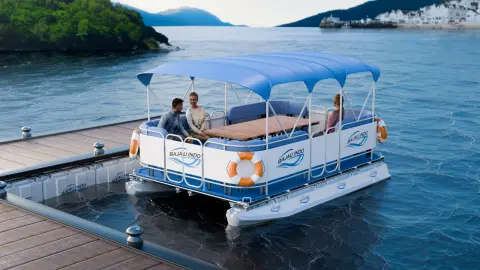
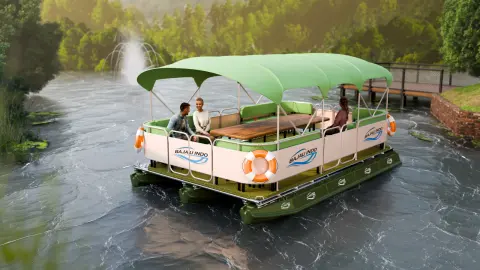
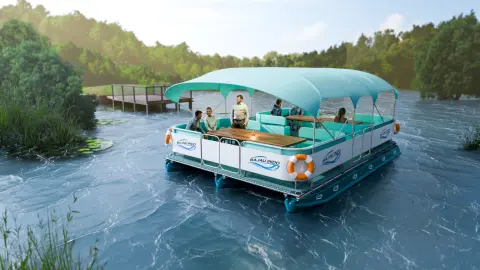
Bajau Indo uses marine-grade aluminum frames on a number of products and projects. The Kelimutu, Sentani, and Toba catamarans use this type of frame, as does the floating dock in Kepulauan Selayar Regency, which combines Block Pod with WPC decking.
One general point to note: aluminum should not be in direct contact with dissimilar metals in seawater, as that combination can trigger galvanic corrosion. Using appropriate insulators and fasteners helps reduce this risk.
Galvanized Frames: Steel with a Zinc Coating
A galvanized frame is steel coated with zinc. The zinc coating protects the steel in two ways: as a physical barrier and as a "sacrificial" layer that corrodes before the steel does. Galvanized steel is generally rigid, easy to fabricate, and widely available.
As a consequence, galvanized frames are generally heavier than aluminum frames for a similar function. The zinc coating also gradually wears away over time, especially in aggressive environments. Areas cut, drilled, or welded after galvanizing need to be re-protected so they do not become starting points for rust.
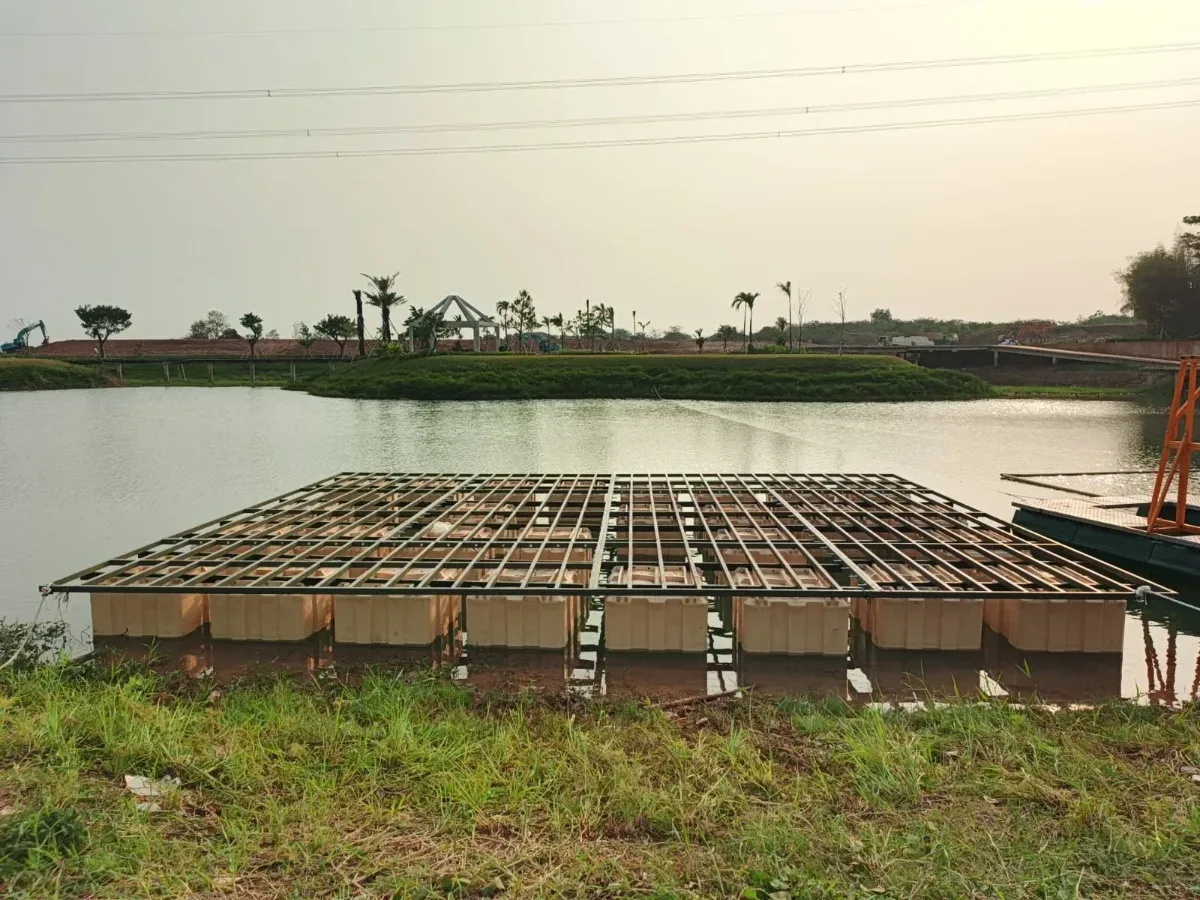
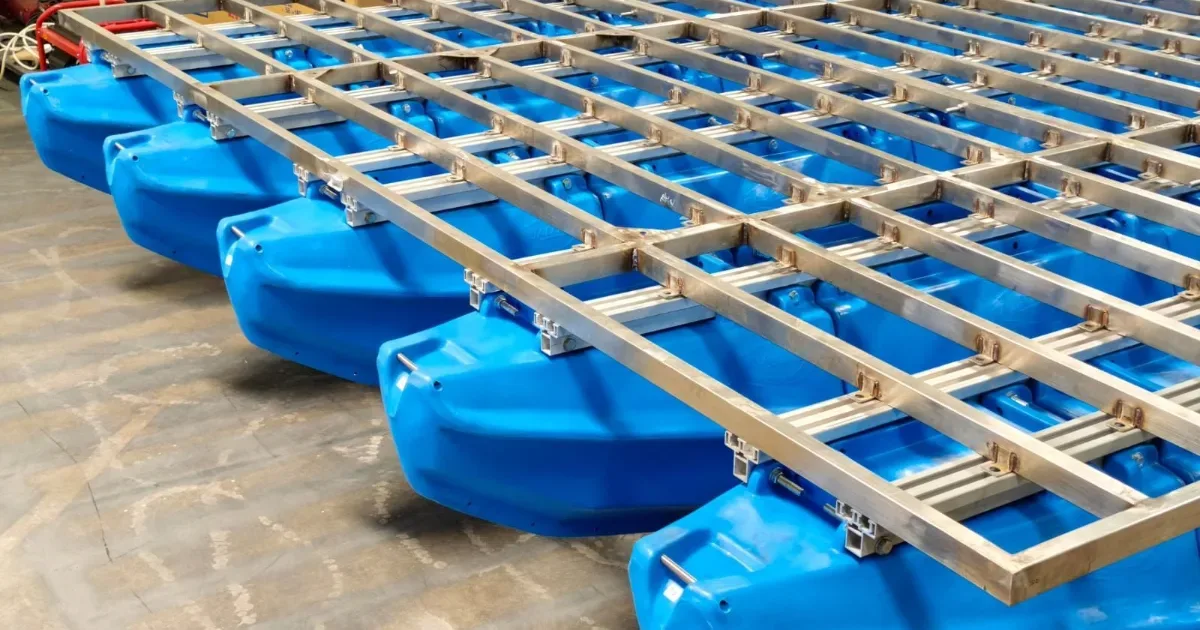
Frame installation on top of pontoons at an ongoing floating dock project in Serpong, Banten. Source: Bajau Indo documentation
Comparing Aluminum and Galvanized Frames
Weight — Aluminum frame: Lighter; Galvanized frame: Heavier
Corrosion protection — Aluminum frame: Natural oxide layer, marine-grade alloy; Galvanized frame: Zinc coating over steel
In seawater — Aluminum frame: Commonly used; watch for contact with other metals; Galvanized frame: Zinc coating tends to wear away faster
In freshwater — Aluminum frame: Can be used; Galvanized frame: Generally lasts longer than in seawater
Maintenance focus — Aluminum frame: Joints and fasteners; Galvanized frame: Condition of the zinc coating, especially at cuts and welds
This table is a general overview. Fabrication quality, profile sizes, joint design, and water conditions at the site still affect the final performance of a floating platform frame.
Seawater or Freshwater: The Environment Drives the Choice
The water environment is the first consideration. At sea and in estuaries, salinity and wave spray accelerate corrosion in many types of metal. In these conditions, marine-grade aluminum is often the more practical choice.
On freshwater lakes, reservoirs, ponds, or rivers, a galvanized frame can be a viable option, especially if the platform is static and the pontoons can still support the extra weight. Other factors to check include water quality, possible exposure to wastewater, how often the platform will be assembled and disassembled, and the maintenance budget.
In short, there is no floating platform frame that suits every location. The better question is which material matches the type of water, the platform's function, the usage pattern, and the operator's ability to maintain it over the long term.
Don't forget the weight factor. A heavier frame reduces the remaining buoyancy available for the payload. The Configurator uses an assumed frame weight of around 15 kg/m² as an initial estimate, and all results are still verified by the engineering team. Examples of frame installations at various sites can be seen on the Bajau Indo projects page.
Frequently Asked Questions
Can a galvanized frame be used at sea?
Yes, but in general the zinc coating wears away faster in seawater than in freshwater. The protective coating therefore needs to be inspected more frequently. For marine sites, many projects choose marine-grade aluminum.
Why is marine-grade aluminum often used on floating structures?
Aluminum is relatively lightweight and forms an oxide layer that helps protect its surface. Marine-grade alloys are intended for humid and saline environments. The lower weight also leaves more buoyancy available for the payload.
Does the choice of frame affect the number of pontoons?
Generally, yes. A heavier frame adds dead load and can therefore affect buoyancy requirements. The Configurator provides an initial estimate, while the final number of pontoons is set after verification by the engineering team.
Still weighing aluminum against galvanized for your site? Tell us about the water conditions, platform size, and its function by email at marketing@bajauindo.com. The Bajau Indo team will help compare frame options based on your project needs.
Written by
Tim Redaksi Bajau Indo
Tim Teknis & Redaksi
Tim teknis dan redaksi Bajau Indo — produsen dermaga apung, kubus apung, dan ponton modular LLDPE dari Sentul, Bogor.
Tags
Share this article: