Floating Dock Maintenance: Routine and Post-Extreme-Weather Inspection Checklist
A floating dock maintenance guide: what to check on joints, moorings, decking, and railings, how to clean, and steps to take after extreme weather.
Floating docks rarely fail suddenly. What happens more often is that small issues go unnoticed: a joint lock that starts to loosen, a mooring line worn at one point, or algae that makes the decking slippery. This is where floating dock maintenance comes in. Simple inspections carried out regularly help catch problems while they are still easy to fix.
This guide sets out general principles for maintaining pontoons and their supporting components. Detailed schedules and procedures should be tailored to the dock design, intensity of use, and supplier recommendations.
Why Floating Dock Maintenance Should Be Scheduled
A floating dock operates in a constantly moving environment. Waves, currents, wind, and changes in water level put repeated loads on the joints and mooring system every day. Add exposure to sunlight, water, and marine organisms, and each component wears at a different rate.
Scheduled floating dock maintenance helps keep the dock functional, comfortable, and on track for its planned service life. Inspection records also make it easier for operators to budget for component replacement before damage spreads. As a practical step, create a simple maintenance checklist sheet that staff fill in at every inspection, complete with the date, findings, and actions taken.
If you are new to how these structures work, the article why floating docks are key to port flexibility is a good introduction.
Dock Inspection Checklist by Component
The following table can serve as the basis for a floating dock maintenance checklist. Adapt it to the components actually present on your dock.
Pontoon-to-pontoon joints — What to check: Pins, bolts, or locks; Signs that need follow-up: Loose, missing, widening gaps
Pontoons — What to check: Outer shell and floating position; Signs that need follow-up: Cracks, deep scratches, one side sitting lower
Mooring system — What to check: Lines, chains, shackles, guide piles; Signs that need follow-up: Worn fibers, rust, excessive movement
Decking — What to check: Floor panels and fasteners; Signs that need follow-up: Loose panels, slippery surfaces, protruding screws
Railings and ladders — What to check: Posts, connections, handrails; Signs that need follow-up: Wobbly, sharp parts, detached connections
Gangway — What to check: Hinges, rollers, supports; Signs that need follow-up: Jamming, unusual noises, wear
Joints and Pontoons
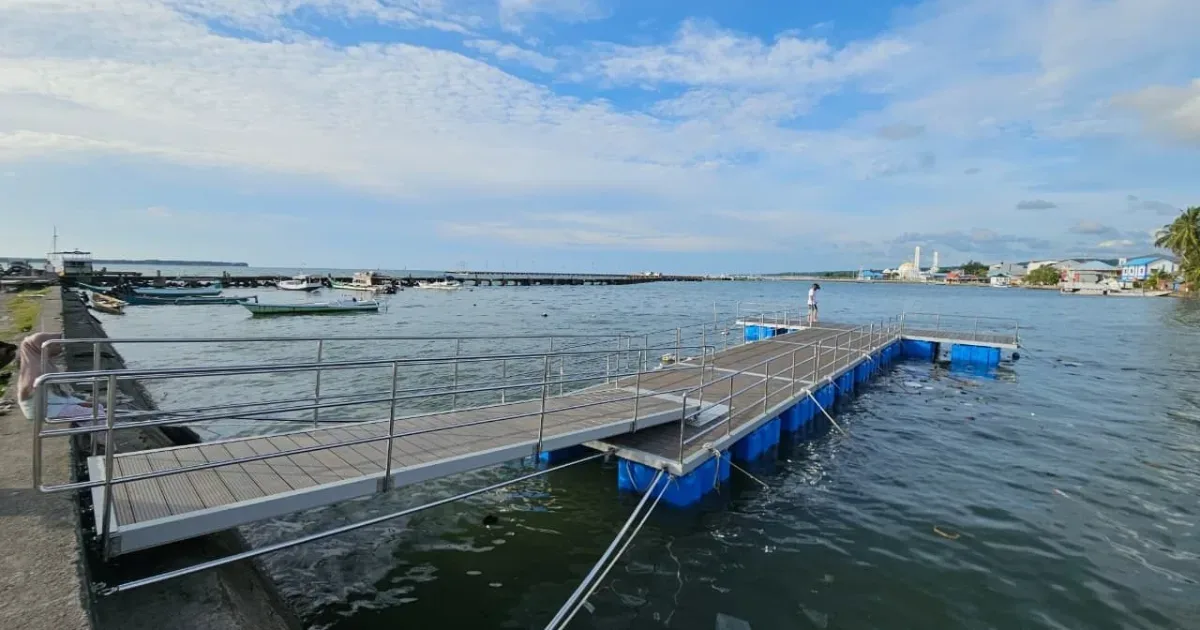
Joints are the points that tie the modules together into a single structure. On modular systems such as Nusa Dock, check for loose or missing locks, then see whether the dock surface is still level. If one section sits lower than its surroundings, look for the cause, such as a concentrated load or damage to a particular unit.
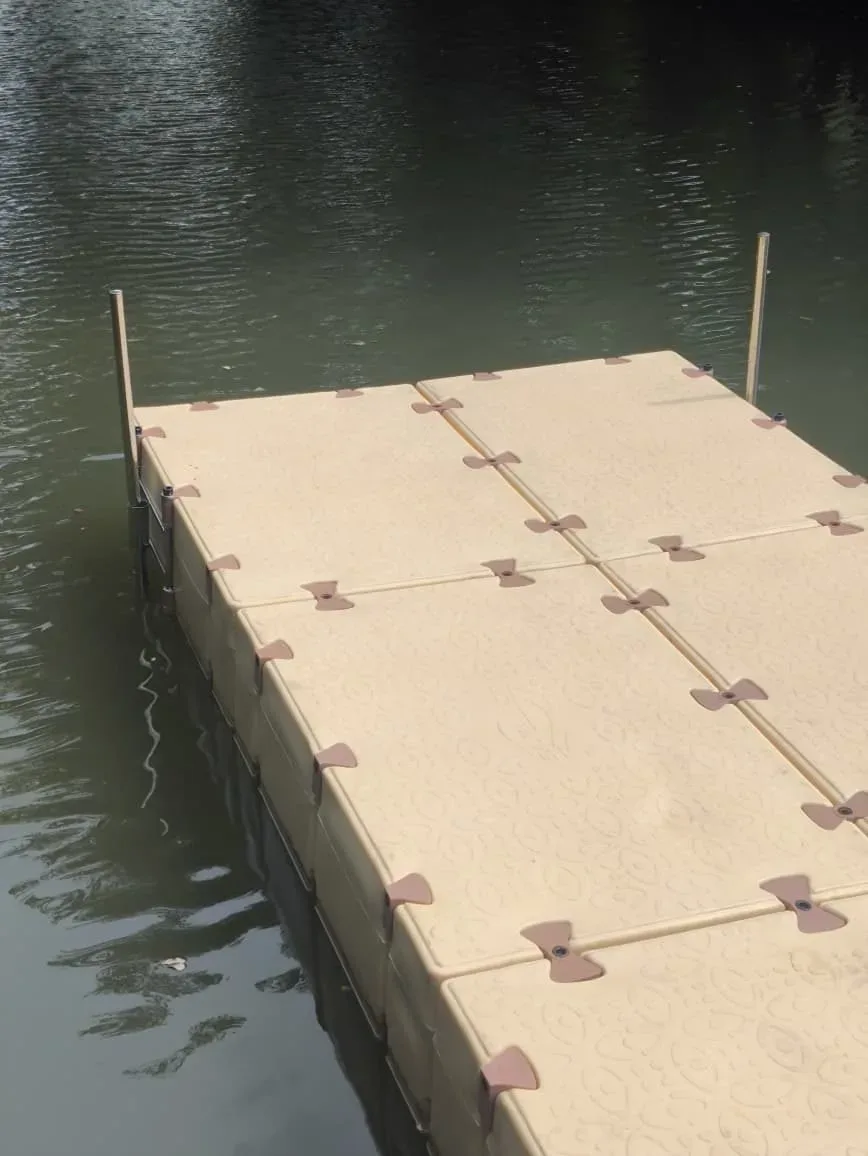
Detail of Nusa Dock module joints on the dock at TWA Mangrove PIK. Source: Bajau Indo documentation
Mooring System
Lines and chains hold the dock in position. Pay attention to areas that rub against other objects, as wear usually starts there. On docks with guide piles, make sure the dock can still rise and fall smoothly with the water level.
Decking and Railings
Decking and railings are in direct contact with users. Loose panels, protruding screws, or unstable railings should be repaired promptly before the area is used again.
Gangway
The gangway connects the dock to land and moves as the water level changes. Make sure the hinges and rollers at its ends work smoothly and that there are no dangerous gaps where it meets the dock.
Routine Cleaning and Pontoon Maintenance
Cleaning is the part of floating dock maintenance that keeps the structure safe and pleasant to look at. Some general steps operators can include in their routine:
Remove debris caught between the pontoons or around the mooring lines.
Clean algae and dirt from the decking so the surface is not slippery.
Rinse metal components exposed to saltwater with fresh water where possible.
Avoid harsh chemicals whose compatibility with the dock materials is unclear.
Monitor marine growth on pontoons and lines, especially in seawater.
Bajau Indo pontoons use a UV-resistant LLDPE shell and a CFC-free polyurethane core. Even so, visual checks remain important so that scratches or impact marks can be assessed early. An explanation of this material is available in the article LLDPE vs HDPE for floating cubes.
Steps After Extreme Weather
Storms, floods, or high waves can impose loads beyond everyday conditions. Once the weather has calmed, inspect the dock before the area is reopened to the public:
Make sure the dock has not shifted from its original position.
Check all lines, chains, and mooring points.
Check joints that may have opened due to excessive movement.
Remove logs or large debris carried in by the current.
Document findings with photos for the operator's records.
If structural damage is found, restrict access to the affected area and consult the supplier or technical personnel. Do not force the dock back into full operation before the cause of the damage is understood.
Frequently Asked Questions
How often should a floating dock be inspected?
In general, simple visual checks can be carried out routinely by the operator, while thorough inspections are scheduled periodically. The frequency depends on intensity of use, type of water body, and local weather conditions. Additional inspections are recommended after extreme weather.
Which components need the most attention in floating dock maintenance?
Pontoon-to-pontoon joints and the mooring system take repeated loads every day, so both deserve special attention. Decking and railings are also important because they are in direct contact with users.
How do you clean algae and dirt off pontoons?
Use a brush and clean water to remove algae and dirt. Avoid harsh chemicals whose compatibility with the pontoon material is unclear. Debris caught between pontoons should be removed regularly.
Want to put together a maintenance schedule or get an opinion on the condition of an installed dock? Send a few recent photos of your dock to the Bajau Indo team on WhatsApp at 0878-5931-4314 so the discussion can get straight to the point. References for structures we have built are also available on the Bajau Indo projects page.
Written by
Tim Redaksi Bajau Indo
Tim Teknis & Redaksi
Tim teknis dan redaksi Bajau Indo — produsen dermaga apung, kubus apung, dan ponton modular LLDPE dari Sentul, Bogor.
Tags
Share this article: