Seaplane Docks for Island Regions: Basic Requirements and Lessons from Selayar
A seaplane dock needs a stable deck, maneuvering room, and safe boarding access. Learn the basics and see a floating dock example in Selayar, South Sulawesi.
In many island regions, inter-island travel still depends on ferry schedules and wave conditions. Amphibious aircraft offer an alternative because they can land on water, but they still need a suitable berthing point. This is where a seaplane dock comes in: a structure that allows aircraft to berth, passengers to board and disembark, and cargo to be transferred safely.
This article covers the general requirements of a seaplane dock, why floating docks are often considered, and an example of their application in Selayar Islands Regency, South Sulawesi.
Why Island Connectivity Needs Amphibious Aircraft Docks
Indonesia has thousands of islands, and not all of them have a runway. Amphibious aircraft can reach calm waters near settlements or tourist destinations, opening air-sea routes that complement sea transportation.
However, amphibious aircraft cannot simply berth at an ordinary boat dock. Wings, floats, and propellers have different space requirements from a boat hull. Without a suitable dock, boarding becomes risky for both passengers and the aircraft.
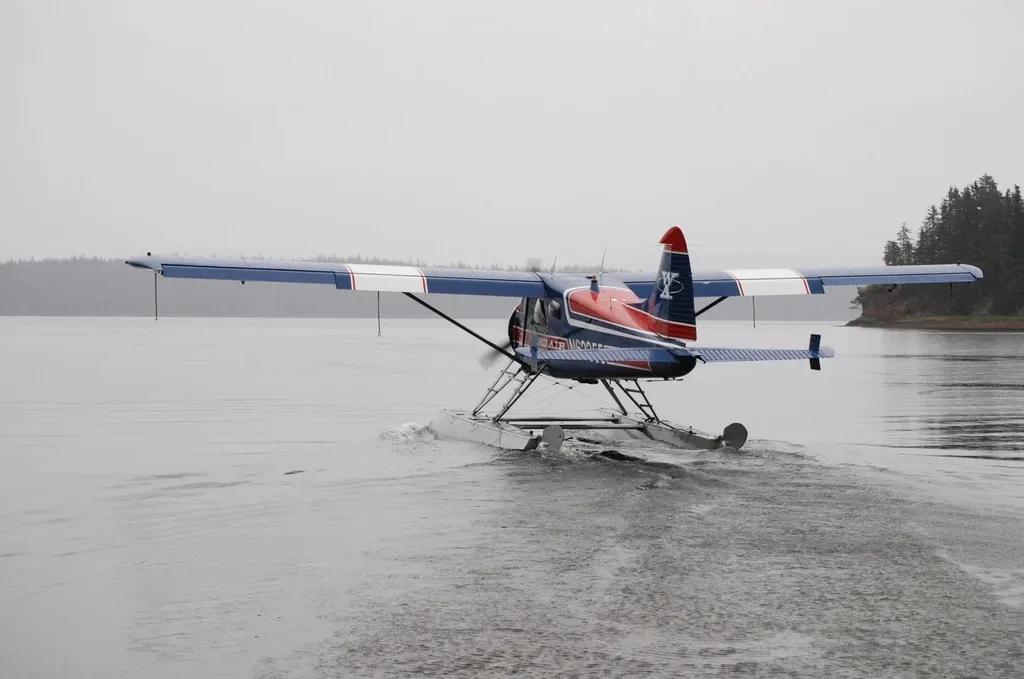
An amphibious aircraft on calm water as a general illustration, not a Bajau Indo project. Photo: rawpixel (CC0)
General Requirements of a Seaplane Dock
Every site has its own characteristics, but in general there are several aspects to consider when planning an amphibious aircraft dock:
Stability — General consideration: The deck needs to remain stable as passengers and cargo move off the aircraft.
Deck height — General consideration: The deck elevation should align with the aircraft's door and floats for comfortable boarding.
Maneuvering room — General consideration: The area around the dock needs to be wide enough that the wings and propellers do not touch the structure.
Dock edges — General consideration: Edges should have as few hard objects as possible that could damage the floats or wings.
Shore access — General consideration: The connecting path to land must be safe for passengers carrying luggage.
Safety — General consideration: Railings, lighting, and safety equipment should be planned from the outset.
Beyond physical aspects, a seaplane dock also needs to consider user flow. Passengers, baggage, and staff should have clear paths so they do not cross the boat working area. On docks that serve both modes, separating zones at the layout stage helps operations run smoothly and reduces the risk of collisions.
Technical details such as berthing area dimensions and clearances depend on the type of aircraft served and the applicable aviation and transportation authority regulations.
Why Floating Docks Are Often Chosen
On a fixed dock, the deck height does not change, while the water level rises and falls with the tides. As a result, the height difference between the deck and the aircraft's floats can change throughout the day. A floating dock follows the movement of the water level, so this height difference is generally more consistent.
Other advantages of modular floating docks in island regions:
The layout can be adjusted, for example by adding a berthing arm for boats on the other side.
Modules are shipped as separate units, making them easier to transport to island sites.
The structure can be expanded or reconfigured as needs evolve.
You can read more about this flexibility in our article on the role of floating docks in port flexibility.
Application Example: The Floating Dock in Selayar
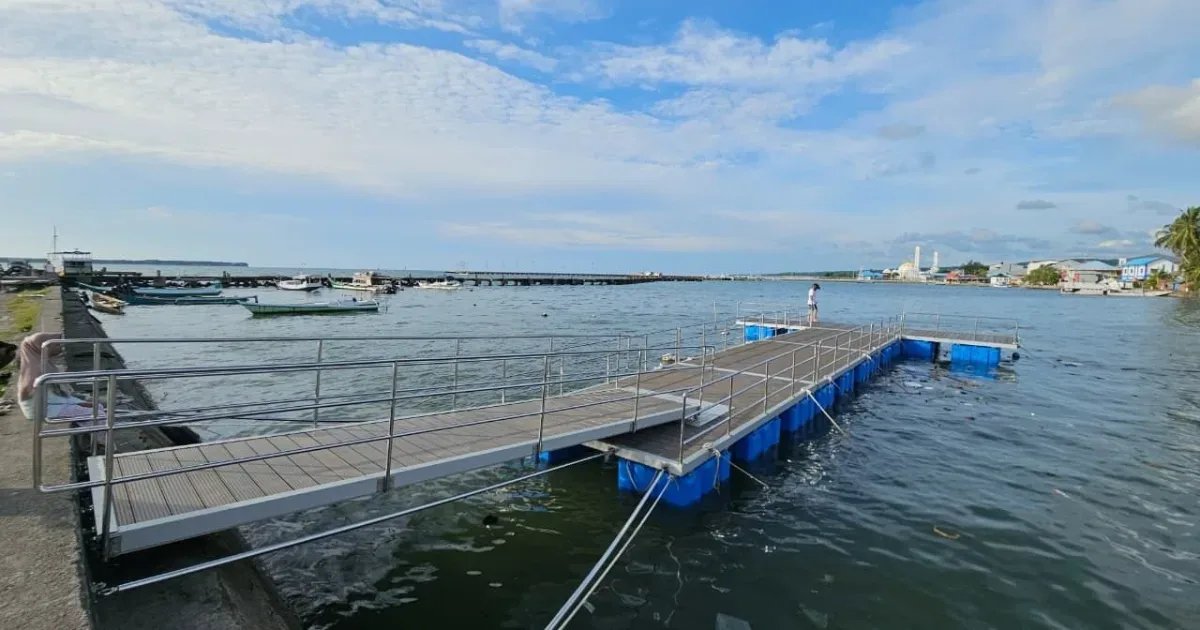
In Selayar Islands Regency, South Sulawesi, Bajau Indo installed a floating dock that serves both boats and amphibious aircraft. The structure uses Block Pod pontoon modules, a marine-grade aluminum frame, and WPC decking.
According to the official specifications, the Block Pod measures 123 × 97 × 65 cm, weighs 40 kg, and has a buoyancy of 375 kg per unit. The total capacity of the dock is not determined by per-unit figures alone, but is calculated per project based on the layout, design load, and water conditions.
The installation story can be read in our article on the Bajau Indo floating dock in Selayar Islands Regency.
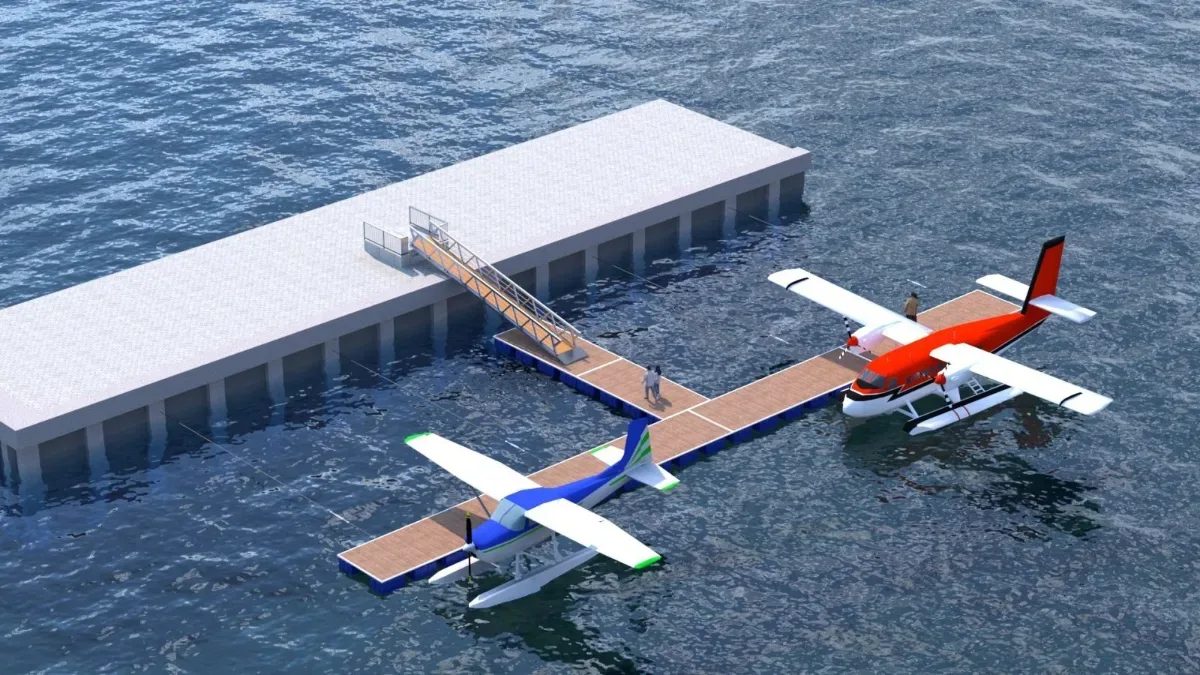
A floating dock layout idea for two amphibious aircraft. Source: Bajau Indo 3D concept illustration — not a built project
To see other ideas, including the amphibious aircraft dock concept above, visit the Floating Unit Inspiration gallery. All visuals in the gallery are 3D concept illustrations, not built projects.
First Steps in Planning a Floating Dock for Island Regions
Before moving into design, gather the following basic data:
The type and number of aircraft and boats to be served.
Water data: depth, tidal range, currents, and wave exposure.
Seabed conditions to determine the mooring system.
Shore access and logistics routes for module delivery.
Coordination with relevant agencies and local transportation operators.
This data helps planners determine the dock's position, orientation, and size from the outset.
Frequently Asked Questions
What is a seaplane dock?
A seaplane dock is a dock designed so that amphibious aircraft can berth, unload passengers, and transfer cargo on the water. Its planning takes into account wing clearance, the aircraft's floats, and deck height. Many planners choose floating construction so the deck follows the water level.
Can one dock serve both boats and amphibious aircraft?
Yes, as long as the layout separates the berthing areas and maneuvering room for each. One example is the floating dock in Selayar Islands Regency, which serves both boats and amphibious aircraft. The division of areas still needs to be adapted to site conditions and operational rules.
Which pontoon modules are used at the Selayar dock?
The Selayar dock uses Block Pod with a marine-grade aluminum frame and WPC decking. The official Block Pod specifications per unit are 123 × 97 × 65 cm, 40 kg in weight, and 375 kg of buoyancy. The overall capacity of the dock was calculated specifically for that project.
Local governments or destination managers exploring air-sea routes can discuss their initial plans with the Bajau Indo team. Send your site data and requirements to marketing@bajauindo.com, or start a conversation via WhatsApp at 0878-5931-4314.
Written by
Tim Redaksi Bajau Indo
Tim Teknis & Redaksi
Tim teknis dan redaksi Bajau Indo — produsen dermaga apung, kubus apung, dan ponton modular LLDPE dari Sentul, Bogor.
Tags
Share this article: