Floating Trash Collector: Components, Unit Scale, and the Data You Need to Prepare
Get to know the floating trash collector: hull, conveyor, and deck, manual vs motorized units, and the site data to prepare before a consultation.
Floating waste in rivers, lakes, and canals does not stay in one place. It drifts with the current, piles up at bends, and gets snagged on sluice gates or bridge piers. Crews cleaning from the banks can often reach only the edges. This is where a floating trash collector comes in: a floating unit that can approach areas where waste accumulates and lift it onto its deck.
This article explains the main components of a floating trash collector, the difference between manual and motorized units, and the data you should prepare before discussing a project with a manufacturer.
What Is a Floating Trash Collector?
A floating trash collector, or trash collection boat, is a floating platform designed to collect waste from the water surface. Depending on its size and configuration, it can be operated on rivers, lakes, reservoirs, or canals. Unlike a static barrier, this unit can move to whichever area needs cleaning.
Bajau Indo has built several river and lake cleaning units, including floating trash collectors in Palembang and Makassar, a trash collector in Bandung, and a manual unit at the Bogor Botanical Gardens. Documentation is available on the Bajau Indo projects page.
Main Components of a Floating Trash Unit
Floating Hull
The floating hull is the foundation of the entire unit. It provides the buoyancy to support the structure, equipment, operators, and collected waste. The size and configuration of the hull are determined by the unit's dimensions and the planned load.
Trash Conveyor
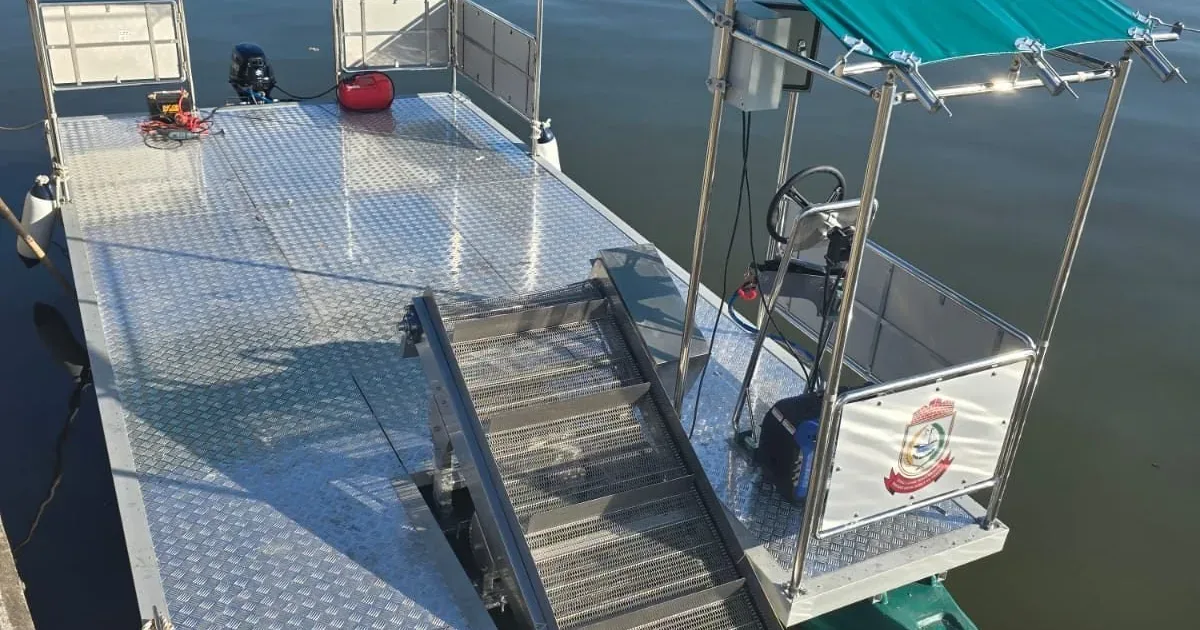
On units equipped with a conveyor, an inclined ramp at the front helps lift waste from the water surface onto the deck. Conveyor ramps like this can be seen on the units in Makassar and Bandung. The mechanism, speed, and dimensions are designed to suit each project's needs.
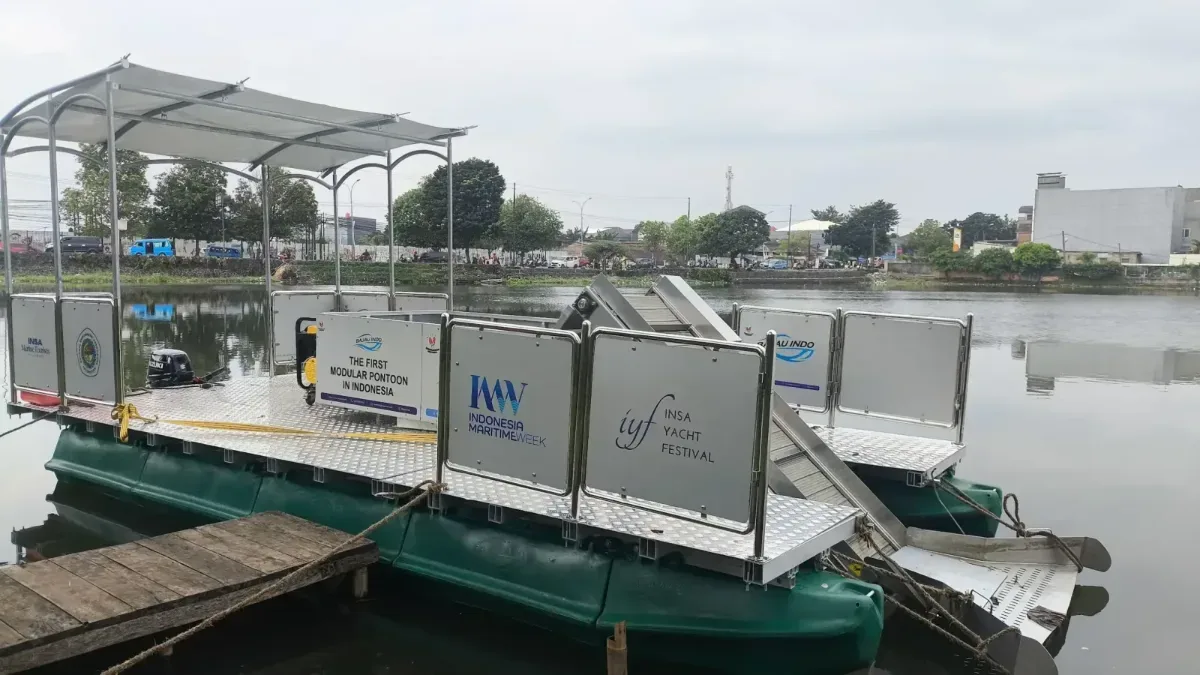
Trash collector in Bandung with a conveyor ramp at the front. Source: Bajau Indo documentation
Deck and Holding Area
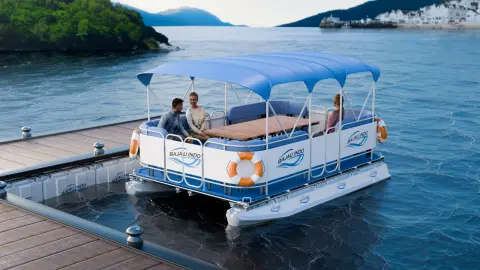
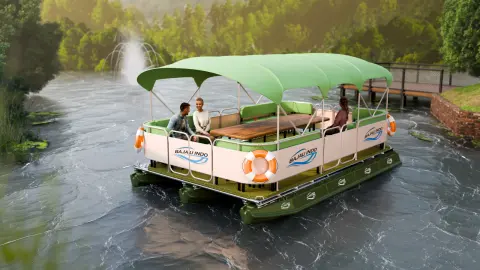
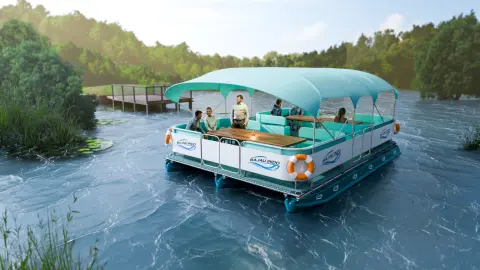
The deck is where operators work and also serves as a temporary holding area before waste is taken ashore. Some units are also fitted with a canopy to protect operators from heat and rain while on duty.
Supporting Equipment
In addition to the three main components, units can be fitted with supporting equipment as needed, such as safety railings, mooring points, or containers that make it easier to transfer waste ashore. Every piece of added equipment increases the load that must be accounted for in the floating hull.
Manual vs Motorized Scale
In general, trash collection units can be divided into the following two scales:
How it works — Manual unit: Waste is lifted by crew using hand tools; Motorized unit: Fitted with equipment such as a conveyor and propulsion
Typical locations — Manual unit: Ponds, small lakes, parks or tourist areas; Motorized unit: Rivers, canals, or larger bodies of water
Operator requirements — Manual unit: Several crew members on deck; Motorized unit: Operators familiar with the equipment
Maintenance — Manual unit: Relatively simple; Motorized unit: Includes maintenance of mechanical components
The manual unit at the Bogor Botanical Gardens is an example of a small-scale unit: a simple floating platform on which several crew members stand and collect waste directly.
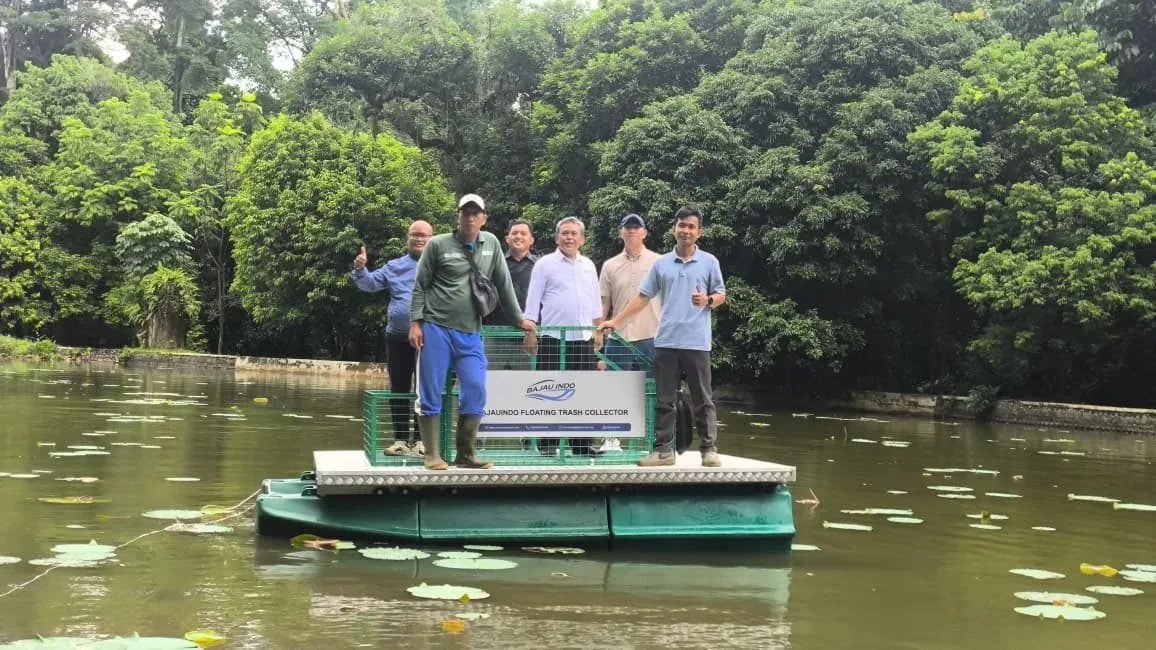
Manual floating trash collector at the Bogor Botanical Gardens. Source: Bajau Indo documentation
The choice of scale depends on the size of the area, the volume of waste, and the operator's resources. At some sites, a collection unit can be combined with a barrier such as the Belida Trash Barrier, which helps direct waste toward a single pickup point.
Data to Prepare Before a Consultation
To make discussions with the manufacturer more effective, prepare the following information:
Type of water body: river, lake, reservoir, canal, or estuary.
Site dimensions: approximate width and depth of the water in the operating area.
Currents and water level: current conditions during the rainy season and the extent of water level changes.
Waste characteristics: predominantly plastic, water hyacinth, branches, or mixed.
Land access: the launch point for the unit and the waste disposal location.
Operating pattern: who the operators are and how often the unit will run.
Route obstacles: low bridges, sluice gates, or shallow areas.
Photos and videos of the site are very helpful. This data forms the basis for determining hull size, whether a trash conveyor is needed, and a suitable deck layout. The more complete the data you send, the easier it is for the technical team to outline an initial unit configuration for the site.
Part of a Bigger Effort
A floating trash unit is not the only answer. Managing waste in waterways generally requires a combination of reducing waste at the source, barriers, collection, and land-based management. Bajau Indo also took part in a river clean-up with Pandawara Group in Bandung in September 2025.
If the main problem at your site is sediment or silting rather than floating waste, another approach such as the Modular Dredger / Dewatering Boat may be more relevant to consider.
Frequently Asked Questions
What is the difference between a floating trash collector and a trash barrier?
A trash barrier is a floating boom that holds waste back and directs it to a specific point. A floating trash collector is a floating unit that collects waste and lifts it onto its deck. The two can be used together for more targeted waste handling.
Can a floating trash collector be used on a lake?
Yes. The size and configuration of the unit are tailored to the water conditions, including the size of the area and the type of waste. One of Bajau Indo's units in Bandung, for example, is documented moored at the edge of a lake.
What data is needed to design a floating trash collector?
The key data includes the type and dimensions of the water body, current conditions, waste characteristics, land access, and operating pattern. Photos or videos of the site greatly help the technical team make initial recommendations.
Planning a river or lake clean-up program in your area? Send your site data along with photos of the water conditions to marketing@bajauindo.com, or discuss it directly via WhatsApp 0878-5931-4314. The Bajau Indo team is ready to help you weigh up the unit scale that fits your field needs.
Written by
Tim Redaksi Bajau Indo
Tim Teknis & Redaksi
Tim teknis dan redaksi Bajau Indo — produsen dermaga apung, kubus apung, dan ponton modular LLDPE dari Sentul, Bogor.
Tags
Share this article: