City River Cleanup Programmes: From Waste Mapping to Monitoring
How to design a city-level river cleanup programme as a system: mapping waste hotspots, trash barriers, collector units, transport and the role of residents.
A one-day river clean-up can lift piles of sacks of waste. A week later, new waste has already arrived from upstream and is caught on the same bend. This pattern shows that a river cleanup programme cannot be run as a one-off activity. For the results to last, the programme needs to be designed as a system that runs routinely, with clear roles for local government, area managers and residents.
This article sets out the components of that system, from mapping waste hotspots to monitoring, as discussion material for the relevant agencies and managers of urban waterways.
Why a River Cleanup Programme Must Be Designed as a System
Urban waterway waste management is essentially a chain: waste enters the river, is carried by the current, is held back, lifted out, transported to land and then processed. If one link is weak, for example waste is held back but there is no collection schedule, the problem simply moves elsewhere. Waste that is held for too long can rot, block the flow or break loose again when the discharge rises.
In general, a sustainable programme has five interconnected components:
- Mapping waste hotspots and flow patterns.
- Waste barriers in the right locations.
- Collector units or teams at the holding points.
- Transport and processing on land.
- Resident education and regular monitoring.
Mapping Waste Hotspots and Choosing Barrier Locations
The first step is to observe where waste usually accumulates: river bends, areas upstream of sluice gates, junctions with tributaries, or around bridges. Observation should take place under several conditions, including the rainy and dry seasons, because waste patterns can change with the discharge. Also record the dominant type of waste, such as plastic packaging, household waste or water hyacinth, because the type affects how it is lifted and processed.
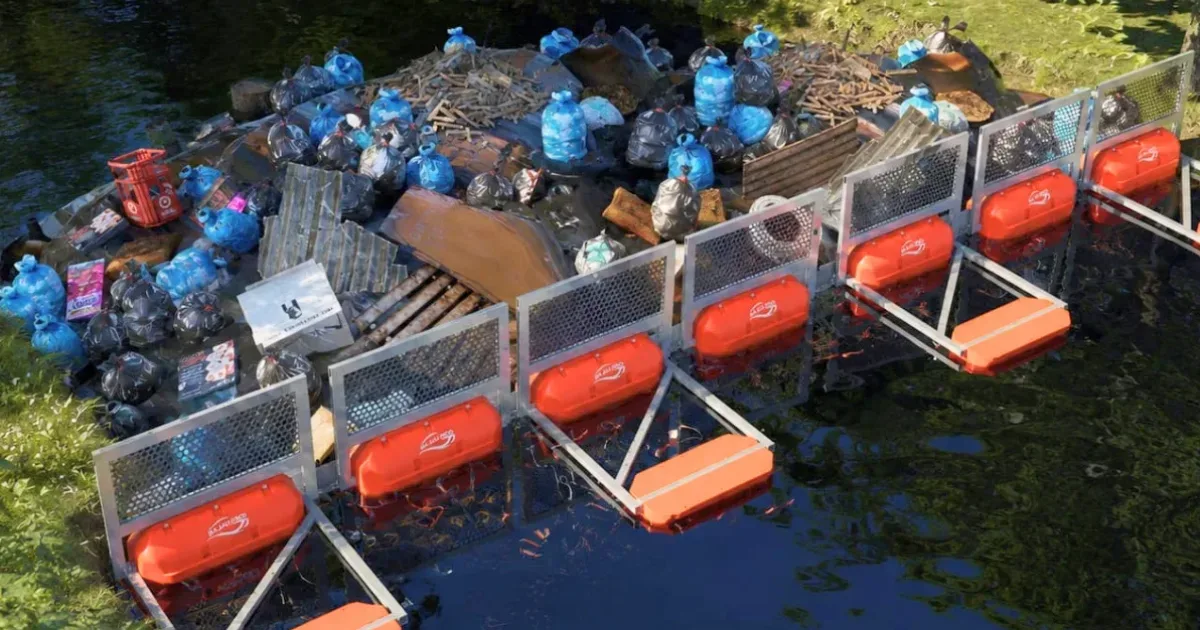
From that map, barrier locations are chosen at points where waste can be guided to a single collection area that is easy to reach from land. One barrier option is the Belida Trash Barrier. Its official per-unit specifications are 100 × 53 × 53 cm, a weight of 17 kg, buoyancy of 171 kg and a wall thickness of 4 mm. How it works and how to choose its location are covered in more detail in the article on river trash barriers: how they work and where to install them.
Collector Units, Transport and Processing on Land
A barrier only holds waste back. That waste still has to be lifted out of the water, either manually by staff or with a floating collector unit. Bajau Indo calls this type of unit the Bajauindo Trash Collector, and its portfolio includes trash collector units in Palembang, Makassar and Bandung, as well as a manual unit at Kebun Raya Bogor. Components and unit scale are explained in the article on floating trash collectors: components and unit scale.
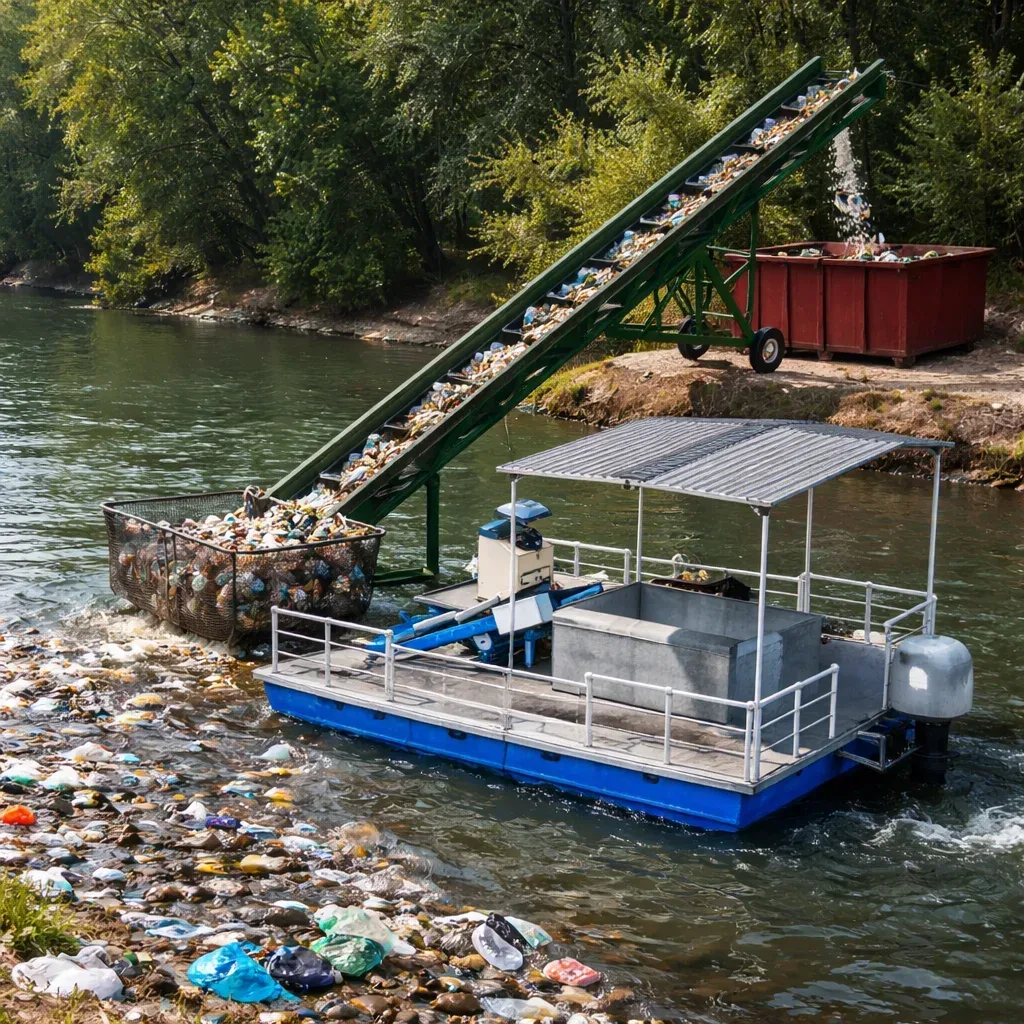
Illustration of a floating trash collector with a long conveyor unloading waste into a container on the riverbank. Source: Bajau Indo visual illustration (AI-generated) — not a project photo
The land side is often overlooked, even though it determines whether the programme runs smoothly. Several things need to be prepared:
- Unloading point: a stable riverbank area for moving waste from the water into containers.
- Vehicle access: a road that trucks or collection carts can use.
- Collection schedule: agreed with the land-based waste manager so containers do not pile up.
- Sorting: separating recyclable, organic and residual waste where facilities are available.
Collaboration with Residents and Communities
Barriers and collector units deal with the symptoms, while changing residents' habits deals with the source. Collaboration with residents can take the form of outreach in riverside neighbourhoods, scheduled community clean-ups, and the involvement of schools and local communities. A simple reporting channel, such as a sub-district contact number, helps residents report piles of waste or damaged barriers quickly.
Environmental communities can also strengthen the programme's message. For example, Bajau Indo took part in a river clean-up with Pandawara Group in Bandung in September 2025. Activities like this are effective at building awareness, but they still need to be followed up by a daily system.
Monitoring and Evaluating the River Cleanup Programme
A good river cleanup programme can be measured. Simple records are enough to start with, such as the volume or number of sacks of waste collected each week, the condition of barriers after heavy rain, collection frequency and residents' reports. This data helps decide whether barrier points need to be added or moved, or whether the collection schedule needs to change.
Evaluation should be carried out periodically, for example at the end of each rainy season, involving field staff, the relevant agencies and residents' representatives. Sharing the results openly with the public can build trust and encourage participation in the next phase of the programme.
Frequently Asked Questions
Who should manage a river cleanup programme at city level?
The programme is usually led by the relevant agency, for example the one responsible for the environment or water resources, with support from sub-districts and communities. What matters most is a clear division of tasks for every link, from holding waste back to processing it on land.
Is a trash barrier alone enough?
No. A trash barrier holds waste back, but without routine lifting and transport, the accumulated waste can create new problems. A barrier needs to be combined with a collector team or unit and a clear collection schedule.
What data should be prepared before installing a waste barrier?
Prepare the river width, estimated depth, current conditions, land access locations and photos of the points where waste accumulates. This data helps the technical team assess the length of the barrier line and the position of the collection point.
Local governments or area managers who are developing a river waste programme can contact the Bajau Indo team via WhatsApp 0878-5931-4314. Include a site map and photos of the river so the initial discussion about barriers and collector units can get straight to the point.
Written by
Tim Redaksi Bajau Indo
Tim Teknis & Redaksi
Tim teknis dan redaksi Bajau Indo — produsen dermaga apung, kubus apung, dan ponton modular LLDPE dari Sentul, Bogor.
Tags
Share this article: