River Trash Barriers: How They Work, Where to Install Them, and Waste Collection Points
Learn how river trash barriers work, how to choose a site, the effect of currents, and waste collection points, plus Belida Trash Barrier specifications.
After heavy rain, the same scene often repeats itself: plastic bottles, bags, and pieces of wood pile up against bridge pillars, sluice gates, or channel mouths. River waste carried by the current eventually ends up in reservoirs, estuaries, or the sea. One way to capture it earlier is to install a river trash barrier.
This article explains how floating trash barriers work, site and current considerations, and the importance of planning collection points from the outset.
How a River Trash Barrier Works
A river trash barrier is a chain of floating units stretched across the water surface. In general, this chain holds back floating waste while the water continues to flow beneath it. The captured waste is then guided to a single point so it can be removed easily.
There are two things to understand from the start. First, a river trash barrier works on surface waste, not waste that sinks or drifts near the riverbed. Second, the barrier is only one part of a waterway waste management system. Without regular removal, waste will keep accumulating behind the barrier.
Compared with picking up waste along the banks, a river trash barrier concentrates waste at one point so that staff effort can be used more efficiently. It also makes it easier to record the types of waste captured, which is useful for evaluating river cleanup programs.
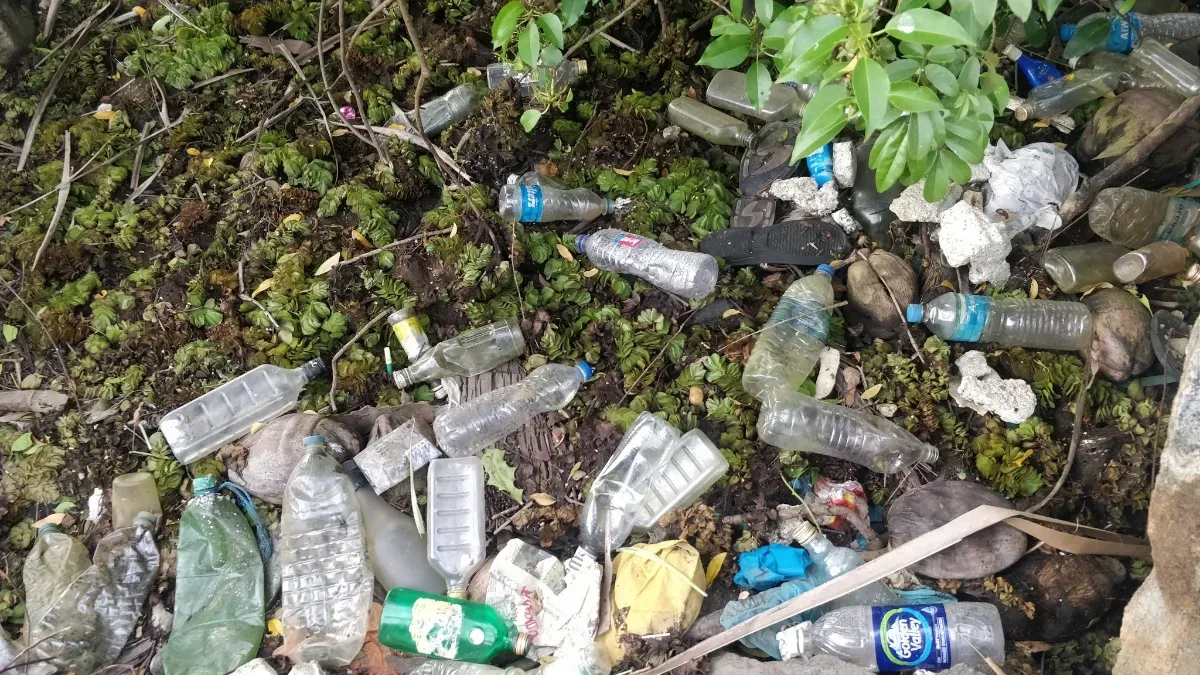
Illustration of plastic waste piled up on a riverbank, not a Bajau Indo project site. Photo: Vishnu Chandra via WordPress Photo Directory (CC0)
Choosing the Installation Site
The site determines how effectively the barrier works. Some commonly considered locations include:
Upstream of water structures, such as intakes, sluice gates, or pump screens, so waste does not clog equipment.
Before the flow enters a reservoir, lake, or estuary, to reduce waste spreading across wider waters.
Downstream of densely populated areas or markets, where waste often enters the river.
On relatively straight river sections, where the current is easier to predict.
In addition, pay attention to boat traffic. If the river is used for transportation or tourism, the barrier needs to be designed so it does not completely block the navigation channel.
Data to collect
Before designing a river trash barrier, prepare the following basic data:
River width and depth at the planned installation point.
An overview of current speed under normal and flood conditions.
The range of water level changes throughout the year.
Bank conditions and access for collection vehicles.
The dominant types of waste, such as plastic, branches, or water hyacinth.
Current, Installation Angle, and Collection Points
The effect of the current
In general, a barrier installed perpendicular to the current takes the full force of the water and waste, and waste tends to spread along the entire barrier. For this reason, barriers are usually installed at an angle to the direction of flow. At a suitable angle, the current helps guide waste toward one side of the river.
The angle, barrier length, and anchoring system are determined per site based on river width, current speed, and changes in water level. Flood conditions must also be taken into account, as waste volume and current strength can increase sharply.
Collection point
The end of the barrier toward which waste is guided should be in an easily accessible location. Ideally, there is land access for staff and collection vehicles. On wider waters, removal can be assisted by a floating trash collection unit. Removal frequency should be adjusted to the season, as captured waste generally builds up faster during the rainy season. Also provide a safe working area for staff around the collection point.
Bajau Indo has handled a floating trash collector project in Palembang, trash collectors in Makassar and Bandung, and a manual trash collector at Kebun Raya Bogor. Documentation can be found on the Bajau Indo projects page.
Introducing the Belida Trash Barrier
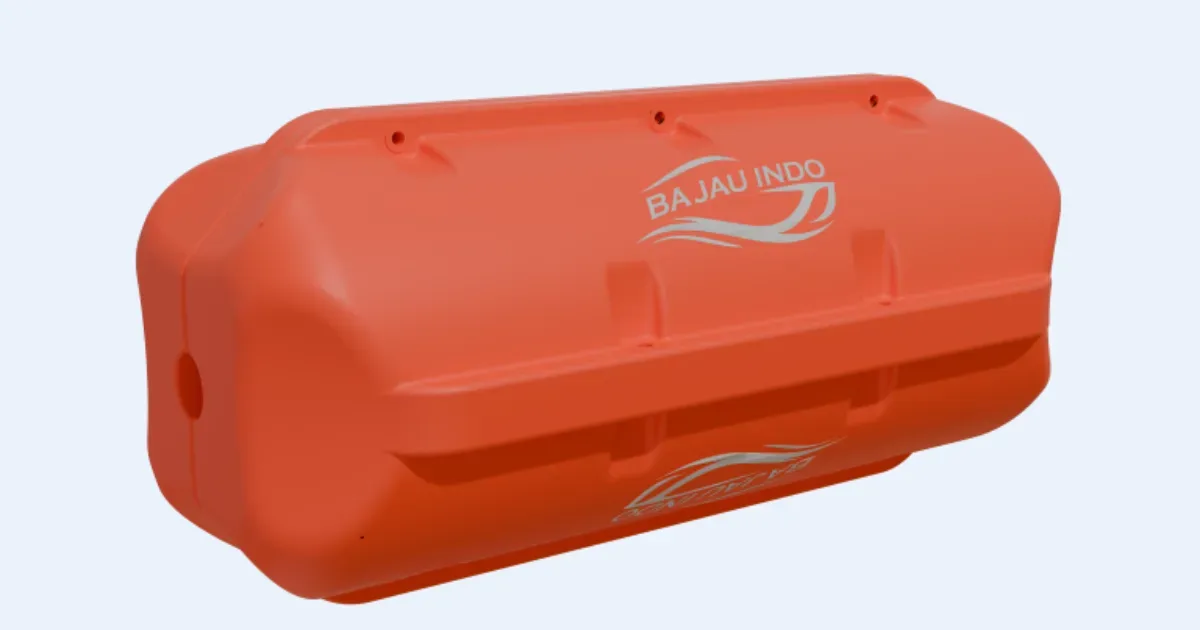
The Belida Trash Barrier is a modular floating trash barrier unit that can be used in rivers, lakes, and coastal waters. Here are its official specifications:
Dimensions — Value per unit: 100 × 53 × 53 cm
Weight — Value per unit: 17 kg
Buoyancy — Value per unit: 171 kg
Wall thickness — Value per unit: 4 mm
Because it is modular, the barrier length can be adjusted to the width of the waterway and the planned layout. The number of units, installation angle, and anchoring system still need to be designed based on site data. Installation in public waters should also be coordinated with the local river management agency.
Bajau Indo's concern for river waste is also reflected in its participation in the River Cleanup Action (Aksi Bersih Sungai) with Pandawara Group in Bandung in September 2025.
Frequently Asked Questions
Does a river trash barrier block the flow of water?
In general, a trash barrier works at the water surface to hold back floating waste, so water continues to flow beneath it. Even so, its design and installation still need to account for the current and conditions during high water flow.
What is the size of one Belida Trash Barrier unit?
According to the official specifications, one Belida Trash Barrier unit measures 100 × 53 × 53 cm, weighs 17 kg, and has a buoyancy of 171 kg per unit. Its wall thickness is 4 mm, and the units are linked together according to the width of the waterway being managed.
Who removes the captured waste?
Removal is usually part of the operational plan of the river manager or local government. Waste can be removed manually from the bank or with the help of a floating trash collection unit, depending on the volume and site access.
Do you manage a river, channel, or reservoir that is frequently filled with floating waste? Send the waterway width, site photos, and an overview of the current to the Bajau Indo team at marketing@bajauindo.com. You can also explore Bajau Indo's design tools to prepare an initial concept before the discussion.
Written by
Tim Redaksi Bajau Indo
Tim Teknis & Redaksi
Tim teknis dan redaksi Bajau Indo — produsen dermaga apung, kubus apung, dan ponton modular LLDPE dari Sentul, Bogor.
Tags
Share this article: