Pontoon Dredgers: Choosing Between Plain Suction and Double Crusher Systems
The Bajauindo Dredger pontoon dredger comes with two suction systems. Learn the difference between plain suction and double crusher so the choice matches the sediment in your waters.
Two reservoirs can both be silting up, yet what lies on their beds can be very different. At one site the deposit is soft mud that stirs up easily. At another, the sediment has compacted over years and is mixed with coarse sand. That is why the first question when planning a pontoon dredger is not "how big is the machine?" but "what material needs to be lifted?". This article looks at the Bajauindo Dredger, Bajau Indo's sediment dredging solution, and its two suction systems: plain suction and double crusher.
Introducing the Bajauindo Dredger
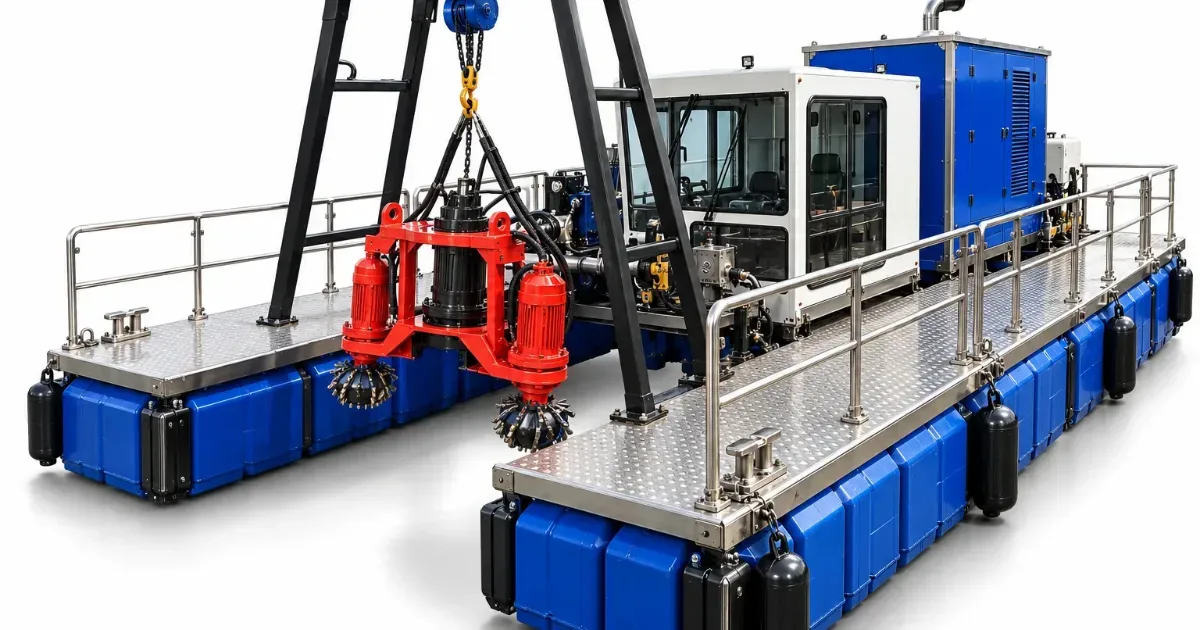
The Bajauindo Dredger is a sediment dredging solution that uses suction-pump technology on a stable pontoon platform. According to its official brochure, its main purpose is to maintain water depth, channel flow and water quality. The brochure's tagline is "Dredging Solution for Better Waterways".
The brochure lists the following areas of application:
- Lakes and reservoirs: maintaining depth and water quality in waters that are becoming shallow.
- Rivers and navigation channels: helping keep the flow moving and water transport accessible.
- Ports and industrial estates: maintaining basin depth and the safety of surrounding activities.
- Tourism areas: keeping the water suitable for water-based tourism.
Bajau Indo also offers the Modular Dredger / Dewatering Boat, a 3 × 5 m modular platform that integrates pumps, dredging and dewatering for lakes, rivers, swamps and retention ponds (embung).
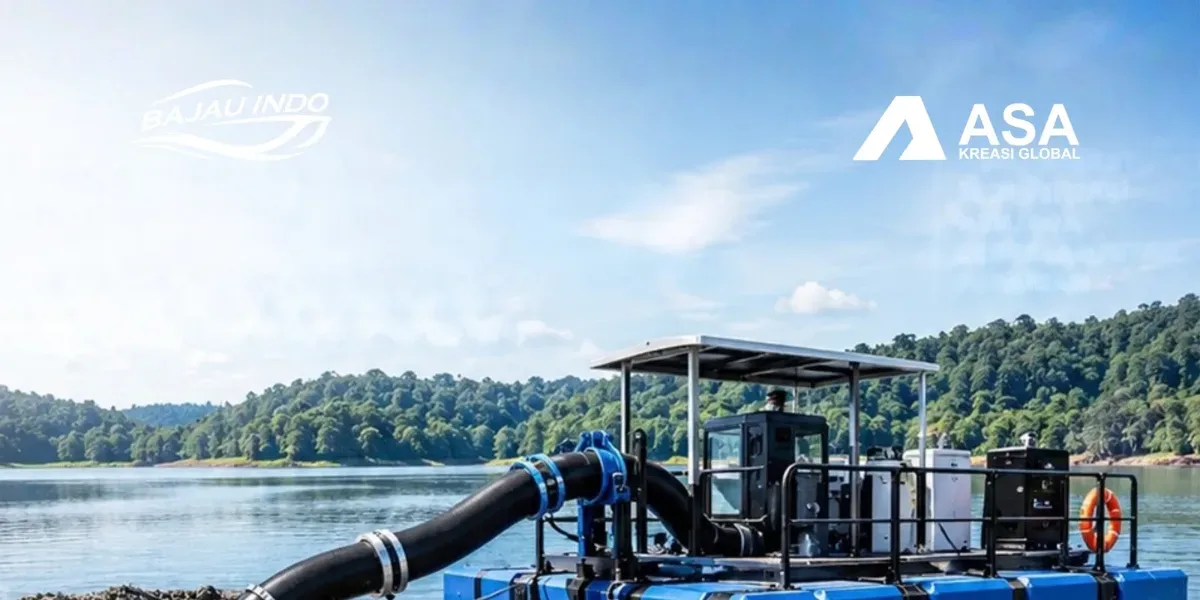
Visual of the Bajauindo Dredger working on a lake, with a black discharge pipe floating towards the shore. Source: Bajau Indo product visual (illustration)
The Role of the Platform in a Pontoon Dredger
A suction pump works with more control when its base is steady. On a pontoon dredger, the floating platform acts as a working deck that carries the pump, supporting equipment and the operator on the water. In general, a stable platform helps the operator hold the suction head in position and reduces vibration while the pump is running.
Another advantage is that dredging takes place from the water surface, so a lake or pond generally does not need to be drained first. The suctioned material is carried through a discharge pipe to a collection point on land. A more technical discussion of stability and equipment mounts is available in the article floating dredging platforms: stability, equipment mounts and mobilisation. An example of this application, the floating dredger project in Bogor, is listed on the Bajau Indo project portfolio page.
Plain Suction for Fine Sediment
The plain suction system draws sediment up directly through a simple, efficient flow. The brochure states that this system suits mud, sand and fine sediment, which are materials that can be lifted by suction relatively easily without being broken up first.
Plain suction is worth considering when:
- The deposit is still soft and easily stirred, for example mud in a retention pond or a pond that is maintained regularly.
- The material is mainly sand or fine sediment without hard lumps.
- You prefer a simple workflow without additional breaking equipment.
Double Crusher for Compacted Deposits
The double crusher system is fitted with a double crusher and an agitator. Together they break up compacted sediment or hard deposits before the material is suctioned. According to the brochure, this system is effective for mud, sand and hard deposits, with more stable and efficient operation.
In general, sediment that has settled for a long time tends to compact and is difficult to lift by suction alone. This is where the agitator and crusher come in: the material is loosened first, so the flow towards the pump runs more smoothly. A pontoon dredger configured this way is relevant for reservoirs that have not been dredged for a long time, industrial ponds with compacted deposits, or channels whose beds contain coarse material.
How to Choose a Pontoon Dredger System
The choice between plain suction and double crusher should be based on field data, not guesswork. The following steps help your team build a basis for the decision:
- Take sediment samples from several points and depths, and note whether the material is soft, sandy or in hard lumps.
- Map the current depth and compare it with the target depth to estimate the volume that needs to be removed.
- Decide the discharge point on land, including the distance and route of the discharge pipe.
- Check site access for mobilising the platform and equipment to the water's edge.
- Discuss the results with the technical team so the system and platform configuration are matched to those conditions.
The Bajauindo Dredger brochure highlights the double crusher, high capacity and efficient operation as its strengths. However, actual performance depends heavily on the type of material, discharge distance and site conditions, so the requirements of each project are calculated separately. For long-term planning, see also the guide to sediment management in reservoirs and retention ponds.
Frequently Asked Questions
Does a lake have to be drained before using a pontoon dredger?
In general, no. A pontoon dredger works from the water surface, so sediment is suctioned from the bed while the water body stays filled. The material is then carried through a discharge pipe to a collection area on land. The technical plan still needs to be adapted to site conditions.
What if the sediment is a mix of soft mud and hard deposits?
Mixed conditions are quite common in waters that have not been dredged for a long time. Because the double crusher is designed to break up hard deposits before suction and remains effective for mud and sand, this system is worth considering for mixed material. The final decision should still be based on the results of sediment sampling.
What is the dredging capacity of the Bajauindo Dredger?
Capacity cannot be stated in general terms because it depends on the type of material, working depth, discharge distance and operating pattern. The Bajau Indo team will calculate it based on your site data. Pricing also depends on specification, volume and delivery location.
Planning to dredge a lake, reservoir or pond in your area? Send site photos, an estimate of the water area and notes on the type of sediment via WhatsApp 0878-5931-4314 or email marketing@bajauindo.com. The Bajau Indo team will help you weigh up whether plain suction or double crusher suits the conditions of your waters.
Written by
Tim Redaksi Bajau Indo
Tim Teknis & Redaksi
Tim teknis dan redaksi Bajau Indo — produsen dermaga apung, kubus apung, dan ponton modular LLDPE dari Sentul, Bogor.
Share this article: