The Pontoon Rotomoulding Process: How LLDPE Pontoons Are Made in One Piece Without Seams
How is a hollow pontoon made in one piece without welding? Learn the stages of rotomoulding, from LLDPE powder and heating while rotating to filling the polyurethane core.
How can a hollow plastic pontoon be made whole in a single piece, without two halves being welded together? The answer lies in the pontoon rotomoulding process, or rotational moulding. This method is commonly used for large hollow plastic products, from water tanks to floating pontoons.
For project owners and contractors, understanding how pontoons are made helps when assessing product quality and asking suppliers the right questions. This article explains the process in general terms, then relates it to Bajau Indo pontoons.
What Is Rotational Moulding?
Rotational moulding is a plastic-forming process in which polymer powder is heated inside a closed mould that rotates slowly on two axes. The rotation makes the molten plastic coat the entire inner surface of the mould, forming a hollow object with a continuous wall.
Unlike methods that inject liquid plastic at high pressure, rotomoulding works without high pressure. This makes the method suitable for large hollow objects with relatively complex shapes, such as pontoons with reinforcing grooves or a tapered bow. In general, each pontoon shape requires its own mould, so different types are made from different moulds.
Stages of the Pontoon Rotomoulding Process
In general, one pontoon production cycle goes through four main stages:
- Charging the material: polymer powder, in this case LLDPE, is weighed and placed in the pontoon mould. The amount of powder helps determine the wall thickness that forms.
- Heating while rotating: the closed mould enters a heating chamber and is rotated on two axes. The powder melts and adheres evenly to the mould walls.
- Cooling: the mould is moved to a cooling area while still rotating, so the plastic wall solidifies into a stable shape.
- Demoulding: once it is cool enough, the mould is opened and the pontoon is removed for inspection and finishing.
All stages of this pontoon rotomoulding process take place inside a closed mould, so mould cleanliness and accurate material dosing are important parts of quality control.
Filling the polyurethane core
After the shell is formed, the pontoon cavity is filled with polyurethane. This material fills the space inside the shell and acts as the pontoon's core. The role of this core is discussed in more depth in our article on the function of the PU core behind the LLDPE shell.
Why Rotomoulding Suits LLDPE Pontoon Production
There are several reasons why the pontoon rotomoulding process is often chosen for making plastic pontoons:
- One piece without weld seams: the shell is formed whole, so there is no weld line that could become a weak point.
- Relatively even walls: biaxial rotation helps spread the material over the entire mould surface, including the corners.
- Functional shapes: reinforcing grooves, locking points and a tapered bow can be formed directly by the mould.
- In line with LLDPE properties: the material is flexible, crack-resistant and UV-resistant, characteristics needed by products constantly exposed to water and sunlight.
The reasons for choosing this material are reviewed more fully in our article on modular LLDPE pontoons for water projects.
Bajau Indo Pontoons: 8 mm LLDPE Shell and CFC-Free PU Core
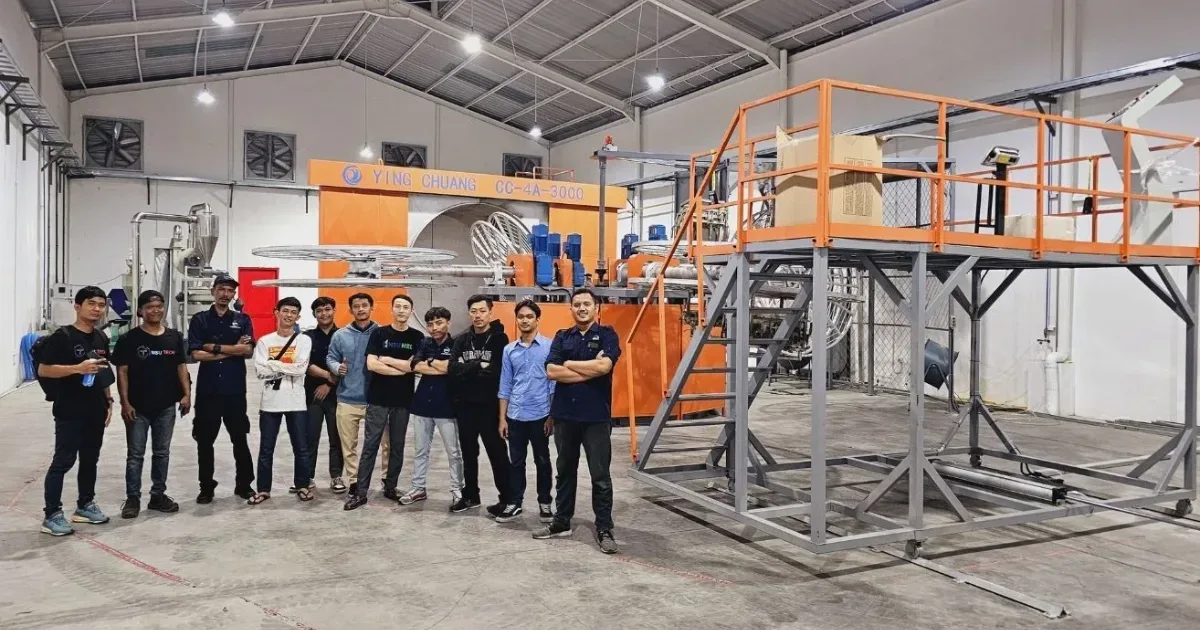
Bajau Indo pontoons are produced at Pergudangan Indo Sentul, Bogor, and this article's featured image shows the Bajau Indo team in front of a rotomoulding machine in the production area. The shell uses UV-resistant LLDPE with a wall thickness of 8 mm for the Nose Pod, Body Pod, Block Pod and Nusa Dock, while the Belida Trash Barrier, which serves as a floating trash barrier, uses a 4 mm wall. The inside of the pontoon is filled with CFC-free polyurethane.
This combination divides the roles clearly: the LLDPE shell faces impacts, water and sunlight, while the PU core helps maintain buoyancy if the outer shell is scratched or damaged. An example is the Body Pod, with an official specification of 125 × 82 × 75 cm, 33 kg in weight and 230 kg of buoyancy per unit.
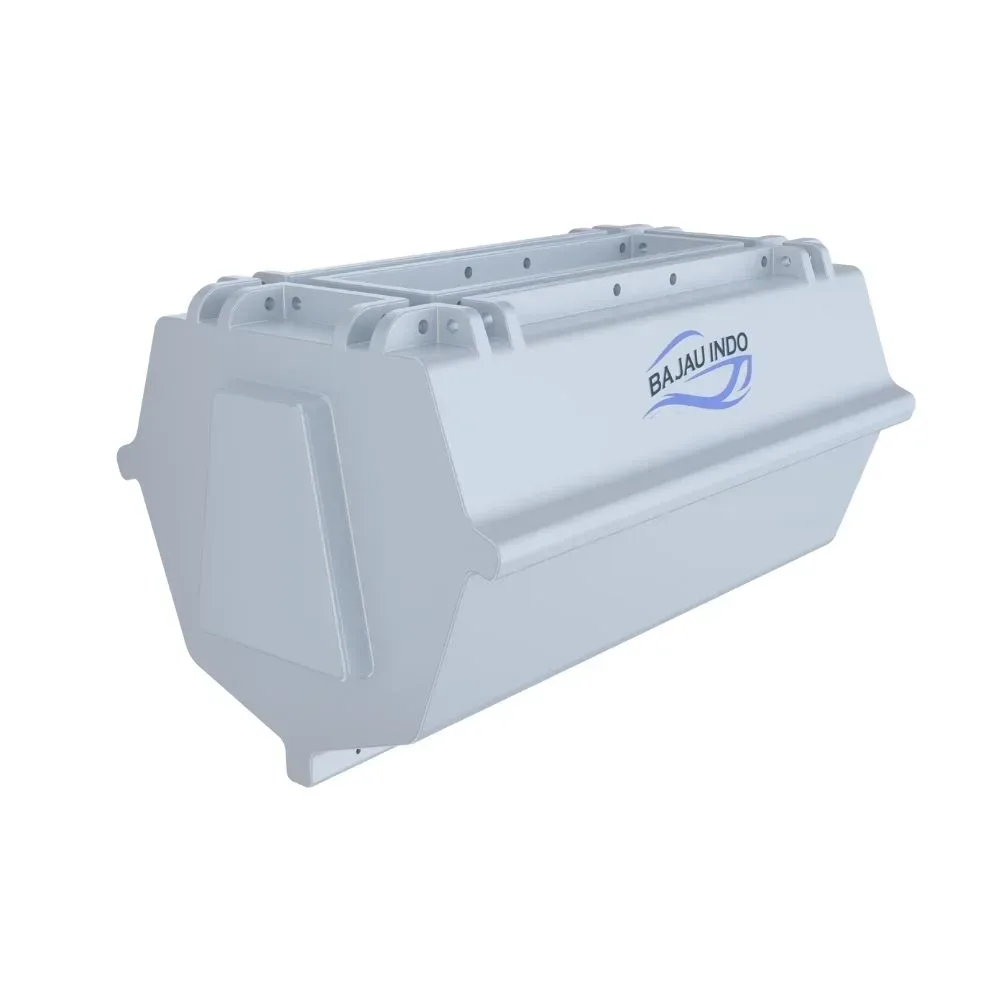
A white Body Pod with the Bajau Indo logo, one of the pontoons with an LLDPE shell and polyurethane core. Source: Bajau Indo 3D product render
Questions to Ask Suppliers About Pontoon Production
When comparing suppliers, the following questions help you assess products more objectively:
- What material is used for the pontoon shell, and is it UV-resistant?
- What is the wall thickness for each pontoon type?
- Is the pontoon left hollow or filled with a core, and what material is used?
- Where is the pontoon produced, and how is it inspected before shipping?
The answers to these questions give a more complete picture than simply comparing the dimensions and buoyancy listed in a brochure. A supplier with a good grasp of the pontoon rotomoulding process can generally explain these points openly.
Frequently Asked Questions
How does a rotomoulded pontoon differ from one joined from several parts?
A pontoon assembled from several parts needs to be joined, so there are seam lines on its body. Rotomoulding forms the shell in a single piece, so the pontoon body has no weld seams.
Does wall thickness affect pontoon quality?
Wall thickness is one factor, together with the type of material, UV resistance and what fills the pontoon. Bajau Indo pontoons have 8 mm walls for the Nose Pod, Body Pod, Block Pod and Nusa Dock, and 4 mm for the Belida Trash Barrier.
How long does one rotomoulding cycle take?
Cycle time depends on product size, wall thickness and machine settings, so it differs for each product. For project scheduling, it is best to ask directly about production and delivery times based on the number and type of pontoons ordered.
Want to know more about the materials and production of pontoons for your project? Contact the Bajau Indo team by email at marketing@bajauindo.com or via WhatsApp 0878-5931-4314, and mention the pontoon type and the approximate number of units you need.
Written by
Tim Redaksi Bajau Indo
Tim Teknis & Redaksi
Tim teknis dan redaksi Bajau Indo — produsen dermaga apung, kubus apung, dan ponton modular LLDPE dari Sentul, Bogor.
Tags
Share this article: