LLDPE vs HDPE: Which Material Is Best for Floating Cubes, Pontoons, and Floating Docks?
When building floating structures such as floating docks, floating restaurants, and floating homes, choosing the right pontoon material is critical. It must withstand environmental stress, temperature changes, structural loads, and constant water movement over the long term.
When building floating structures such as floating docks, floating restaurants, and floating homes, the choice of pontoon material is a critical factor. The material must be able to withstand environmental stress, temperature changes, structural loads, and water movement over the long term.
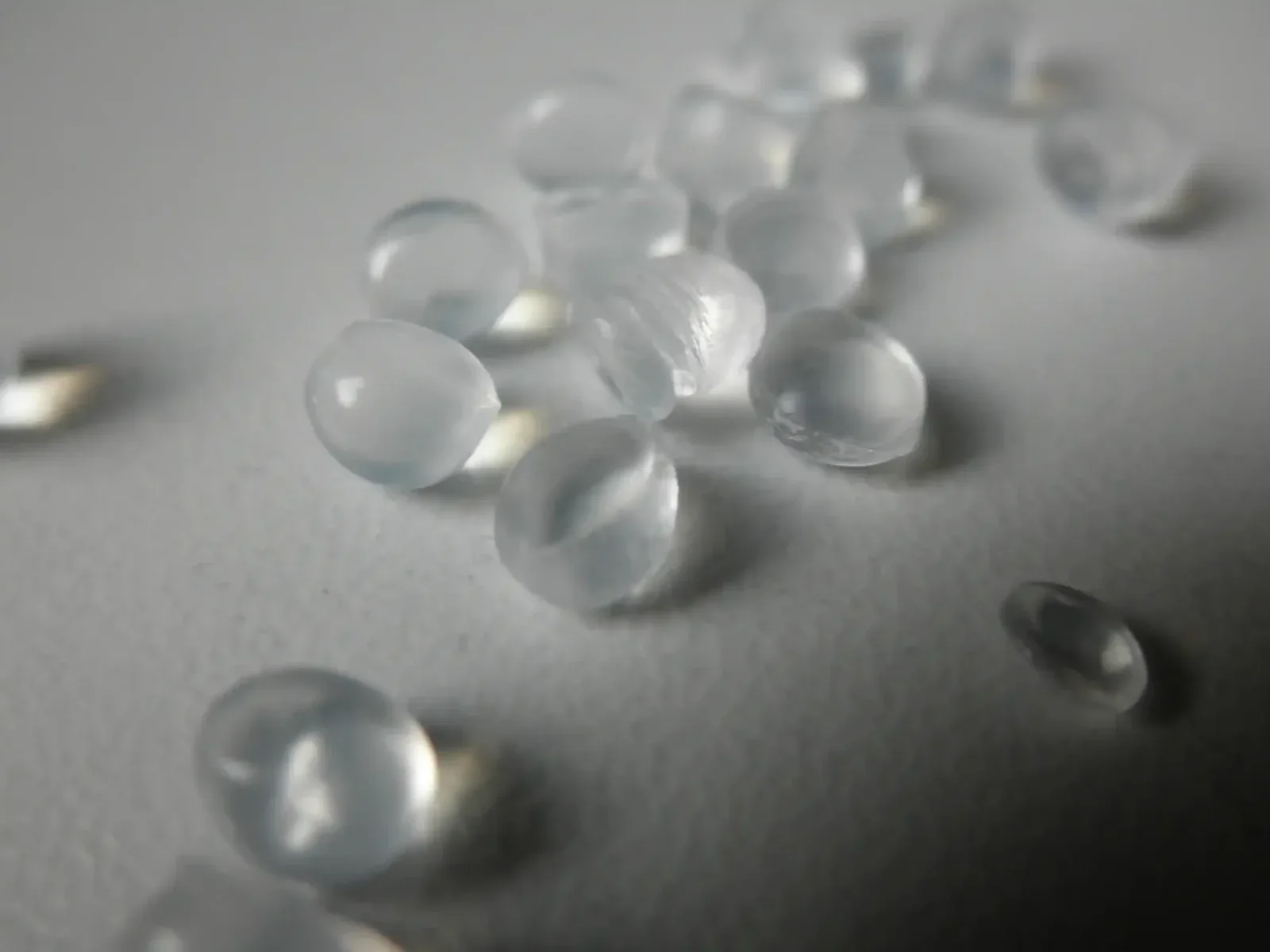
Today, the two plastic materials most commonly used in the floating structure industry are HDPE (High Density Polyethylene) and LLDPE (Linear Low Density Polyethylene). Both are types of polyethylene known for their resistance to water, chemicals, and corrosion.
However, based on a range of scientific studies on the mechanical properties of polyethylene, LLDPE has several important advantages over HDPE, particularly in flexibility and resistance to cracking caused by environmental stress (environmental stress cracking).
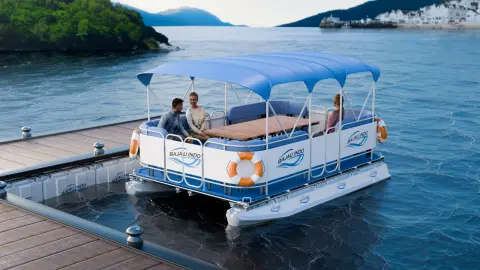
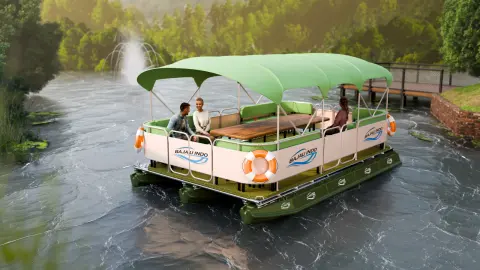
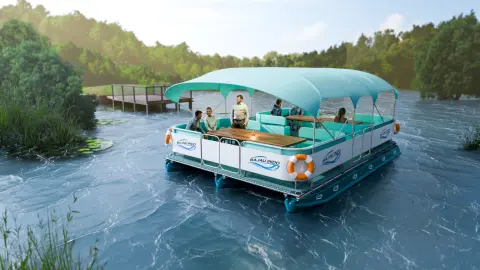
This is why Bajau Indo uses LLDPE as the primary material for producing its pontoons and floating cubes, resulting in products that are stronger, longer-lasting, and safer to use in a wide range of water conditions.
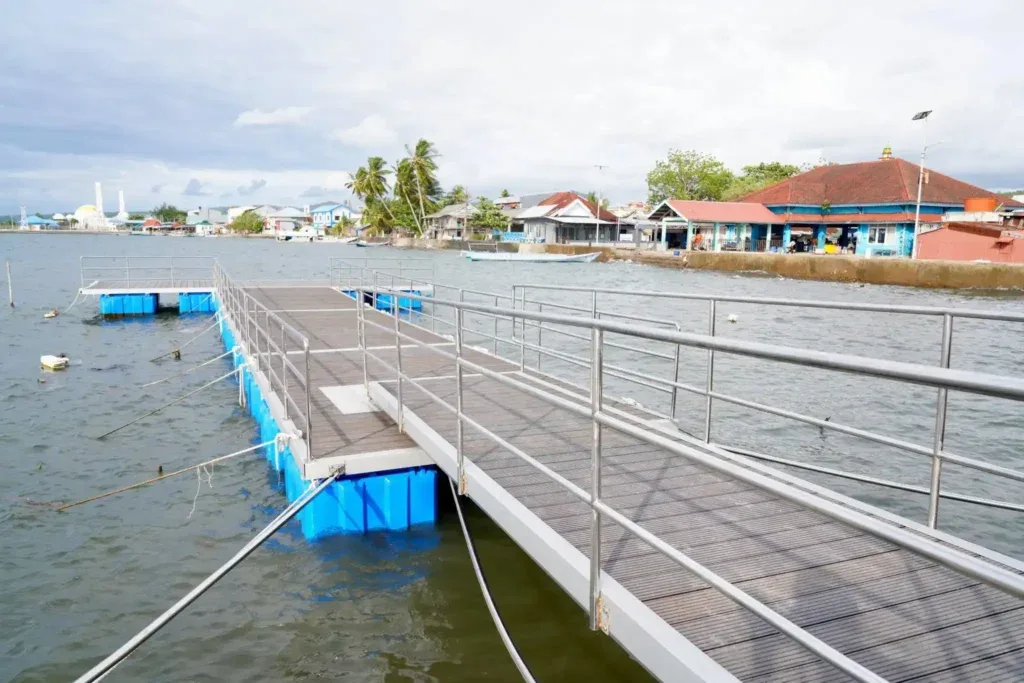
Understanding HDPE and LLDPE
HDPE and LLDPE belong to the same family of plastics: polyethylene. The main difference between them lies in the molecular structure and polymer density that make up each material.
HDPE (High Density Polyethylene)
HDPE has a very tightly packed molecular structure with a high degree of crystallinity. This structure gives the material the following characteristics:
- stiffer
- high hardness
- resistant to many chemicals
- good dimensional stability
Because of these properties, HDPE is widely used in products such as pipes, chemical tanks, industrial containers, and various structural plastic components.
However, this very dense molecular structure also gives HDPE lower flexibility than other types of polyethylene.
LLDPE (Linear Low Density Polyethylene)
LLDPE has a slightly different molecular structure. LLDPE polymers have short-chain branches in their molecular structure, which makes the material more flexible.
The key properties of LLDPE include:
- more elastic
- more resistant to cracking
- higher elongation
- more resistant to deformation
These characteristics make LLDPE well suited to applications subject to continuous dynamic stress, such as floating cubes and floating dock pontoons.
Stress Crack Resistance in HDPE vs LLDPE Pontoons
One of the most important factors in determining the quality of a plastic material for floating structures is Stress Crack Resistance (SCR).
SCR is a material's ability to resist crack growth caused by mechanical stress over long periods, especially when the material is in a liquid environment such as water or a chemical solution.
Environmental stress cracking is one of the causes of polyethylene failure in many industrial applications. These cracks typically occur when the material is exposed to:
- constant mechanical stress
- water or chemicals
- changes in ambient temperature
These conditions are very common for pontoons, floating cubes, and floating docks, which are always in an aquatic environment.
Research comparing the performance of HDPE and LLDPE using the Single-Point Notched Constant Tensile Load Test (SP-NCTL) showed a very significant difference.
In that test:
- HDPE had an SCR value of around 800 hours
- LLDPE had an SCR value of around 18,700 hours
This difference shows that LLDPE can resist crack growth more than 20 times longer than HDPE.
This ability is crucial for floating structures, because pontoons are continuously subjected to stress from:
- waves
- changing structural loads
- human activity
- changes in ambient temperature
A material with better crack resistance will naturally deliver a much longer service life.
Material Flexibility in Floating Cubes and Floating Docks
Besides crack resistance, material flexibility is also an important factor in the design of floating docks and modular floating cubes.
Floating structures are never static. A platform is always subjected to various types of stress, such as:
- wave motion
- loads from people or vehicles
- shifting load distribution
- day-night temperature changes
A material that is too stiff can develop stress concentrations at certain points, which can potentially lead to cracking or structural damage.
In mechanical property tests of polyethylene, LLDPE shows higher elongation at break than HDPE.
The elongation of LLDPE can reach around 980%, while HDPE reaches around 800%.
This means LLDPE can undergo greater deformation before the material fails.
For applications such as pontoons, floating docks, or floating cubes, this ability is essential because the material must be able to follow the movement of the water without losing structural integrity.
Resistance to Material Aging
Beyond initial performance, long-term durability is also a very important factor.
Materials used in floating structures are typically exposed to a range of environmental conditions, such as:
- sunlight
- temperature changes
- seawater or freshwater
- naturally occurring chemicals in the water
In research on HDPE and LLDPE subjected to aging under high temperatures and chemical solutions, HDPE was found to undergo structural changes that made the material more brittle.
By contrast, LLDPE was still able to retain some of its flexibility even after undergoing the aging process.
This shows that LLDPE offers more stable long-term performance, which is essential for structures used outdoors.
Why Does Bajau Indo Use LLDPE for Its Pontoons and Floating Cubes?
As a manufacturer of modular pontoons and floating cubes, Bajau Indo always prioritizes material quality so that its products are highly durable and safe to use in a wide range of water conditions.
Taking into account a range of scientific research as well as field experience, Bajau Indo chose LLDPE as the primary material for producing its pontoons and floating cubes.
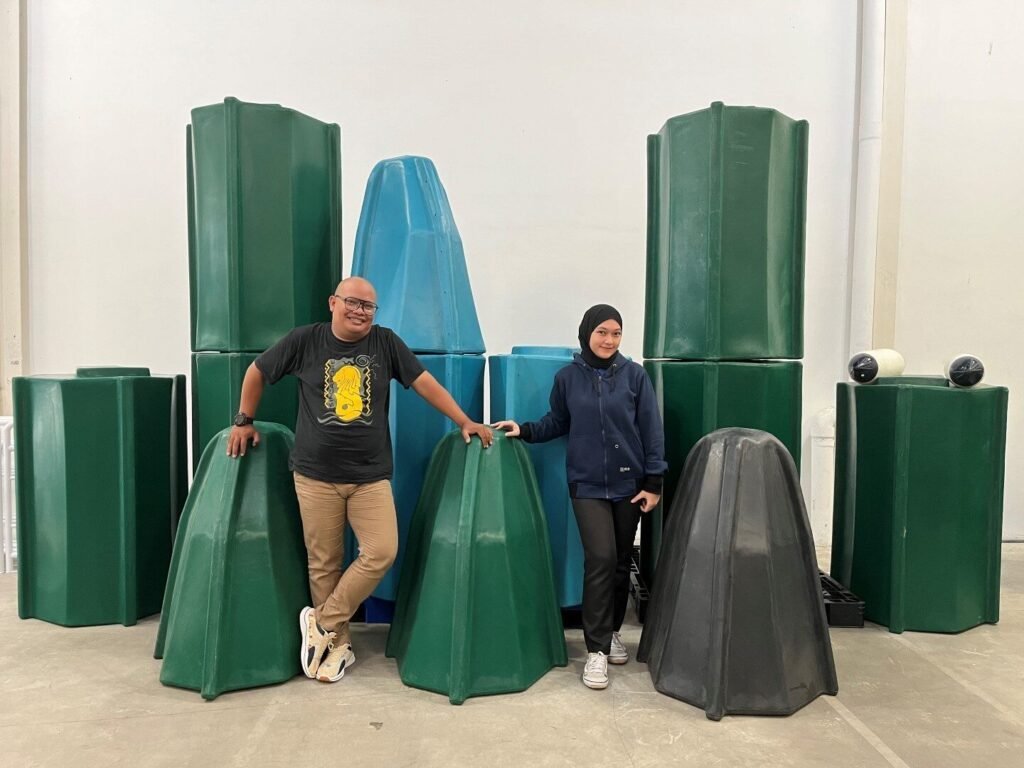
The main reasons for using LLDPE include:
Better Crack Resistance
LLDPE has a much higher stress crack resistance than HDPE.
Greater Flexibility
The material can follow the movement of the water without suffering structural damage.
Longer Service Life
The combination of flexibility and crack resistance makes the products more durable.
Structural Safety
A material that does not easily become brittle helps maintain the stability of the floating platform.
A More Durable Floating Cube and Floating Dock Solution
When building floating docks, floating restaurants, and water tourism platforms, choosing the pontoon material is a long-term investment.
The right material not only provides good initial strength but also ensures the structure remains safe and stable over years of use.
A range of research on polyethylene shows that LLDPE offers the best combination of strength, flexibility, and resistance to environmental stress cracking.
By using LLDPE in its pontoons and floating cubes, Bajau Indo delivers floating structure solutions that are stronger, more flexible, and longer-lasting for a wide range of needs in Indonesian waters.
Through design innovation and the selection of high-quality materials, Bajau Indo is committed to providing pontoons, floating cubes, and floating dock systems for a wide range of water-based projects, from docks, water tourism, and the fisheries industry to modern maritime infrastructure.
FAQ
What is the difference between LLDPE and HDPE?
LLDPE has a more flexible molecular structure than HDPE, giving it better crack resistance and elasticity.
Are floating cubes better made from LLDPE or HDPE?
LLDPE is often considered superior because it has higher stress crack resistance and better flexibility for floating structures.
Why do pontoons need to be flexible?
Floating structures are constantly exposed to waves and changing loads. A flexible material can follow the movement of the water without cracking easily.
What are the advantages of Bajau Indo floating cubes?
Bajau Indo floating cubes are made from strong, flexible, and durable LLDPE, making them suitable for a wide range of floating dock projects.
Written by
Tim Redaksi Bajau Indo
Tim Teknis & Redaksi
Tim teknis dan redaksi Bajau Indo — produsen dermaga apung, kubus apung, dan ponton modular LLDPE dari Sentul, Bogor.
Share this article: