Choosing a Floating Pontoon Module: Nusa Dock, Block Pod, or Nose Pod and Body Pod?
Compare the Nusa Dock, Block Pod, Nose Pod, and Body Pod floating pontoon modules by dimensions, weight, and buoyancy per unit so you can make the right choice for your project.
You already know you want to build a dock, a platform, or a pontoon boat, but the catalog shows several module types in different sizes. Which one is right for your project? Choosing the right floating pontoon module from the start will affect the shape of the structure, the assembly method, and the buoyancy calculation.
If you are still new to the concept of floating cubes, first read the introduction to modular floating cubes for docks. This article goes straight to comparing the official specifications of the four Bajau Indo modules and when each one is typically used.
Floating Pontoon Module Specification Comparison
The table below summarizes the official per-unit specifications of each floating pontoon module as listed on bajauindo.com:
Nusa Dock — Dimensions (cm): 150 × 100 × 40; Weight: 32 kg; Buoyancy per unit: 275 kg; Uses according to the official website: Marinas, yacht clubs, floating resorts
Block Pod — Dimensions (cm): 123 × 97 × 65; Weight: 40 kg; Buoyancy per unit: 375 kg; Uses according to the official website: Mooring for large vessels, semi-permanent docks, fish cages, marine tourism
Nose Pod — Dimensions (cm): 100 × 82 × 75; Weight: 23 kg; Buoyancy per unit: 130 kg; Uses according to the official website: Front element of mobile floating units
Body Pod — Dimensions (cm): 125 × 82 × 75; Weight: 33 kg; Buoyancy per unit: 230 kg; Uses according to the official website: Continuation element after the Nose Pod
All modules use a UV-resistant LLDPE shell with a CFC-free polyurethane core. The buoyancy figures above are per-unit values. The capacity of a complete structure is always calculated per project, because it is affected by the weight of the frame, decking, design load, and layout.
Nusa Dock: For Docks and Pedestrian Areas
The Nusa Dock module has a 150 × 100 cm footprint and a height of 40 cm, lower than the other three modules. In general, a lower module produces a deck surface closer to the water, making it comfortable for pedestrian areas and small-boat access.
The official website states that Nusa Dock can be arranged in straight, L, T, or U patterns. This flexibility makes it relevant for marinas, yacht clubs, and floating resorts. An example of its use can be seen at the Nusa Dock floating dock at TWA Mangrove PIK.
Block Pod: For Vessel Mooring Areas
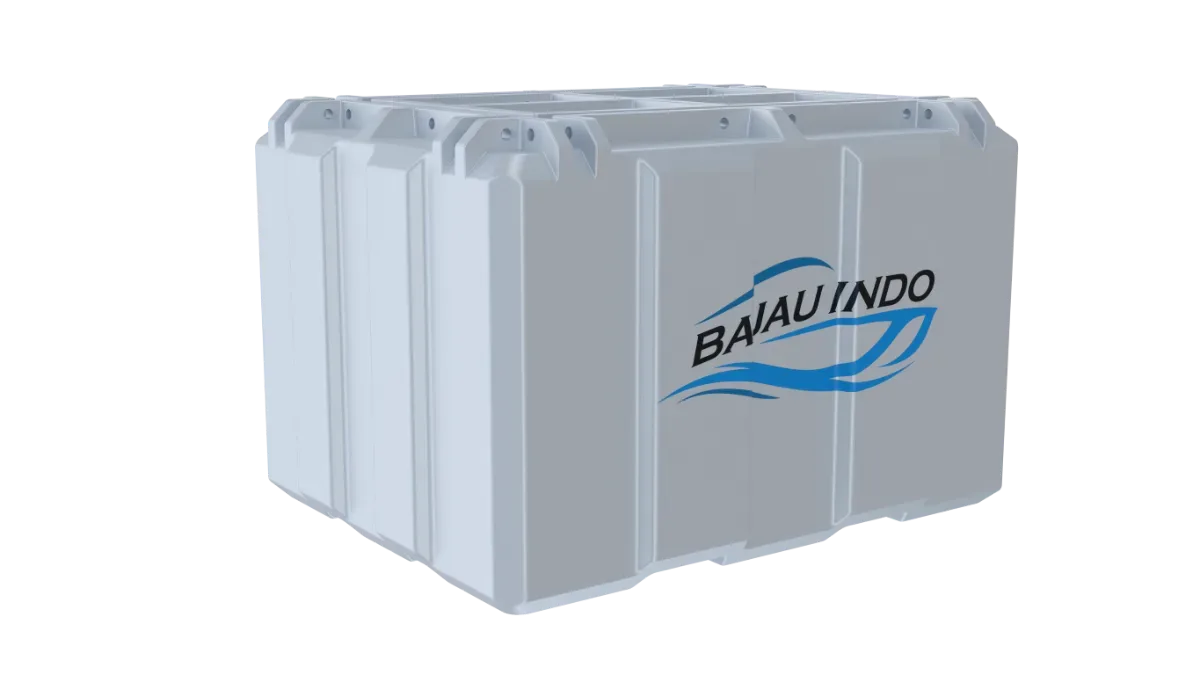
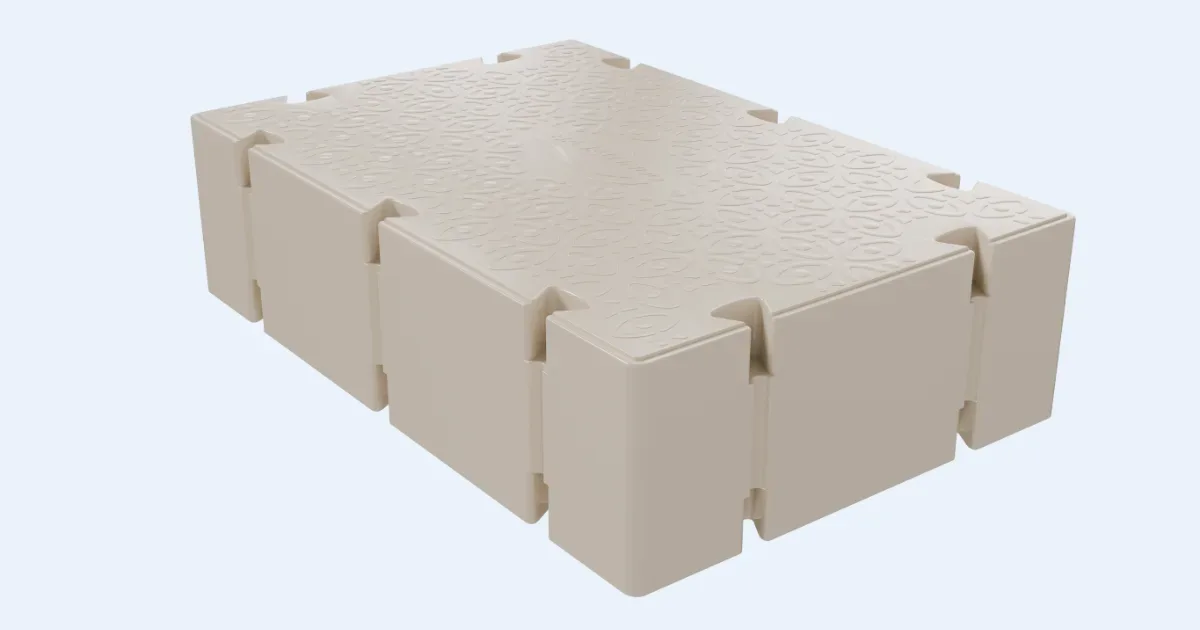
Block Pod, a module for vessel mooring areas and semi-permanent docks. Source: Bajau Indo 3D product render
The Block Pod pontoon measures 123 × 97 × 65 cm with a buoyancy of 375 kg per unit, the largest per-unit figure in the table above. The official website positions it for large-vessel mooring areas, semi-permanent docks, floating net cages, and marine tourism.
An example application is the floating dock for vessels and amphibious aircraft in Kabupaten Kepulauan Selayar, which uses Block Pods with a marine-grade aluminum frame and WPC decking. In general, the Block Pod is considered when the structure needs to serve as a berthing point for vessels or to support equipment.
Nose Pod and Body Pod: For Mobile Floating Units
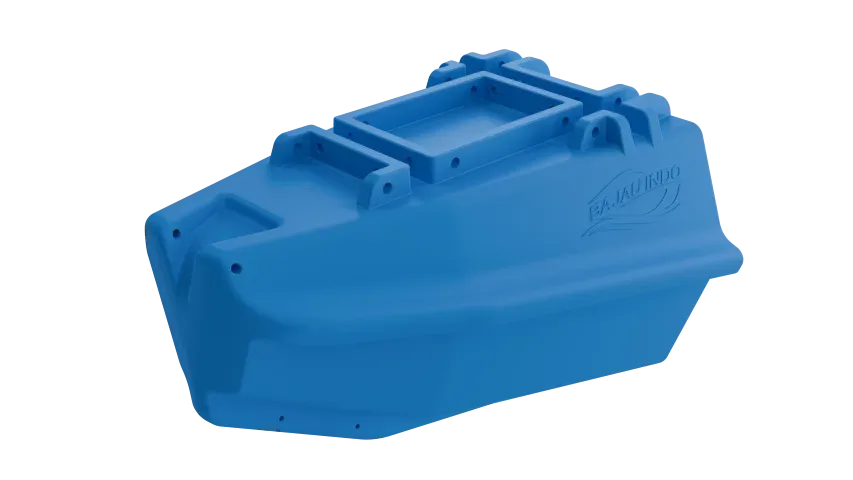
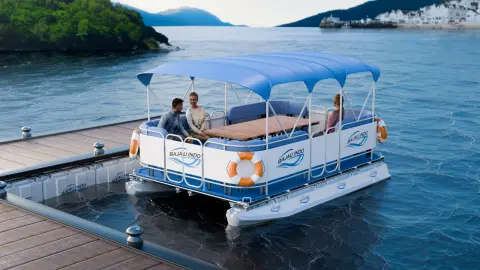
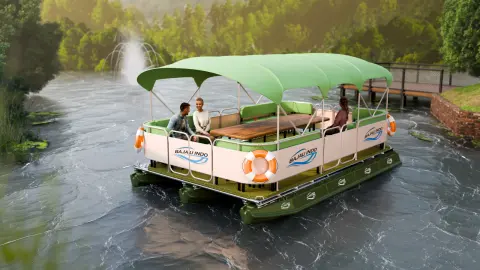
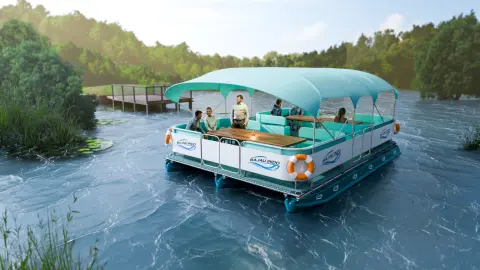
Nose Pod, the front element of a pontoon assembly for mobile floating units. Source: Bajau Indo 3D product render
Unlike the two previous modules, the Nose Pod and Body Pod are designed as an elongated assembly. The Nose Pod, with its tapered tip, is placed at the front, followed by several Body Pods behind it. This assembly forms the hull for tourist boats, catamarans, and floating restaurants.
This pair is also the basis of the Platform Pontoon Configurator. Under the configurator's assumptions, each row consists of one Nose Pod (1 m) and several Body Pods (1.2 m per unit), with two rows for widths of up to 3.5 m and three rows for wider platforms.
How to Choose Pontoons for Your Project
Use the following quick guide as a starting point:
Pedestrian docks, marinas, or tourist decks: start with Nusa Dock in a straight, L, T, or U layout.
Vessel berthing areas, semi-permanent docks, or fish cages: consider the Block Pod.
Tourist boats, catamarans, floating restaurants, or mobile platforms: use a Nose Pod and Body Pod assembly.
Mixed projects: a single site can use more than one module type, for example a dock made from Nusa Dock and a boat made from Nose Pods and Body Pods.
Besides the type of floating pontoon module, also consider the water conditions, decking type, frame material, and logistics access to the site. For platforms based on the Nose Pod and Body Pod, try the Platform Pontoon Configurator, which shows an estimated unit count and a buoyancy indicator. The result is a preliminary estimate that will be verified by the engineering team.
Frequently Asked Questions
What is the difference between Nusa Dock and Block Pod?
Nusa Dock measures 150 × 100 × 40 cm with a buoyancy of 275 kg per unit and is intended for marinas, yacht clubs, and floating resorts. Block Pod measures 123 × 97 × 65 cm with a buoyancy of 375 kg per unit and is aimed at large-vessel mooring areas, semi-permanent docks, and fish cages. The final choice depends on the project's function and load.
Can the Nose Pod and Body Pod be used for docks?
The Nose Pod and Body Pod are essentially designed as a hull assembly for mobile floating units, such as tourist boats and floating restaurants. For docks moored at a single location, Nusa Dock or Block Pod is more commonly used. The engineering team can help assess your project's specific requirements.
Can the per-unit buoyancy simply be added up to calculate a dock's capacity?
It is not that simple. Total buoyancy needs to be compared with the weight of the structure, such as the frame, decking, and accessories, plus the design load, and then adjusted to the layout. That is why the capacity of a complete structure is always calculated per project by the engineering team.
Still unsure which module is right? Tell the Bajau Indo team about your project's function, approximate size, and location via WhatsApp 0878-5931-4314 or email marketing@bajauindo.com, and we will help you map out your module options.
Written by
Tim Redaksi Bajau Indo
Tim Teknis & Redaksi
Tim teknis dan redaksi Bajau Indo — produsen dermaga apung, kubus apung, dan ponton modular LLDPE dari Sentul, Bogor.
Share this article: