Floating Dock Safety: A Guide to Railings, Loads, and SOPs for Operators
A floating dock safety guide for operators: railings, load limits and distribution, safety equipment, signage, and supervision SOPs for tourist docks.
Picture a weekend afternoon at a lakeside tourist dock. A group of visitors gathers on one side waiting for a boat, a few children run toward the edge, and staff are busy managing the queue. The scene looks ordinary, yet this is exactly where floating dock safety is put to the test. Even a well-designed structure needs clear usage rules to remain safe every day.
This guide covers floating dock safety in general terms, from railings, loads, safety equipment, and signage to supervision.
Why Floating Dock Safety Needs Special Attention
A floating dock moves with the water level and responds to the load on top of it. When many people stand at one spot, that section can sit slightly lower than other areas. Wakes from passing boats also make the deck rock gently.
For this reason, floating dock safety does not depend on material strength alone. Layout, safety fittings, and user behavior are equally important. Together, they help prevent incidents such as slipping, tripping over joints, or falling while boarding a boat.
Dock Railings: Protection Without Obstructing Access
Dock railings serve as both a physical barrier and a handhold. In general, railings are installed on sides not used for boat berthing, along long connecting walkways, and in areas where visitors gather.
Points to consider for railings:
Height and sturdiness: railings should be comfortable to grip and should not wobble when pushed.
Gaps between posts: on docks frequently visited by children, gaps need attention so they cannot easily be squeezed through.
Materials suited to the environment: in seawater, material selection and finishing must account for the risk of corrosion.
Marking open edges: sides without railings should be given contrasting colors or edge lines.
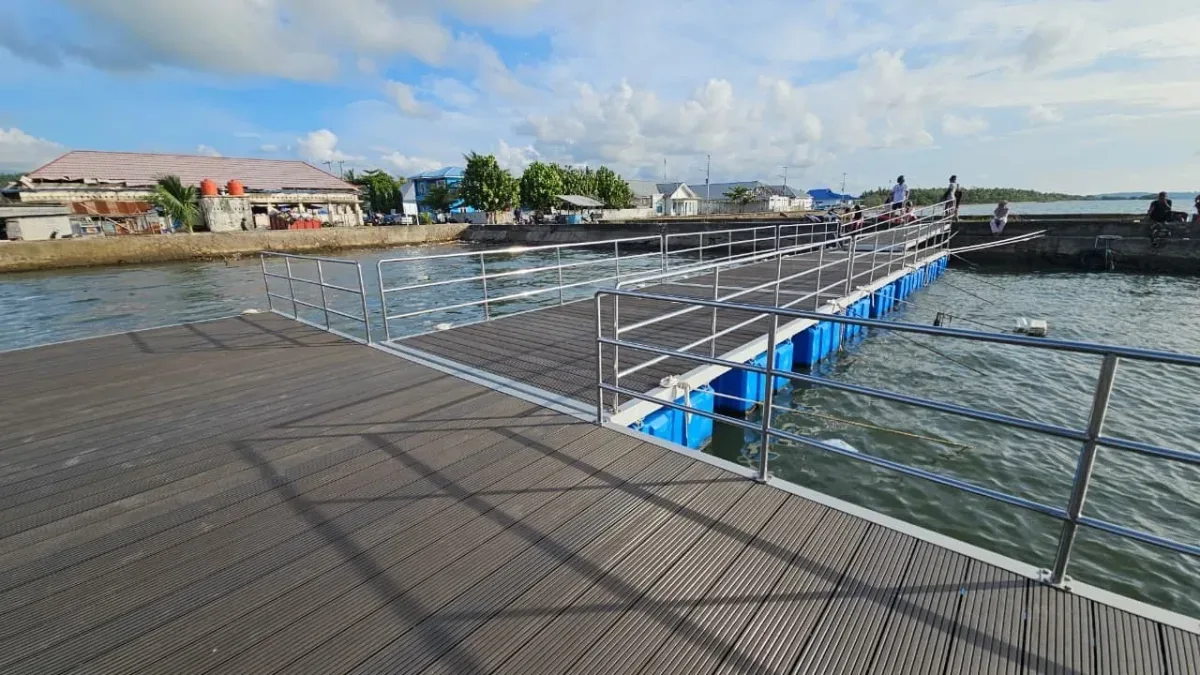
WPC deck walkway with railings on a floating dock in Kepulauan Selayar Regency. Source: Bajau Indo documentation
The floating dock in Kepulauan Selayar Regency, for example, uses Block Pod, a marine-grade aluminum frame, and WPC decking, with railings along the deck walkway as shown in the photo. You can read the project background in the article on the Bajau Indo floating dock in Kepulauan Selayar Regency.
Load Limits and Load Distribution on the Platform
Each pontoon unit has a per-unit buoyancy specification, but that figure is not the load limit for the dock as a whole. The capacity of a structure is calculated per project, taking into account the weight of the frame, decking, accessories, and user loads, and is then verified by the engineering team. For an initial overview, the Platform Pontoon Configurator displays estimates of structural weight, total load, and buoyancy.
Beyond total load, load distribution also affects comfort and safety. In general, a load concentrated in one corner tilts the platform more than a load spread evenly. Practical steps to maintain floating dock safety in terms of load:
Set the number of people allowed per area based on calculation results, not visual estimates.
Manage passenger queues so they do not bunch up at the end of the dock.
Place heavy items, such as storage boxes or equipment, in pre-planned positions.
Avoid adding accessories or structures without a fresh technical consultation.
Dock Safety Equipment and Signage to Prepare
Dock safety equipment should be available from the first day of operation. The type and quantity should follow local authority requirements, but in general the basic list includes:
Ring buoys with throw lines — Function: Rapid rescue for anyone who falls into the water
Life jackets — Function: Worn by passengers while on the boat
First aid kit — Function: Initial treatment of minor injuries
Lighting — Function: Improves visibility when the dock is used in the late afternoon or at night
Signs and information boards — Function: Communicate capacity, prohibitions, and emergency numbers
Effective signs are brief, for example stating the maximum number of people, no running or jumping, no swimming in the berthing area, and the requirement to wear a life jacket before boarding a boat.
Supervision and SOPs for Tourist Docks
Physical fittings need to be backed by tourist dock SOPs that are applied consistently. SOPs help staff act uniformly when visitor numbers are high or the weather changes. Elements commonly included are:
Daily checks before the dock opens: condition of the decking, joints, railings, and mooring lines.
Assignment of staff at passenger boarding and alighting points.
Procedures for suspending operations during strong winds, heavy rain, or drastic changes in water level.
Emergency response steps and easily accessible contact numbers.
Recording of damage findings and the follow-up actions taken.
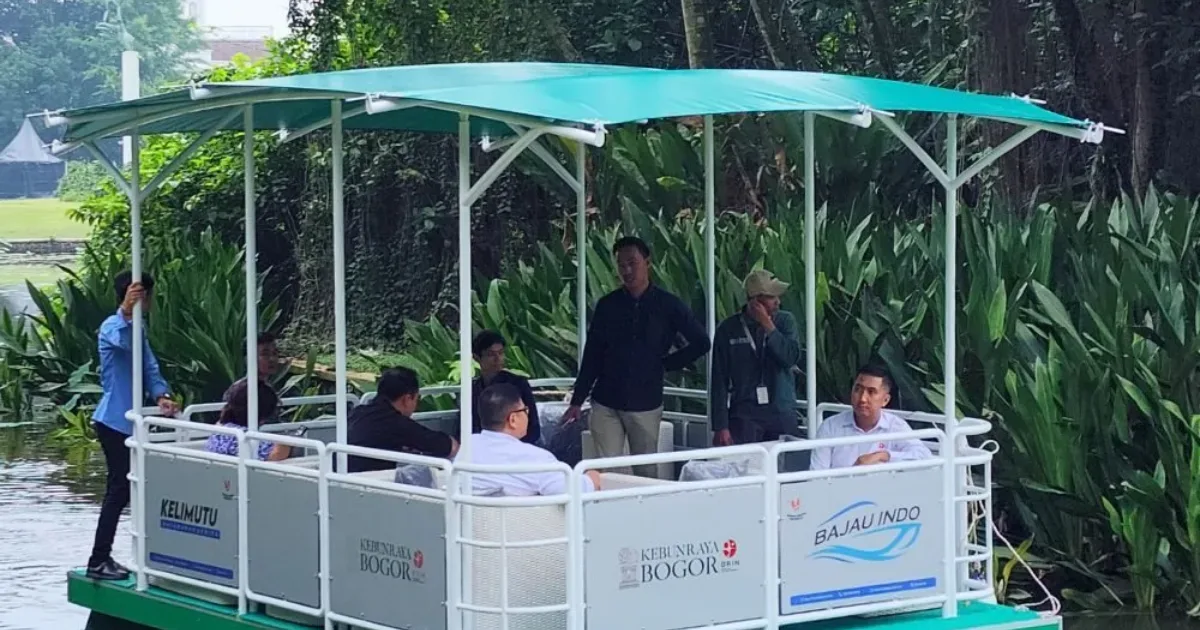
For docks serving tourist boats, coordination between dock staff and boat operators is essential. For an overview of tourist boat operations on a lake, see the article on the Bajau Indo catamaran at the Bogor Botanical Gardens.
Frequently Asked Questions
Does every floating dock need railings?
In general, railings are recommended on sides not used for passenger boarding and alighting, especially on tourist docks visited by children and the elderly. The boat berthing side is usually left open for smooth boarding and is then given clear edge markings. The final decision depends on the dock's function and the results of a technical assessment.
How do you determine the load limit of a floating dock?
The load limit of a floating dock cannot be inferred from the buoyancy of a single pontoon unit alone. It is calculated per project, taking into account the weight of the structure, decking, accessories, and user loads, and is then verified by the engineering team. Once the limit is known, post it on signage so that staff and visitors alike understand it.
What safety equipment should be available at a tourist dock?
In general, provide ring buoys with throw lines, life jackets for boat passengers, a first aid kit, and lighting if the dock is used in the late afternoon or at night. Place the equipment at easily reachable points and check its condition regularly. The exact type and quantity should follow local authority requirements.
Want to make sure your dock plan accounts for safety from the outset? See examples of our work on the Bajau Indo projects page, then discuss your site's needs with our team via WhatsApp 0878-5931-4314 or email marketing@bajauindo.com.
Written by
Tim Redaksi Bajau Indo
Tim Teknis & Redaksi
Tim teknis dan redaksi Bajau Indo — produsen dermaga apung, kubus apung, dan ponton modular LLDPE dari Sentul, Bogor.
Tags
Share this article: