Polyurethane Pontoons: Understanding the PU Core Behind the LLDPE Shell
How do polyurethane pontoons differ from hollow floats? Learn the role of the PU core, how it works with the LLDPE shell, and how to read pontoon specs.
When comparing pontoon quotations, many project owners look only at size, weight and buoyancy figures. Yet what is inside the pontoon is also worth understanding. A polyurethane pontoon—a pontoon whose interior is filled with polyurethane (PU) foam—works differently from a hollow float that contains only air.
This article gives a general explanation of the role of the PU core, how it differs from hollow floats, and how the core is combined with an LLDPE shell in Bajau Indo pontoon products.
The Two Main Layers of a Modular Pontoon
Bajau Indo modular pontoons consist of two main parts. The outer part is a UV-resistant LLDPE (Linear Low-Density Polyethylene) shell. The inner part is a CFC-free polyurethane core that serves as both insulation and the buoyancy core.
This combination can be thought of as a division of labor. The outer shell is in direct contact with water, sunlight and day-to-day abrasion. The PU core fills the space inside, so the pontoon does not rely solely on trapped air.
How Foam-Filled Pontoons Work
The principle of buoyancy applies equally to all floating objects. In general, an object floats when the weight of the water it displaces is greater than its own weight, in line with Archimedes' principle. Polyurethane foam is made up of small, lightweight cells, so it can fill the pontoon's volume without adding significant weight.
In a foam-filled pontoon, the interior is not left empty. The PU core occupies that volume, so the space that water can fill is limited. Because the same core also serves as insulation, a polyurethane pontoon gets two benefits from a single layer. For Bajau Indo products, the claim is a cautious one: the PU core helps maintain buoyancy if the outer shell is scratched or damaged.
Note that this does not mean polyurethane pontoons are immune to damage. A scratched or cracked shell still needs to be inspected and dealt with according to technical recommendations.
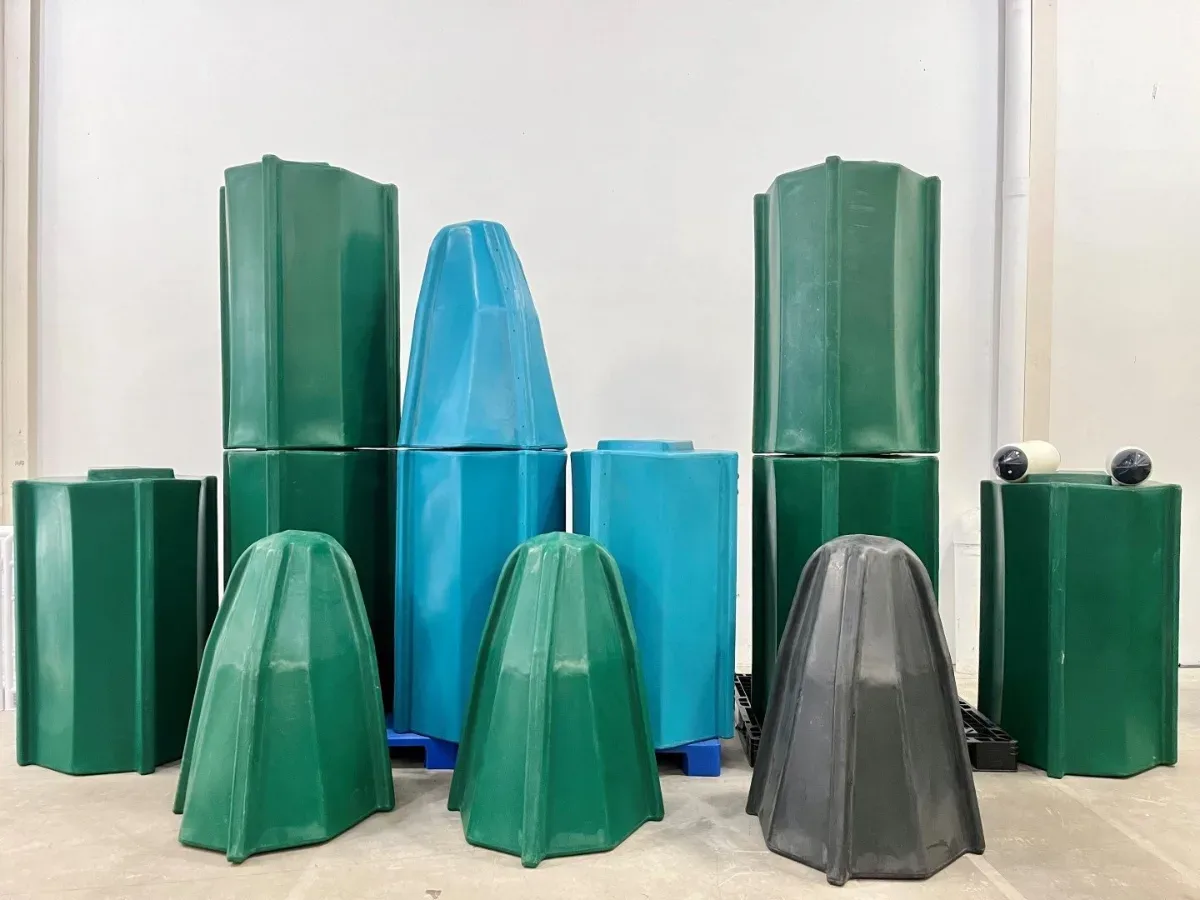
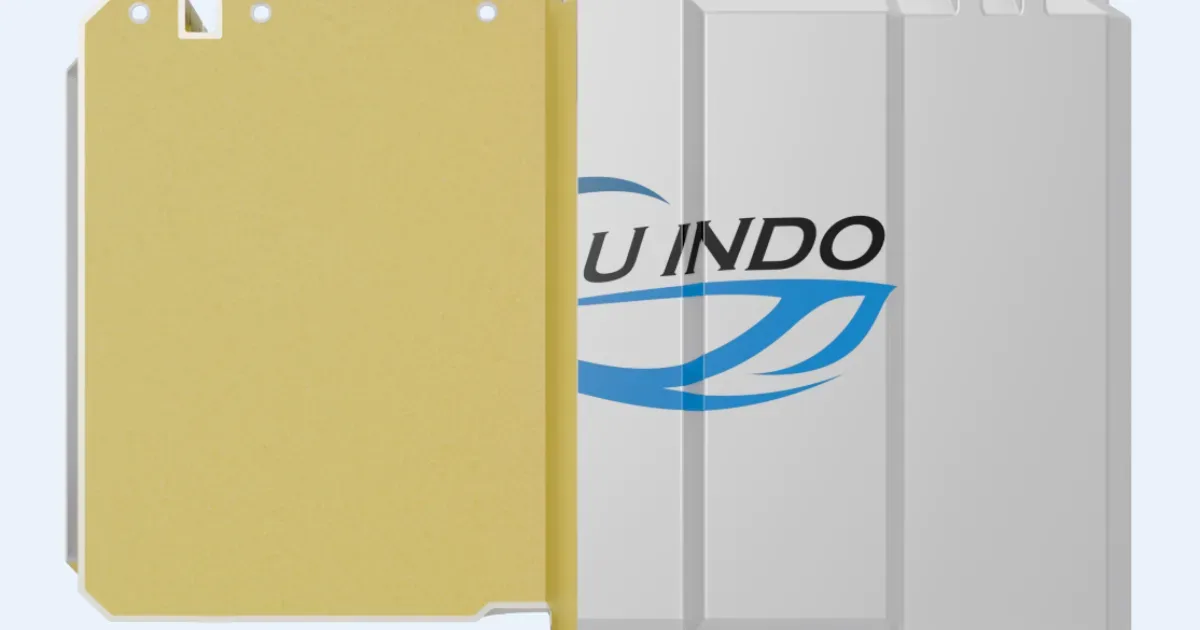
Modular pontoon units stored upright in a warehouse area. Source: Bajau Indo documentation
How They Differ from Hollow Floats
Hollow floats rely on air trapped inside a sealed shell. In general, this system works well as long as the shell stays watertight. The challenge arises when the shell leaks, because water can enter the cavity and reduce the unit's buoyancy.
The following summarizes the general differences between the two:
Interior filling — Hollow float: Air; PU-filled pontoon: Polyurethane foam
Reliance on a watertight shell — Hollow float: High; PU-filled pontoon: Lower, because the cavity is filled with foam
When the shell is scratched or leaks — Hollow float: Water may enter the cavity; PU-filled pontoon: The PU core helps maintain buoyancy
Additional core function — Hollow float: None; PU-filled pontoon: Insulation
Need for routine inspection — Hollow float: Still required; PU-filled pontoon: Still required
This comparison is general and does not describe any specific product. The actual performance of any pontoon still depends on its design, material quality and production process. For operators of docks or tourist boats that run every day, this difference in how they work is worth considering from the product selection stage.
The Role of the LLDPE Shell in This Combination
The PU core does not work alone. The LLDPE shell that encases it is flexible, crack-resistant and UV-resistant. In general, flexible materials tend not to become brittle under light impacts, while UV resistance matters because pontoons are exposed to sunlight every day.
In other words, the LLDPE shell protects the PU core from the external environment, while the PU core acts as a backup layer for buoyancy. You can read a more detailed discussion of shell materials in the article comparing LLDPE and HDPE for floating cubes.
This two-layer structure is used in several Bajau Indo pontoon products, each with the following official per-unit specifications:
Nose Pod: 100 × 82 × 75 cm, 23 kg, buoyancy 130 kg.
Body Pod: 125 × 82 × 75 cm, 33 kg, buoyancy 230 kg.
Block Pod: 123 × 97 × 65 cm, 40 kg, buoyancy 375 kg.
Nusa Dock: 150 × 100 × 40 cm, 32 kg, buoyancy 275 kg.
What This Means for Project Owners
Choosing a polyurethane pontoon means considering how the pontoon maintains its buoyancy, not just the figures on the spec sheet. Understanding what is inside a pontoon also helps you ask suppliers the right questions. A few practical steps:
Ask about the shell material and the interior filling of the pontoon, not just its buoyancy figure.
Read buoyancy as a per-unit specification; the capacity of a complete structure is always calculated per project.
Still plan routine inspections, including for foam-filled pontoons.
Consider UV exposure and water conditions at the site when choosing materials.
You can find further guidance on assessing products in the article how to choose quality floating cubes.
Frequently Asked Questions
Does a polyurethane pontoon still float if its shell is scratched?
The PU core helps maintain buoyancy if the outer shell is scratched or damaged. Even so, a pontoon with a damaged shell still needs to be inspected and dealt with according to technical recommendations to keep the unit performing well.
What does CFC-free polyurethane mean for pontoons?
It means the polyurethane foam in the pontoon core is made without using CFCs (chlorofluorocarbons). CFCs are known to damage the ozone layer, so their use is restricted in many countries.
Do all Bajau Indo pontoons have the same buoyancy?
No. Buoyancy differs for each product—for example, the Nose Pod has 130 kg and the Block Pod 375 kg per unit according to the official specifications. The overall capacity of a structure is calculated per project according to requirements and site conditions.
Want to know which type of pontoon suits your project? Send an outline of your needs, area size and water location to marketing@bajauindo.com or WhatsApp 0878-5931-4314. The Bajau Indo team will help explain the unit options along with their technical considerations.
Written by
Tim Redaksi Bajau Indo
Tim Teknis & Redaksi
Tim teknis dan redaksi Bajau Indo — produsen dermaga apung, kubus apung, dan ponton modular LLDPE dari Sentul, Bogor.
Share this article: