Utility Pontoons: Floating Platforms for Pumps, Equipment, and Maintenance Access
Utility pontoons serve as floating bases for pumps, equipment, and maintenance access on the water. Learn about design considerations, the data you need to prepare, and example projects.
Many technical jobs have to be carried out in the middle of the water: pumping raw water from a reservoir, placing water quality monitoring equipment, or maintaining an intake that is hard to reach from the shore. Building a fixed structure for these purposes is often complicated, especially when the water level changes throughout the year. This is where a utility pontoon comes in, serving as a floating work base that can be adapted to the needs of the site.
This article covers the functions of utility pontoons, general design considerations, the data you need to prepare, and example applications from the Bajau Indo portfolio.
What Is a Utility Pontoon?
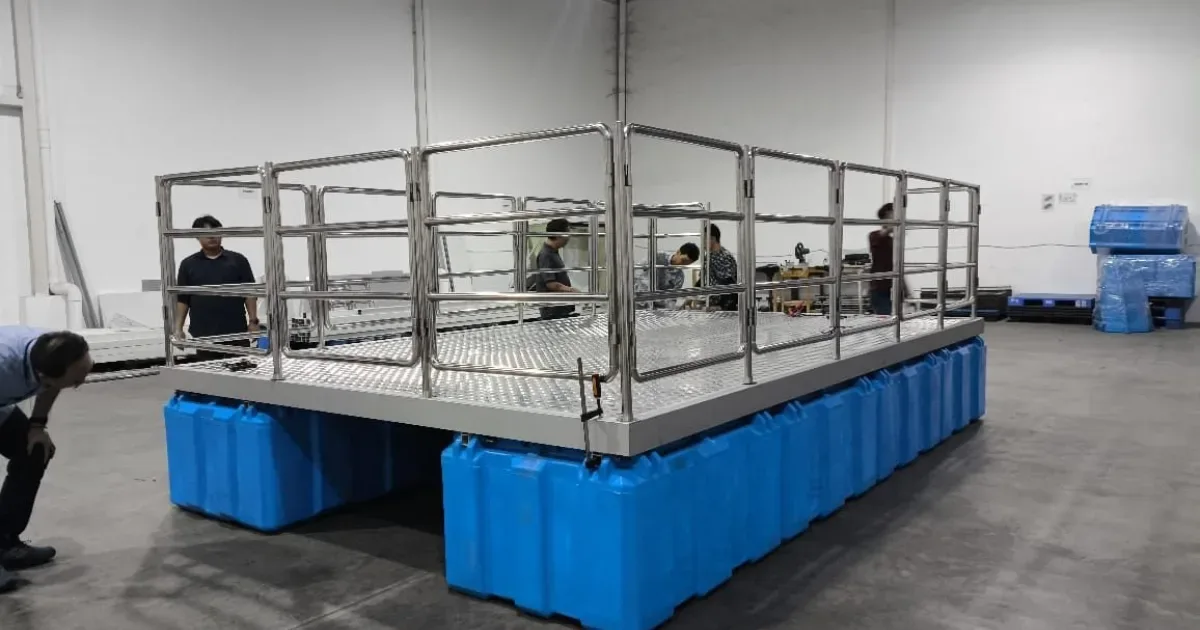
A utility pontoon is a floating platform whose purpose is to support operations, not tourism or passenger transport. It can serve as a pump mount, an equipment base, a maintenance access route, or a temporary work base for technicians. Its form is generally simple: an assembly of modular pontoons, a frame on top, and a work deck suited to the activity.
Because it is built from modules, the platform can be enlarged or reduced. This approach makes it easier to adapt when equipment needs change or when the platform needs to be moved to another location. In addition, a floating platform moves with the rise and fall of the water level, so the position of the equipment relative to the water surface stays relatively constant. This is generally an advantage for pumps that draw water from the surface.
Examples of Utility Pontoon Use
Each sector has different needs, but the following usage patterns are quite common:
Floating pump platforms for drawing water from lakes, reservoirs, retention ponds (embung), or ponds.
Floating equipment bases for items such as generators, panels, or monitoring equipment that need to be close to the water.
Waterway maintenance access to intakes, sluice gates, nets, or other structures that are hard to reach from land.
Work pontoons as a base for temporary technical activities, such as dredging or cleaning.
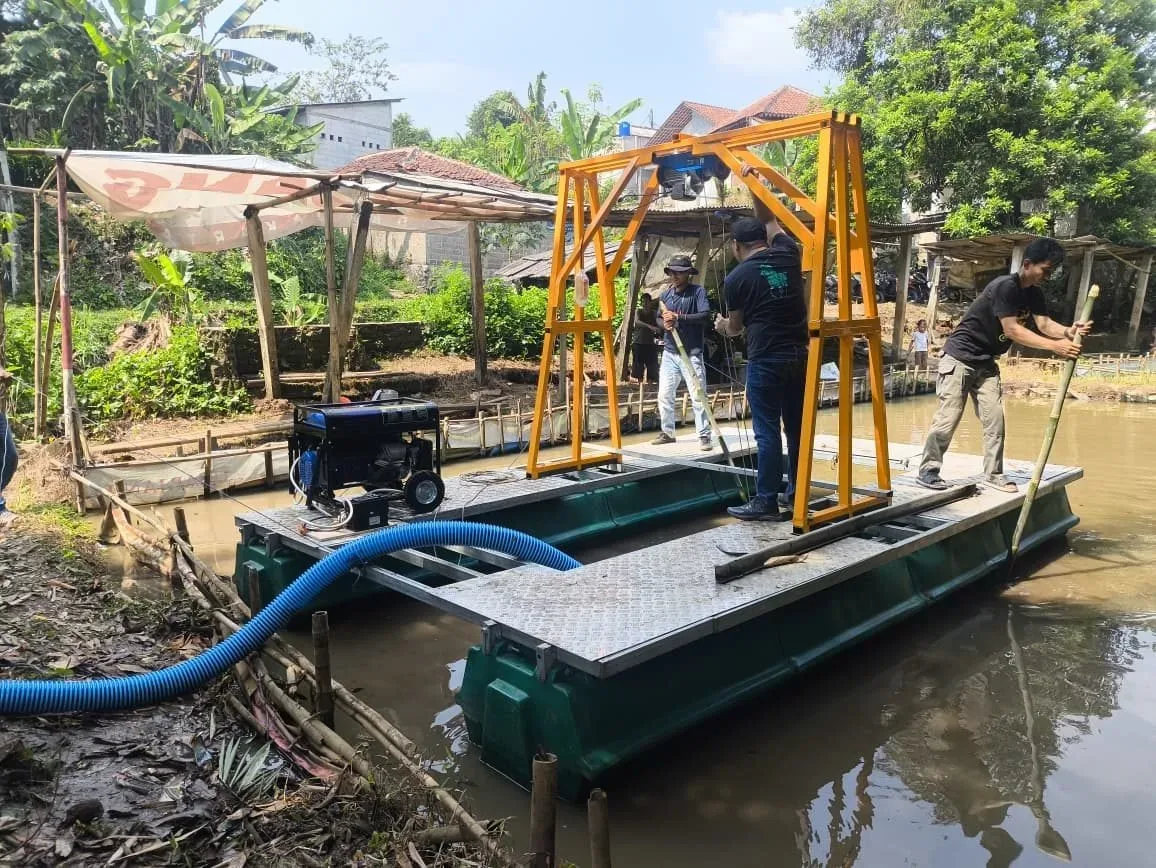
Floating work platform with a gantry and dredging equipment on the floating dredger project in Bogor. Source: Bajau Indo documentation
Examples from the Bajau Indo Portfolio
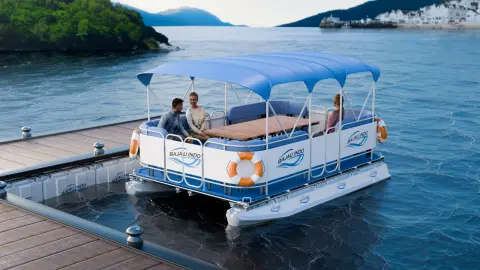
Two projects in the Bajau Indo portfolio illustrate the use of pontoons for utility functions. The first is a utility pontoon for Brunei Darussalam: a pontoon platform with railings, as shown in this article's main photo.
The second is a floating dredger in Bogor. Here, the floating platform serves as the work base for a gantry, pumps, and supporting dredging equipment. For similar needs, Bajau Indo also offers the Modular Dredger / Dewatering Boat, a 3 × 5 m modular platform that integrates pumping, dredging, and dewatering. The product is intended for lakes and reservoirs, rivers and canals, mangroves and swamps, reclamation areas, as well as ponds, retention ponds, and water treatment plants.
Design Considerations for a Floating Pump Platform
A platform that supports equipment faces different challenges from a pedestrian dock. Equipment loads tend to be concentrated and can cause vibration when machinery is running. In general, the following points should be discussed from the planning stage.
Equipment Weight and Position
Weight data for each piece of equipment, including generators, pumps, and panels, should be collected from the outset. Equipment should be positioned so that the platform's center of gravity remains balanced. Module selection also matters: according to the official specifications, the Block Pod measures 123 × 97 × 65 cm with a buoyancy of 375 kg per unit, while the Body Pod has a buoyancy of 230 kg per unit.
Vibration and Pulling Forces
Pumps and engines can generate vibration, while hoses or pipes can pull the platform in a particular direction. Equipment mounts and the mooring system need to be designed with these forces in mind.
Work Space and Technician Safety
Leave enough room around the equipment for routine maintenance. Railings, a non-slip deck surface, and clear access routes help technicians work more safely.
Water Environment
Seawater and freshwater affect the choice of frame material and accessories. Currents, waves, and changes in water level also determine the appropriate type of mooring.
Data to Prepare Before a Consultation
To make the initial calculations more accurate, prepare the following information:
List and weight of equipment — Purpose: To calculate the total load and determine equipment placement
Required work area size — Purpose: To determine the platform dimensions
Depth, current, and water level changes — Purpose: To design the mooring system
Land access to the site — Purpose: To plan delivery and assembly
Planned cable or pipe routing — Purpose: To determine the mount layout
For an initial overview, you can try the Platform Pontoon Configurator, which shows an estimate of the number of pontoon units, structural weight, total load, and buoyancy. The results are preliminary estimates and will be verified by the engineering team.
Frequently Asked Questions
What is the difference between a utility pontoon and a regular floating dock?
A floating dock is generally designed for pedestrians and boat berthing, whereas a utility pontoon supports equipment and technical activities. Loads on a utility pontoon tend to be concentrated and may be accompanied by machine vibration. For this reason, the equipment layout and mounts need to be planned in more detail.
Can a utility pontoon be moved to another location?
Because it is built from modules, a pontoon platform can in principle be dismantled and reassembled. How easy this is depends on the platform size, frame type, mooring system, and access to the new site. This should be discussed during planning if the platform will be relocated frequently.
How much equipment load can a utility pontoon support?
Platform capacity cannot be inferred from the buoyancy of a single pontoon unit alone. Capacity is calculated per project based on structural weight, equipment weight, load position, and site conditions. The engineering team will verify these calculations before production.
Need a platform for pumps or equipment at your site? Send your equipment list and water conditions to the Bajau Indo team at marketing@bajauindo.com or via WhatsApp at 0878-5931-4314, so we can help you develop a suitable initial concept.
Written by
Tim Redaksi Bajau Indo
Tim Teknis & Redaksi
Tim teknis dan redaksi Bajau Indo — produsen dermaga apung, kubus apung, dan ponton modular LLDPE dari Sentul, Bogor.
Tags
Share this article: